Conservative Court Upholds Online Voter Registration Rights
A conservative appeals court has struck down Arkansas's ban on online voter registration requiring wet ink signatures. This ruling challenges tactics seen as voter suppression and sets a precedent for other states. Advocates argue for broader legislative solutions to protect voting access.

Conservative Court Upholds Online Voter Registration Rights
A major ruling from a conservative appeals court has struck down a rule that required a physical, “wet ink” signature for online voter registration in Arkansas. This decision, reached by the 8th Circuit Court of Appeals, could have a significant impact on how people register to vote across the country. The ruling came from a panel that included judges appointed by former President George W. Bush and former President Donald Trump, with a dissenting opinion also from a Trump appointee.
The Fight Against Voter Suppression Tactics
For some time, lawmakers have sought new ways to make it harder for certain groups, particularly young and first-time voters, to register. One tactic has been to demand original, physical signatures on registration forms. This means that simply registering online or submitting a digital copy is not enough; voters must appear in person and sign a document with a pen in front of an election official.
This requirement can create significant barriers. It disproportionately affects young people who may not have easy access to polling places or election offices. It also tends to impact minority voters and others who face greater challenges in appearing in person. These laws, critics argue, are designed to discourage rather than facilitate voting.
A Legal Battle and a Key Victory
A law firm, representing the online voter registration group Get Loud Arkansas and the well-known Vote.org, challenged the Arkansas law. They had previously won at the trial court level. Many observers believed they had little chance of winning at the 8th Circuit Court of Appeals, known for its conservative judges. However, in a 2-1 decision, the court sided with the plaintiffs.
This victory is seen as a significant win for voting rights advocates. The lead opinion was written by a judge appointed by George W. Bush and joined by a conservative Trump appointee. This shows that even in conservative courts, legal arguments can succeed in protecting access to the ballot box. The ruling is expected to challenge similar laws in other states within the 8th Circuit’s jurisdiction.
Precedent and Future Impact
Winning a case at the Court of Appeals level is important because it sets a precedent for states within that circuit. This ruling directly affects Arkansas and potentially other states covered by the 8th Circuit. More broadly, decisions from conservative courts on issues related to the Civil Rights Act of 1964 can influence judges nationwide.
The Civil Rights Act prohibits states from creating unnecessary hurdles that make it difficult to register to vote. The Arkansas law, requiring a wet ink signature, was seen as such an unnecessary hurdle. When conservative judges uphold such interpretations of the law, it provides support for more moderate and liberal judges to make similar rulings. It also lends credibility to these arguments when they are considered by judges in other circuits or even the Supreme Court.
While the fight for voting rights is ongoing, this decision offers momentum. It comes at a time when some believe that efforts to restrict voting access are increasing. The ability to point to a ruling that strikes down seemingly arbitrary rules is seen as a crucial boost for those defending democratic processes.
Challenging Immaterial Tactics
This case highlights a recurring theme in election law: the use of what are called “immaterial” tactics to challenge votes. These are often minor, technical issues that have little bearing on whether a vote is valid but can be used to disqualify ballots.
Examples include issues with the date on an absentee ballot, whether a ballot was placed in one envelope or two, or whether an envelope was properly sealed. In closely contested elections, these technicalities can determine the outcome. Critics argue that these tactics are often employed to target mail-in ballots, which may be used more frequently by certain demographics, thereby disproportionately affecting specific political parties.
The legal team involved in the Arkansas case has also litigated similar cases, such as one in Pennsylvania concerning ballot envelopes. They have also fought cases challenging the rejection of mail-in ballots based on postmarks, even if the ballots arrive shortly after Election Day. These battles are described as a “war for democracy,” where small details can have significant consequences in close races.
Addressing Claims of Fraud
A common argument against online voter registration and digital signatures is that it invites fraud. However, the ruling and the arguments against the Arkansas law challenge this notion directly.
In many states, including Arkansas, the signatures collected during voter registration are not actively compared to signatures on ballots. The process of signing on a digital pad at the DMV, for instance, often does not involve a wet ink signature. The requirement for a wet ink signature for online registration is thus seen as an arbitrary step with no real security benefit. It serves only to add a barrier that can cause people to abandon the registration process.
Furthermore, in many cases, only a simple mark, like an “X” or a squiggle, is needed, and these are not verified against anything. The argument is that these requirements are outdated relics from a different era of voting. In contrast, nearly every other important transaction in modern life, from filing taxes to buying property and entering contracts, can be completed online using various forms of digital signatures.
The underlying motivation, according to proponents of online registration, is not security but a desire to suppress votes. By making registration harder, particularly for young and transient populations, political parties seek to reduce the number of potential voters who might oppose them. This pattern is seen across various Republican-led efforts, including objections to ballot drop boxes, mail-in ballot cutoffs, and online registration.
The Path Forward: Legislation and Advocacy
The constant need to fight these voter suppression tactics in court is exhausting and resource-intensive. The question arises whether legislative action could provide a more permanent solution.
Congress has the authority to set rules for federal elections, including how voters register. While Republicans have proposed legislation that could restrict voting, Democrats have also attempted to pass laws like the Freedom to Vote Act and the For the People Act. These aimed to establish national standards for voting access.
Advocates suggest that Democrats, if they control Congress, should prioritize such legislation. This could include measures to prohibit immaterial provisions that trip up voters. While some states have already enacted laws to improve voting access, federal action could create a uniform standard nationwide.
Ultimately, the solution may lie in a combination of legal challenges and proactive legislation. The work of organizations like Democracy Docket and channels like Democracy Watch is crucial in informing the public and pushing these issues onto the political agenda. The goal is to move beyond a cycle of constantly playing “whack-a-mole” in court and to establish clear, accessible rules for voting for all Americans.
Source: Trump judge drops “BLOCKBUSTER” ruling AGAINST TRUMP (YouTube)

Related Articles

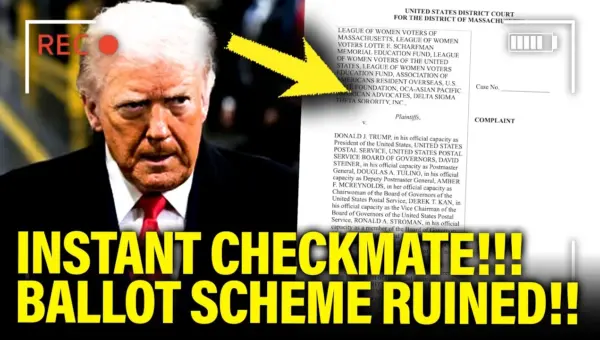
Trump’s Election Order Faces Swift Legal Challenge
A new lawsuit challenges President Trump's executive order on mail-in ballots, arguing it oversteps presidential authority and violates the Constitution. Voting rights groups filed the suit, citing concerns about federal control over elections and potential impacts on ballot delivery. This action follows historical legal challenges to similar executive orders and highlights ongoing debates about election administration.

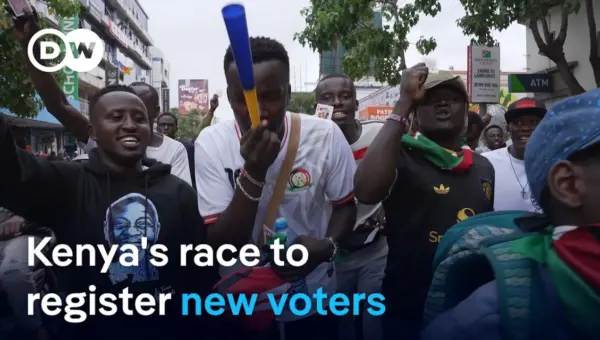
Kenya’s Youth Mobilize for Vote: ‘Our Cards Are Ready!’
Kenya's Gen Z are actively registering to vote through the Nicocadi initiative, translating protest energy into political action. Driven by the slogan "I have my card ready," young Kenyans aim to use their votes to demand change and better representation in the upcoming general election.


Judge Dismisses Most of Blake Lively’s Harassment Claims Against Baldoni
A federal judge has dismissed ten out of thirteen sexual harassment claims filed by actress Blake Lively against Justin Baldoni. While claims of defamation and direct sexual harassment were thrown out, a retaliation claim and others remain active. This ruling significantly narrows the scope of the legal battle and could influence future settlement talks.