Conservative Commentator Confronted Over Past ‘Tyranny’ Stance Amidst Heated Debate on Law Enforcement Fatalities
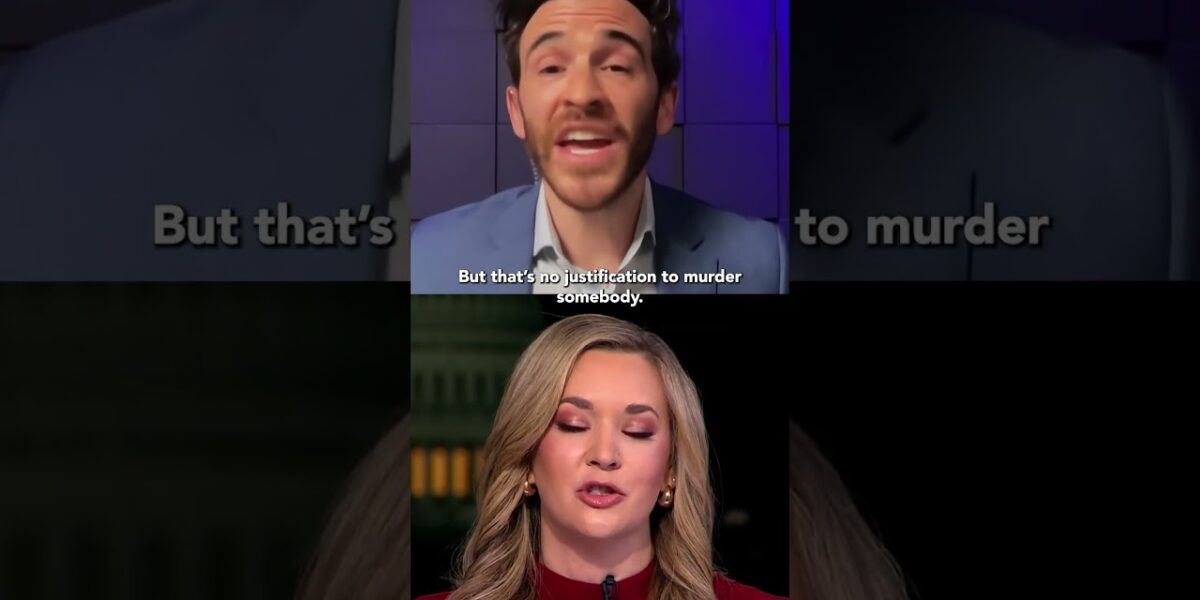
A recent on-air debate challenged a conservative commentator on her past stance on 'tyranny' amidst a heated discussion concerning federal law enforcement fatalities. The exchange focused on the deaths of Renee Good and Alex Prey during encounters with ICE, prompting questions about law enforcement accountability, the proportionality of force, and the influence of political rhetoric on protest actions. The confrontation underscored significant ideological divides regarding governmental power and the justice system.

Conservative Commentator Confronted Over Past ‘Tyranny’ Stance Amidst Heated Debate on Law Enforcement Fatalities
A contentious on-air debate unfolded recently, challenging a prominent conservative commentator on her past statements regarding governmental overreach and ‘tyranny.’ The discussion, which quickly escalated, centered on the deaths of individuals during encounters with federal law enforcement, specifically U.S. Immigration and Customs Enforcement (ICE), and the perceived lack of accountability for the officers involved. The exchange highlighted deep divisions in how law enforcement actions, protest violence, and the very concept of governmental authority are viewed across the political spectrum.
The confrontation began when a guest on the commentator’s show referenced a tweet from 2013, attributed to the host, which stated, "Anybody who believes the United States can never be a tyrannical state has their heads in the sand." This past assertion was juxtaposed against the commentator’s current defense of law enforcement actions in incidents that the guest described as a "rogue agency killing people with impunity," specifically citing the deaths of Renee Good and Alex Prey (also referred to as Alex Back in the transcript).
The Shifting Sands of ‘Tyranny’ in Political Discourse
The accusation of hypocrisy, stemming from the commentator’s decade-old tweet, struck at the heart of a recurring theme in American political discourse: the definition and application of ‘tyranny.’ For many conservatives, particularly those aligned with the MAGA movement, the term "tyrannical government" often evokes concerns about federal overreach, infringements on individual liberties, and perceived abuses of power by government agencies. Historically, such concerns have been directed at various administrations, regardless of party, when policies or actions are seen as exceeding constitutional bounds or infringing upon states’ rights.
The guest’s pointed recall of the 2013 tweet aimed to highlight a perceived inconsistency. The argument posited that if the commentator once believed the U.S. could become tyrannical, then the current incidents involving law enforcement fatalities, allegedly without justice, should align with those earlier concerns. This line of questioning forces a critical examination of whether one’s principles regarding governmental power remain consistent when applied to different contexts or when the actions are carried out by agencies one typically supports.
The concept of a "tyrannical state" itself is highly subjective and politically charged. To some, it may refer to systemic oppression and suppression of dissent, while to others, it might simply describe government actions they disagree with. The debate underscores how political figures and media personalities often navigate these nuanced definitions, sometimes adapting their interpretations to fit prevailing political narratives or to defend allies and institutions they align with. This flexibility in defining fundamental concepts like ‘tyranny’ can lead to accusations of opportunism or intellectual dishonesty, further polarizing public discourse.
The Renee Good Incident: A Clash Over Justification
The first specific case brought into the debate was that of Renee Good. While details from the transcript are limited, the commentator quickly interjected a defense of the law enforcement officers’ actions. According to the commentator, Good "arguably tried to run over an ICE officer with her car." This claim was presented as a justification for the force used, with the commentator emphasizing the availability of video evidence to support this assertion, stating, "There’s lots of video showing that she know what it looks like when somebody turns the wheel to the right."
Incidents involving vehicles used as weapons against law enforcement officers are among the most dangerous scenarios police face. Officers are generally trained to perceive a vehicle as a deadly weapon, and the use of lethal force in such situations is often deemed justifiable under established use-of-force policies. The immediate threat posed by a moving vehicle can necessitate a rapid and decisive response to protect officers and the public.
However, critics often scrutinize such incidents, questioning the immediacy and severity of the threat, the availability of less lethal alternatives, and the overall context leading up to the confrontation. Discrepancies in eyewitness accounts or interpretations of video evidence can lead to prolonged legal battles and public outcry. The guest’s mention of "no justice for Renee Good" suggests a fundamental disagreement with the official narrative or the outcome of any investigation into her death, implying that, regardless of the alleged actions, the response was disproportionate or unwarranted.
The Alex Prey Incident: Proportionality and Prior Conduct
The second case discussed involved Alex Prey (or Alex Spray/Back). The commentator’s guest challenged the justification for Prey’s death, asking, "What about Alex?" In response, the commentator detailed Prey’s alleged prior conduct: "Alex Prey was at a protest two weeks prior, ICE, and got violent with the officers, kicked out a tailgate, then went to another one." The commentator then suggested that Prey’s actions at a subsequent protest, where he was "trying to get in the middle of a federal investigation camera," contributed to the fatal encounter.
The guest vehemently rejected the notion that prior actions, such as "kicking a tailgate 11 days prior," could serve as justification for a fatal outcome. This highlights a critical legal and ethical debate regarding the proportionality of force and whether an individual’s past conduct, particularly non-lethal offenses, can retroactively justify lethal force in a subsequent, separate incident. While an individual’s history might inform law enforcement’s approach, it rarely, if ever, serves as a direct legal justification for lethal force in a new, distinct encounter unless it directly contributes to an immediate, life-threatening situation.
The commentator, however, framed Prey’s actions during the second protest—"getting involved in the middle of a federal investigation"—as a felony, implying that his presence and interference escalated the situation to a point where intervention, potentially lethal, was warranted. This perspective often aligns with arguments that individuals who actively resist or interfere with law enforcement operations bear responsibility for the consequences that may follow. The debate here centers on whether interference, even if a felony, inherently justifies the use of lethal force, especially when the initial acts (like kicking a tailgate) were not life-threatening.
The Role of Public Officials and Incitement
Adding another layer of complexity, the commentator brought forth a serious accusation against public officials: "Not to mention that that officials including the lieutenant governor in Minnesota were were telling people to go out and put their bodies on the line to commit felonies by getting saw federal invested by ICE agents." This claim suggests that political leaders might have encouraged actions that led to dangerous confrontations with federal agents, potentially contributing to the very scenarios under debate.
Such accusations of incitement or encouragement of illegal activities by public officials are extremely grave. If proven, they could raise questions about ethical conduct, political responsibility, and even legal liability. Public officials hold a unique position of influence, and their words can significantly impact public behavior, especially during periods of civil unrest or protest. Encouraging citizens to "put their bodies on the line" can be interpreted in various ways, from peaceful civil disobedience to direct confrontation with authorities. The line between advocating for protest and inciting illegal acts is often debated and legally complex.
This point underscores the broader context of political polarization, where narratives are often shaped to assign blame or responsibility, not just to individuals involved in the incidents, but also to political adversaries who may have influenced the environment in which these events occurred. The accusation against the Minnesota Lieutenant Governor serves as an example of how deeply intertwined political rhetoric and real-world consequences can become in a highly charged atmosphere.
Broader Implications: Violence, Accountability, and Media Narratives
The debate on the conservative program encapsulates a national struggle over justice, accountability, and the proper role of law enforcement. The core disagreement revolves around what constitutes justified violence and who bears responsibility when encounters with authorities turn deadly. One side emphasizes the sanctity of law enforcement operations and the inherent dangers faced by officers, suggesting that individuals who resist or interfere are responsible for the ensuing consequences.
The other side, however, highlights concerns about systemic issues within law enforcement, including the use of excessive force, a lack of transparency, and insufficient accountability for officer-involved deaths. This perspective often points to a pattern where official investigations frequently clear officers, leaving victims’ families and advocates feeling that justice has not been served.
The role of video evidence, as mentioned by the commentator regarding Renee Good, is also a critical component of these debates. While video can provide crucial insights, its interpretation is often subjective and can be influenced by pre-existing biases or political viewpoints. What one person sees as a clear act of aggression, another might interpret as an attempt to flee or a misunderstanding, further complicating the search for objective truth.
Ultimately, this on-air confrontation is a microcosm of a larger societal debate. It reflects the deep divisions in how Americans perceive government power, the rights of protesters, the authority of law enforcement, and the quest for justice in a polarized nation. The unresolved tensions surrounding these incidents continue to fuel public discourse, demanding ongoing scrutiny of both individual actions and institutional practices.
Source: MAGA host's OWN words come back to HAUNT her on air (YouTube)

Related Articles


Adam Mockler Clashes with Heraldo Rivera on Live TV
Political commentator Adam Mockler and veteran journalist Heraldo Rivera engaged in a fiery on-air debate concerning political discourse and respect for institutions. Mockler challenged Rivera's calls for deference to presidential addresses, citing Donald Trump's past actions and what Mockler described as 'false equivalencies' in media.

Gaines Accused of Xenophobia in Immigration Debate
Brian Tyler Cohen challenged conservative commentator Riley Gaines' definition of 'American' during a debate, arguing that qualifying Americanness based on assimilation or political views is un-American. Cohen suggested the focus on immigration is a political distraction from economic failures.
Mockler and Rivera Clash Over Presidential Address Protocol
Journalist Adam Mockler and Fox host Geraldo Rivera engaged in a heated debate over Democratic lawmakers' boycott of a presidential address. Mockler argued the boycott was a justified response to "unprecedented" presidential actions, while Rivera decried it as "disrespect disguised as being hip."