Congress’s War Powers: A Looming Battle Over Military Authority
A looming war powers vote in Congress is set to reignite the debate over legislative authority in military action. Analyzing Pentagon narratives and Speaker Johnson's stance, this piece explores the historical context and critical implications of Congress asserting its role in decisions of war.

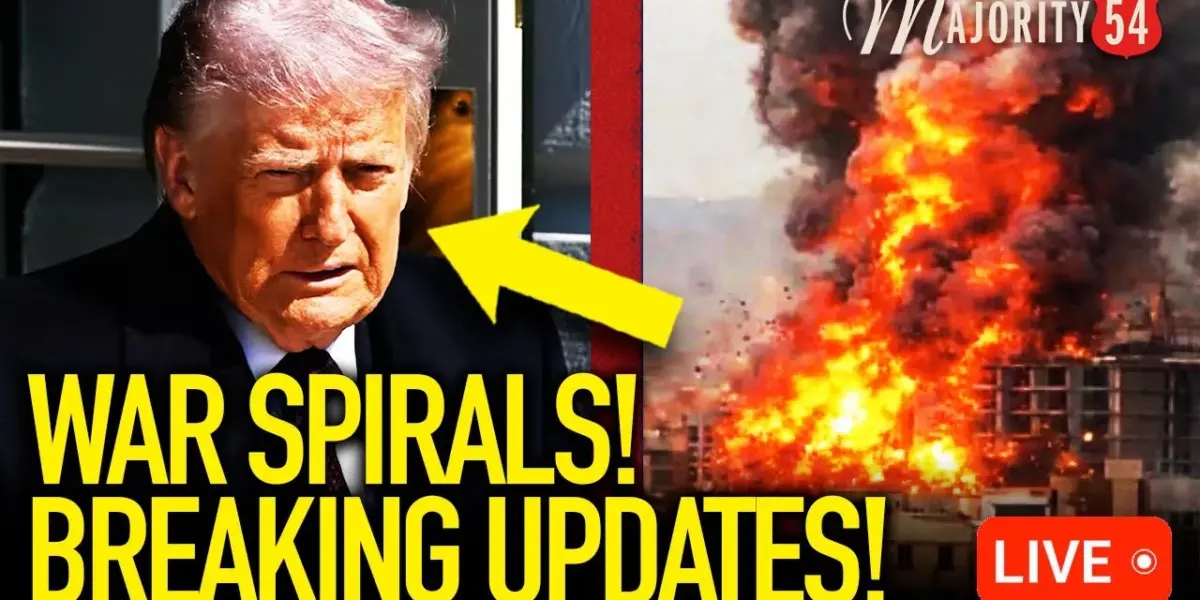
Congress’s War Powers: A Looming Battle Over Military Authority
In a recent analysis, Jason Kander dissects the escalating tensions surrounding potential U.S. military action in Iran, focusing on a critical juncture: the impending war powers vote in Congress. The discussion, originating from a press conference featuring U.S. defense officials claiming a narrative of American success amidst grim updates from the Pentagon, highlights a significant legislative showdown that could fundamentally reshape congressional authority over the use of military force.
The Pentagon’s Narrative and Congressional Scrutiny
The backdrop to this debate is a Pentagon briefing where officials declared “America is winning,” a statement met with skepticism and analysis regarding its veracity and intent. Kander’s breakdown emphasizes the significance of these claims within the broader context of potential military engagement. The narrative presented by defense officials, particularly amidst what are described as grim updates, raises questions about transparency and the information being conveyed to both the public and legislative bodies.
Central to the unfolding political drama is Speaker Mike Johnson’s position and remarks ahead of the crucial war powers vote. This vote represents a potential inflection point in the long-standing tension between the executive and legislative branches regarding the initiation and conduct of military operations. The U.S. Constitution grants Congress the power to declare war, yet in practice, presidents have increasingly asserted authority in deploying troops and engaging in hostilities without explicit declarations.
Historical Context: The Evolving War Powers Debate
The War Powers Resolution of 1973 was a landmark attempt by Congress to reassert its constitutional authority following the Vietnam War. It aimed to limit the president’s ability to commit U.S. armed forces abroad by requiring the president to notify Congress within 48 hours of committing armed forces to military action and prohibiting prolonged deployments without congressional authorization. Despite its intentions, the resolution has been a subject of continuous debate and varying interpretations, with presidents often finding ways to circumvent its strictest provisions.
The current situation, as analyzed by Kander, appears to be a re-enactment of this historical struggle. The looming vote forces Congress to confront its own role and responsibility in authorizing or restraining military action, particularly in a volatile region like the Middle East. The outcome of this legislative battle could set a precedent for future presidential actions and redefine the balance of power in matters of national security and foreign policy.
The Legislative Showdown and its Implications
The analysis points to a potentially bitter legislative showdown. This suggests deep divisions not only between parties but also within parties regarding the appropriate level of congressional oversight and the definition of what constitutes an “imminent threat” or a necessary military action. The “Majority 54” podcast, which aims to help progressive-minded individuals influence their conservative friends and family, frames this as an opportunity to engage in crucial conversations about the direction of U.S. foreign policy and the democratic principles at stake.
The core of the legislative conflict lies in the interpretation and application of congressional authority. Will Congress assert its power to approve or deny military engagement, thereby acting as a genuine check on executive power? Or will the complexities of modern warfare and geopolitical pressures lead to a further erosion of congressional oversight, empowering the executive branch to act with greater autonomy?
Why This Matters
This debate is not merely an abstract constitutional argument; it has profound real-world consequences. The decision to engage in military conflict carries immense human, economic, and geopolitical costs. Congressional involvement, or lack thereof, directly impacts the justification, scope, and ultimate success of any military operation. A robust congressional role ensures broader deliberation, greater accountability, and a more democratic process in decisions that affect the lives of service members and the nation’s standing in the world.
Furthermore, the narrative presented by defense officials and the subsequent congressional response are critical for public trust. When official statements clash with observable realities or when legislative processes appear compromised, it can lead to cynicism and disengagement. The effectiveness of U.S. foreign policy also hinges on clear, consistent, and democratically legitimized decision-making.
Trends and Future Outlook
The recurring nature of war powers debates suggests a persistent challenge in adapting constitutional frameworks to the realities of 21st-century warfare. Trends indicate a continued reliance on presidential authority for rapid military responses, often justified by immediate threats or the need for decisive action. However, there is also a growing awareness and demand from segments of the public and Congress for greater accountability and transparency.
The future outlook for congressional war powers will likely depend on several factors: the specific geopolitical context, the prevailing political climate, the actions of future presidents, and the willingness of Congress itself to assert its constitutional prerogatives. The current moment, with its focus on a specific war powers vote, represents a critical juncture that could either reinforce or significantly alter these long-term trends. The ability of voices like those on “Majority 54” to mobilize public opinion and influence legislative action will be a key determinant in shaping this future.
Source: LIVE: Trump Iran WAR FALLOUT + Breaking Updates (YouTube)

Related Articles

Hegseth Briefs on Iran Conflict Amid Escalating Tensions
Defense Secretary Pete Hegseth provided a critical update on the ongoing conflict involving Iran during a Pentagon briefing. The U.S. strategy emphasizes de-escalation, protecting national interests, and promoting regional stability through strong alliances and diplomatic efforts.

Senator Shaheen Questions US Control of Foreign Policy Amid Iran Strikes
Senator Jeanne Shaheen expressed deep concern over U.S. foreign policy control following recent Iran strikes, questioning whether President Trump or Prime Minister Netanyahu dictates American actions. The briefing revealed conflicting rationales for the preemptive military action, raising alarms about the administration's strategy and diplomatic preparedness.
Trump’s Iran War: Public Outcry Meets GOP Defense
A new poll shows low public support for U.S. military action in Iran, fueling a debate over whether these are "strategic strikes" or an "unlawful war." Congressional efforts to assert oversight face strong Republican opposition, exposing deep partisan divides on presidential war powers and the justification for conflict.