Congressman Raskin Exposes Lies, Demands Accountability
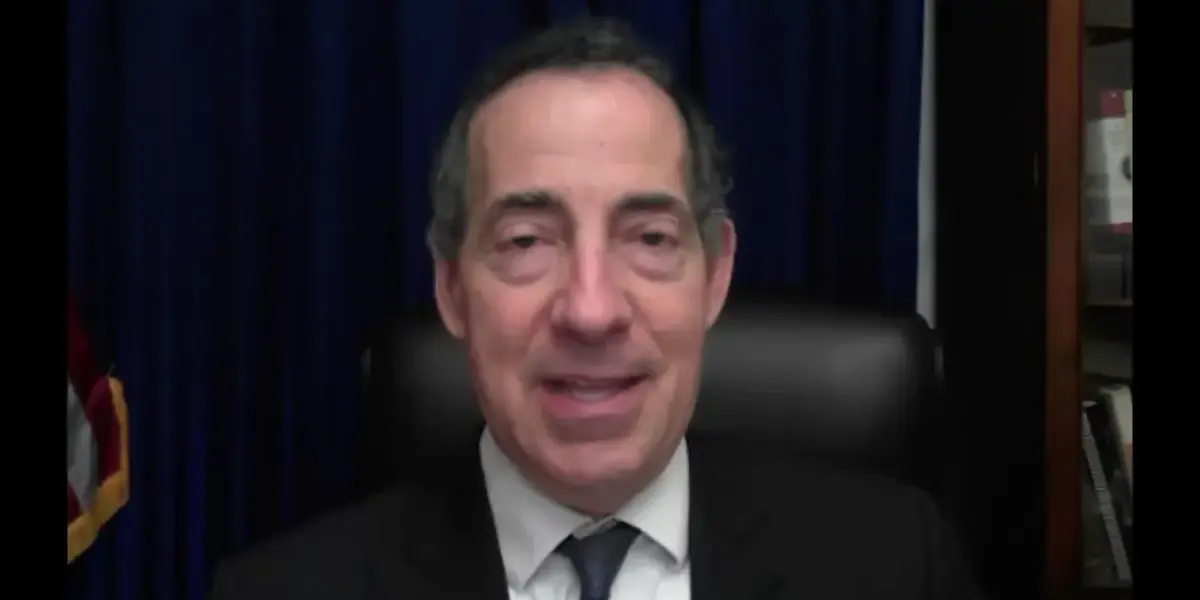
Congressman Jamie Raskin has initiated a criminal referral against Christine N. Gnome for allegedly lying to Congress. He emphasizes the legal consequences of false statements and highlights concerns about the Department of Justice's willingness to enforce laws, especially concerning Trump allies. Raskin also discussed congressional contempt powers as a potential tool for accountability when other avenues fail.

Congressman Raskin Exposes Lies, Demands Accountability
Congressman Jamie Raskin has highlighted a critical issue: people lying to Congress. He explained that lying under oath or hiding important facts from lawmakers is against the law. He specifically pointed to former Trump administration official Christine N. Gnome. Raskin stated that Gnome repeatedly made false statements and concealed material facts during her testimony. This led to a criminal referral being sent to the Department of Justice (DOJ).
However, Raskin expressed concern about the DOJ’s willingness to act, especially if the Attorney General is seen as protecting Trump allies. He mentioned that the statute of limitations for lying to Congress is five years. This means prosecutions can happen long after an administration leaves office. Raskin believes this should make former officials think twice before misleading Congress.
Accountability for False Statements
Raskin emphasized that lying to Congress is a serious offense. He used the example of Pam Bondi, a former Florida Attorney General. Bondi recently testified before a congressional committee and stated there was no evidence linking Donald Trump to the Epstein files. Raskin called this statement “patently false.” He noted that interviews within the Epstein files contain accusations of crimes involving Donald Trump.
Raskin also detailed specific instances where Christine N. Gnome allegedly lied. She claimed the Department of Homeland Security always complies with court orders. However, Raskin pointed to at least 210 cases where the department violated court orders, with the DOJ admitting fault in 50 of them. Gnome also claimed a $220 million contract was the result of competitive bidding. Raskin’s colleague, Joe Neguse, showed evidence that Gnome used a national security exception to avoid competitive bidding for a public relations contract. This claim about competitive bidding was found to be untrue.
“The bottom line is you can’t come and lie before Congress any more than you can go and lie in court. And we have got to hold the line on that to show that the perjury laws and the material false statement laws mean something.”
Broader Concerns About Consequences
The conversation touched on a broader concern: a lack of consequences for public officials who make false statements. The example of Republican Supreme Court justices was raised. They reportedly pledged respect for precedent during their confirmation hearings but later overturned Roe v. Wade. Raskin acknowledged this is a complex legal area, as justices can cite changing circumstances to distinguish cases. However, he stressed that the issues with officials lying directly to Congress are real and serious.
Raskin stressed that while Donald Trump can often lie without legal consequence due to First Amendment protections and Supreme Court rulings (unless under oath or involved in fraud), this should not set a precedent for cabinet secretaries. He stated, “We can’t get so conditioned by Donald Trump’s lies that the word goes out among the cabinet secretaries that you can go ahead and say whatever you want.”
Tools to Uphold the Rule of Law
When asked what Congress can do if the DOJ fails to act on crimes against Congress, Raskin mentioned a few options. One is to wait for a future administration where the statute of limitations still applies. Another is the power of “inherent contempt.” Congress has the authority to hold individuals in civil or criminal contempt. Civil contempt can involve fines until compliance is met. Criminal contempt can lead to punishment for actions like lying to Congress.
Raskin noted that this power was explored during the Trump administration. He suggested that if officials continue to lie to Congress, this power could be legislatively reinforced. He also suggested that Congress could go to court to compel the executive branch to comply with subpoenas if necessary, stating, “we will use any means at our disposal.”
Democracy Summer Program
The discussion also highlighted the Democracy Summer 2026 program. This initiative aims to engage high school and college students in political action. Participants can join nationwide campaign Zooms with prominent figures and engage in activities like door-knocking and voter registration. Raskin sees this as a vital way for young people to get involved and make their voices heard on critical issues like war, the cost of living, climate change, and artificial intelligence.
Why This Matters
The core issue raised by Congressman Raskin is the importance of truthfulness and accountability in government. When officials lie to Congress, it undermines the legislative process and the public’s trust. The potential for criminal referrals and the use of congressional contempt powers show that there are mechanisms to address these violations. However, Raskin’s concerns about the DOJ’s willingness to prosecute and the broader implications of a culture of deception highlight a significant challenge to upholding the rule of law. The discussion also points to the ongoing need for civic engagement, especially from young people, to ensure a healthy democracy.
Implications and Future Outlook
The focus on criminal referrals and contempt powers suggests a potential push for stricter enforcement of laws against lying to Congress. The five-year statute of limitations offers a pathway for future accountability, regardless of who is in power. The Democracy Summer program represents an effort to build a more informed and engaged citizenry, which could be crucial for demanding accountability in the future. The conversation underscores a broader societal concern about the erosion of truth in public discourse and the need for robust checks and balances to counter it.
Source: Jamie Raskin drops BOMB on top Trump official (YouTube)

Related Articles

Social Media Giants Face Legal Reckoning Over Child Harm
Juries have recently found Meta and YouTube liable for harming children, marking a significant legal shift. This, coupled with legislative efforts like the Kids Online Safety Act, signals a growing demand for social media accountability regarding child safety and mental well-being.


Trump DOJ’s Mishap Reveals Motive in Classified Docs Case
An accidental Justice Department leak has revealed a key motive in the classified documents case against Donald Trump: his business interests. The leaked memo suggests Trump retained sensitive documents potentially for financial gain, linking the documents to his business dealings and raising national security concerns. The incident has intensified calls for the release of Special Counsel Jack Smith's full report.


Foreign Powers Demand Epstein Files US Won’t Release
International governments are demanding access to the unreleased Epstein files, a move Congressman Roana contrasts with U.S. government inaction. Meanwhile, deposition videos reveal inconsistencies regarding a settlement tied to Donald Trump, raising further questions about accountability and potential perjury.