Congress Stalls on Funding Amid Political Games
US lawmakers are locked in a political battle over Department of Homeland Security funding, risking a government shutdown. This deadlock highlights how political point-scoring often overshadows critical policy decisions, potentially impacting national security and public trust ahead of the November elections.

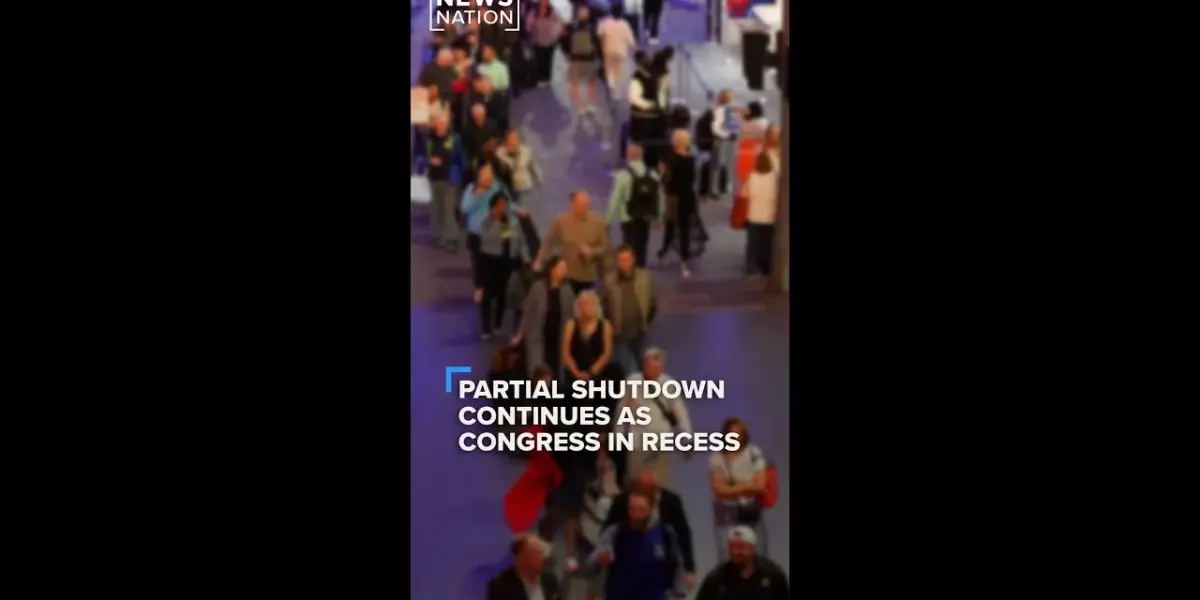
Congress Stalls on Funding Amid Political Games
Lawmakers in Washington are struggling to agree on funding for the Department of Homeland Security (DHS). This disagreement is leading to potential government shutdowns, which could impact essential services. The ongoing debate highlights deep political divisions and a struggle for public opinion as elections approach.
Political Point-Scoring Over Policy
As is common in Washington, politicians are using the funding debate to score political points. Both Democrats and Republicans are trying to convince the American people that the other side is to blame for any potential shutdown. This tactic aims to sway voters ahead of the November elections, but it often distracts from finding actual solutions.
The core issue is whether Congress will pass the necessary funding bills. Without agreement, government agencies, including those vital for national security and border management, could face financial shortfalls. This situation forces essential workers to continue their jobs without guaranteed pay, creating uncertainty and stress.
Voter Priorities Versus Political Tactics
The question remains whether voters will prioritize these shutdown battles when they cast their ballots in November. Many Americans are focused on their own lives and basic needs, like paying bills and supporting their families. They might not see the shutdown fight as a deciding factor in their vote. If they don’t fund their own lives, they face serious consequences, like losing their homes.
The transcript suggests that the national mood may favor Democrats, partly due to the handling of disputes like the one involving the Transportation Security Administration (TSA). However, the overall picture is that no one in Washington seems to emerge looking good from these political stalemates. The inability to pass basic funding bills can make the entire government appear ineffective.
The Broader Impact of Congressional Gridlock
This inability to pass funding bills has wider implications. It can signal instability to international partners and investors. It also raises concerns about the government’s capacity to handle domestic and international challenges effectively. The constant threat of shutdowns creates an environment of uncertainty that can harm public trust and economic confidence.
The current situation is not new. Congress has a history of facing last-minute deals or partial shutdowns over budget disputes. These recurring issues often stem from fundamental disagreements on policy priorities and ideological differences between the parties. Finding common ground requires compromise, which seems scarce in the current political climate.
Economic and National Security Concerns
The DHS funding is critical for national security. It supports agencies responsible for border security, counterterrorism, and disaster response. Any disruption in funding can weaken these capabilities. The transcript mentions that without a clear push or a significant public outcry, like the large percentage call-outs seen previously, there is little incentive for Congress to act quickly.
The political gamesmanship overshadows the real work of governing. While politicians focus on blame, the actual consequences for national security and the provision of public services are often put on hold. This creates a cycle where funding crises become a recurring feature of the political landscape, rather than an exception.
Future Scenarios
One likely scenario is that Congress will eventually pass a stopgap measure or a full funding bill, likely after intense pressure and negotiations. This would prevent an immediate shutdown but would not resolve the underlying issues. Another possibility is a partial shutdown, affecting specific agencies or services, leading to public outcry that forces a resolution.
A more prolonged shutdown, while less likely, could have significant economic and social impacts. This would likely increase public frustration and potentially shift voter sentiment. The outcome will depend on the political will to compromise and the level of public pressure exerted on lawmakers to prioritize governance over political maneuvering.
Global Impact
The inability of the U.S. Congress to pass essential funding bills, even for its own homeland security, sends a message to the rest of the world. It can be seen as a sign of internal division and political dysfunction. This can affect how allies and adversaries view American stability and its ability to act decisively on the global stage. When the U.S. appears divided or unable to manage its own affairs, it can embolden rivals and create uncertainty for allies who rely on American leadership.
Furthermore, disruptions to U.S. government functions can have ripple effects on international cooperation, trade, and diplomacy. While this specific funding debate might seem domestic, the perception of American governance impacts its international standing and influence. A government that struggles to fund its basic operations may be seen as less reliable in its international commitments.
Source: I don’t know if Congress will act on DHS funding: Cillizza | NewsNation (YouTube)

Related Articles
Judge Halts Trump’s Ballroom: Power vs. Public Good
A federal judge has halted Donald Trump's $400 million White House ballroom project, ruling the president is not the owner of the property. The decision contrasts sharply with the economic struggles of average Americans, drawing criticism about misplaced priorities and the limits of executive power.
Judge Blocks Trump’s White House Ballroom Project Permanently
A federal judge has permanently blocked President Trump's $400 million White House ballroom project, ruling it lacked necessary congressional approval. The decision emphasizes Congress's authority over federal property and spending, reaffirming the balance of power in government.

Kristi Noem’s Dog Scandal Unearths Government Corruption
New allegations against Kristi Noem link the controversial death of her dog to potential government corruption. Investigations into her time at DHS suggest a pattern of 'pay-to-play' schemes and misuse of taxpayer funds.