Congress Stalls as Trump’s Iran Deal Crumbles
Republican leaders have adjourned Congress while a potential ceasefire deal with Iran, brokered by Donald Trump, appears to be collapsing. Critics argue Trump agreed to a 10-point plan that significantly weakens U.S. influence and cedes control of vital waterways to Iran, raising concerns about regional stability and America's global standing.

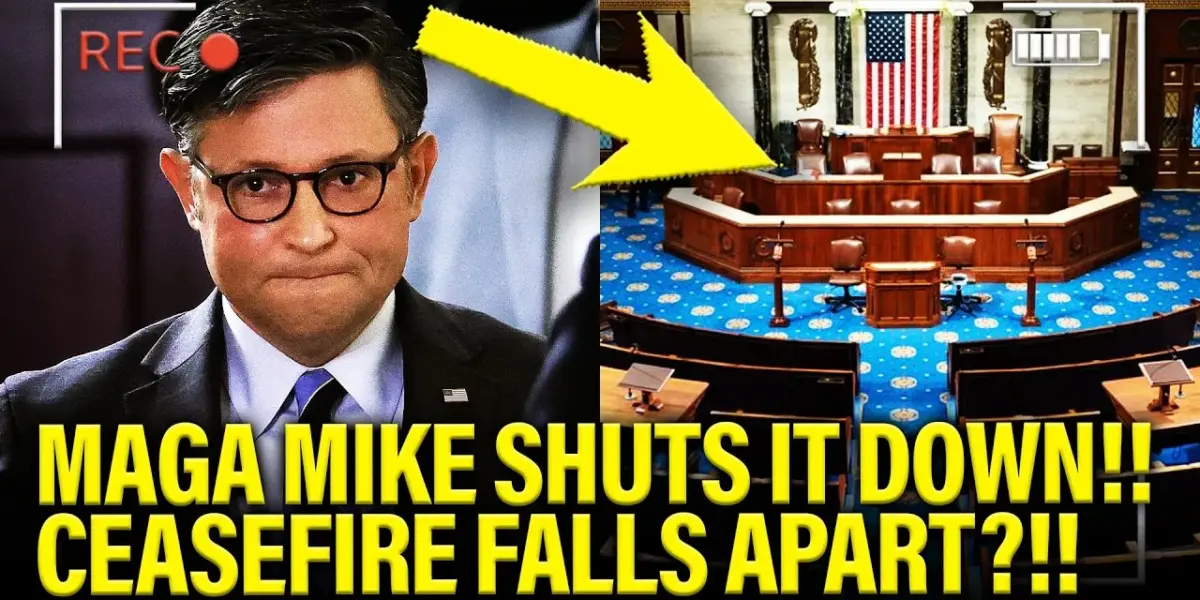
Congress Stalls as Trump’s Iran Deal Crumbles
The U.S. House of Representatives has been adjourned, with Republican leaders like Mike Johnson, often referred to as ‘MAGA Mike,’ choosing not to convene for legislative business. This break comes as a supposed ceasefire agreement with Iran, heavily influenced by former President Donald Trump, appears to be falling apart. Iran’s lead negotiators are reportedly refusing to meet with a U.S. delegation, including Senator J.D. Vance, unless the U.S. agrees to negotiate based on a 10-point framework previously outlined by Trump.
This framework, according to critics, involves major concessions from the U.S. It reportedly includes the withdrawal of all U.S. forces from the Middle East, an end to attacks on Iran and its allies, lifting all sanctions on Iran, unfreezing Iranian leaders’ assets, and paying war reparations to Iran. Furthermore, the plan allegedly allows Iran to control the Strait of Hormuz and charge ships a $2 million transit fee, while remaining silent on nuclear enrichment. This has led to accusations that Trump agreed to terms that amount to a complete surrender of American interests and power in the region.
Trump’s Shifting Stance and Private Doubts
While Trump has publicly stated that oil will flow freely and the Strait of Hormuz is open, he has privately expressed doubts about its full reopening. He reportedly confided in advisors that he believes Iran will never give up control of the vital waterway. This private concern contrasts sharply with his public pronouncements and his reported agreement to Iran’s 10-point plan, which critics argue effectively hands control of the Strait to Iran.
Adding to the confusion, Trump has also suggested that if a deal isn’t reached, the U.S. is prepared to use its best ammunition and weapons effectively. However, Iran’s negotiating team seems unfazed, stating they will not attend meetings in Islamabad until their terms are met, emphasizing their control over the Strait of Hormuz.
Regional Alliances Fraying
The situation is causing concern among traditional U.S. allies in the Middle East. Many Arab nations, who once relied on the U.S. security umbrella, are reportedly considering their own military interventions if Iran continues to control the Strait of Hormuz. This uncertainty could lead to a wider conflict in the Middle East.
The choice of Pakistan as a mediator has also raised eyebrows. Pakistan’s Defense Minister, Khawaja Asif, posted a message stating, “Israel must be restrained for US Iran ceasefire to hold.” This statement, coming from a key figure in the mediation process, suggests a potential bias and complicates efforts to achieve a stable ceasefire, especially as Israel continues military operations, including a recent deadly offensive in Lebanon.
Congressional Republicans Defend Trump, Cede War Powers
Within Congress, some Republican members are defending Trump’s handling of the situation and questioning the need for congressional oversight. For example, Representative Russell Fry argued on Fox News that Congress should not “micromanage a war,” stating that President Trump is handling it well. This stance, according to critics, represents a significant departure from Congress’s constitutional role in declaring war and overseeing military actions.
Other Republican senators, like Marco Rubio and Rick Scott, have focused on criticizing allies and demanding support for U.S. actions, drawing parallels to past U.S. involvement in saving Europe. They argue that allies who benefited from U.S. protection in World War II should now support U.S. initiatives in the Middle East, suggesting a need for NATO to change or for European nations to contribute more financially and militarily.
Concerns Over Loss of U.S. Credibility and Power
Critics, including Democratic Congressman Jake Auchincloss, a former Marine captain, argue that the U.S. is losing significant ground and credibility. Auchincloss described the situation as a “clown show,” where the U.S. appears to be capitulating to Iran’s demands. He highlighted the potential damage to America’s standing on the global stage, especially when compared to its post-World War II role in establishing international order.
“The nation that saved the world from the Nazis and architected the Pax Americana now is the nation that let Iran, Pakistan and China make as the basis of negotiations going forward 10 points that are as you said a complete capitulation of American power in that region.”
The concern is that even if the 10-point plan doesn’t become a final treaty, agreeing to it as a basis for negotiation signals immense weakness. This perception could embolden adversaries and destabilize the region further, marking a historical low point for American foreign policy.
A Call for a New Regional Alliance
Looking ahead, some Democrats are proposing a strategic shift. Congressman Auchincloss suggests building a “Greater Mediterranean Alliance.” This would involve connecting Ukraine through to the Middle East with integrated defense, energy, and logistics infrastructure. Key elements include reinforcing the Abraham Accords with air defense, investing in the India-Middle East economic corridor to bypass the Strait of Hormuz, and strengthening NATO by linking it more closely with Middle Eastern allies.
This approach aims to create a united front against hostility from Russia and Iran, allowing the U.S. to focus on its primary 21st-century challenge: China in the Indo-Pacific. The strategy seeks to rebuild U.S. influence by fostering deeper cooperation and creating alternative trade and security routes.
Challenging Authoritarianism and Offering Alternatives
Auchincloss also emphasizes the importance of Democrats offering a clear, positive agenda to counter what he calls “authoritarianism” and “madness” in Washington. He uses his Substack, “Simple but Not Easy,” to present democratic alternatives on issues ranging from immigration and housing to healthcare and foreign policy. His goal is to provide a vision for the future that contrasts with the current political turmoil and offers concrete solutions.
By engaging directly with audiences, even on platforms like Fox News, Auchincloss aims to challenge the prevailing narratives and build support for a more cohesive and principled approach to national security and foreign policy. He believes that by driving wedges within the MAGA coalition and highlighting policy inconsistencies, Democrats can regain public trust and effectively counter what he sees as dangerous unilateral actions.
Source: MAGA Mike SHUTS DOWN House as CEASEFIRE COLLAPSES!!! (YouTube)

Related Articles

Iran Talks Stall: US Threatens Military Action, Cuba Awaits Fate
High-stakes U.S.-Iran talks in Pakistan face uncertainty as Iran demands a Lebanon ceasefire and sanctions relief, while President Trump threatens military action. Cuba's President vows to defend the revolution, expressing fears of becoming a U.S. "conquest" amidst regional tensions.


Alex Jones Accuses Trump of Demonic Possession
Alex Jones has publicly stated that former President Donald Trump is "possessed by demonic influences" and acting like a "supervillain." This marks a significant break from Jones's previous strong support for Trump. The accusations also involve claims about Trump's wife and the Jeffrey Epstein case.

UK Offers Iran Negotiation Insight to Aid Trump’s Stalled Deal
The UK is offering its diplomatic expertise to the US to help President Trump navigate complex negotiations with Iran. As talks loom amidst uncertainty and strained UK-US relations, London believes its experience can aid in achieving a settlement and reopening the Strait of Hormuz. Discussions also highlight the UK's defense readiness and its role in regional stability.