Congress Stalls Amidst War Talk and Budget Battles
Congress has adjourned again, leaving critical issues unresolved amidst escalating tensions in the Middle East and a budget standoff. Lawmakers are divided on funding priorities, with debates over TSA, ICE, and military expenditures overshadowing legislative business. The situation highlights deep partisan rifts and raises concerns about national security and the functioning of government.

Congress Stalls Amidst War Talk and Budget Battles
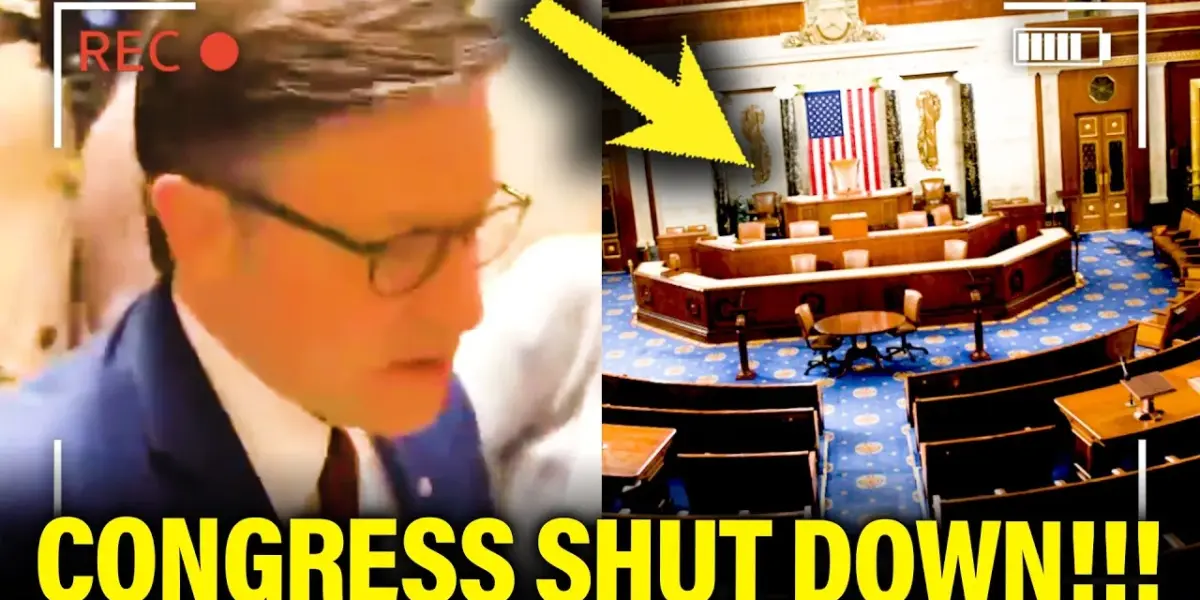
The House of Representatives has been adjourned, a move that has drawn sharp criticism. Speaker Mike Johnson, often referred to as ‘MAGA Mike,’ has adjourned the House multiple times recently. This means lawmakers are not working on pressing issues, leaving important decisions in limbo.
The latest adjournment came after significant testimony from intelligence officials regarding the conflict in Iran. These officials reportedly sought to distance themselves from former President Donald Trump’s actions concerning the war. Following this, the House calendar for Monday, March 23rd, was left blank, with no legislative business scheduled.
Budget Impasse Fuels Congressional Shutdowns
A major sticking point in funding has been the Transportation Security Administration (TSA) and Immigration and Customs Enforcement (ICE). MAGA Republicans have refused to fund the TSA unless their demands regarding ICE are met. Specifically, they insist that ICE agents should be allowed to wear masks and operate near polling locations during elections, actions that Democrats argue could intimidate voters.
Democrats have proposed bills to fund the TSA, but these have been rejected by MAGA Republicans. They argue that the TSA cannot be funded alone, leading to a deadlock. This situation has led to concerns about TSA agents not being paid, with reports suggesting significant absenteeism at some airports. This has resulted in extremely long wait times for travelers, creating significant disruption for the public.
Escalation Fears and Domestic Strife
Adding to the tension, former President Donald Trump has been accused of preparing to send thousands of troops to the Persian Gulf, potentially to invade Iran’s Car Islands. This potential military action has raised alarms, with many questioning the necessity and legality of such a move. The phrase “The Marines are not going there just to be decorations” has been quoted, highlighting the seriousness of the potential deployment.
The situation is further complicated by the perceived rhetoric surrounding the conflict. Some lawmakers, like Senator Lindsey Graham, have been criticized for what appears to be an eagerness for military engagement. Critics argue that such language, which draws parallels to past conflicts like the battle of Iwo Jima, shows a disregard for American lives and an unhealthy fixation on war.
Internal Republican Division on Foreign Policy
Within the Republican party itself, there are divisions regarding foreign policy and the approach to the conflict. Some MAGA Republicans, including Congresswoman Lauren Boebert and Congresswoman Marjorie Taylor Greene, have voiced strong opposition to further funding for the war. They argue for an “America First” approach, prioritizing domestic needs over foreign military spending.
Concerns have also been raised about the constitutional implications of such military actions. Some Republicans believe that any deployment of ground troops requires congressional authorization, and that proceeding without it constitutes a constitutional crisis. This highlights a fundamental disagreement about the separation of powers and the president’s authority in matters of war.
Trump’s Social Media and Policy Demands
Former President Trump has used his social media platform to articulate his stance on these issues. His posts have linked funding for essential services like the TSA to unrelated social issues, such as transgender rights and what he terms “genital mutilation.” This approach has been widely criticized as divisive and an attempt to use public services as political leverage.
Trump’s demands appear to be tied to a “Save America Act,” which he claims should be passed before any deal is made. This act reportedly focuses on preventing what he describes as “transgender mutilization of our precious children.” The inclusion of such social issues in budget negotiations has been seen by many as a distraction from critical national security and public service needs.
Criticism of War Funding and Priorities
Lawmakers like Congresswoman Marjorie Taylor Greene have been vocal about the financial implications of ongoing conflicts. She stated, “I am so tired of spending money elsewhere. I I am tired of the industrial war complex getting all of our hard earned tax dollars.” She has called for prioritizing funding for domestic needs, such as securing the TSA, ICE, and Border Patrol, before allocating billions to foreign wars.
The debate over war funding has also drawn attention to the economic consequences. Concerns have been raised about potential inflation and disruptions to global food supplies, especially if conflicts escalate. The potential for energy lockdowns in the Middle East and Asia could have far-reaching effects on the global economy, impacting Americans through rising prices.
Historical Context and Economic Policies
The current situation echoes past debates about foreign policy and economic sanctions. Critics point to the Obama administration’s deal with Iran, which involved $1.4 billion in exchange for Iran halting its nuclear program. This deal, overseen by international agencies, was seen by supporters as a way to prevent Iran from developing nuclear weapons.
However, Donald Trump withdrew the U.S. from that agreement, leading to the reimposition of sanctions. The transcript suggests that these sanctions have allowed Iran to earn billions from oil sales, potentially funding its military activities. This has led to accusations that Trump’s policies have inadvertently provided resources to a nation now in conflict with the U.S., a stark contrast to the criticism leveled against Obama’s deal.
Why This Matters
The ongoing legislative gridlock and the looming threat of military escalation have significant implications for national security, the economy, and the daily lives of Americans. When Congress is unable to function, essential services can suffer, and critical decisions about foreign policy are made in a vacuum. The debate over funding priorities highlights a deep divide between those who advocate for prioritizing domestic needs and those who support robust military intervention abroad.
The use of budget negotiations to push social agendas, as seen in former President Trump’s demands, further complicates matters. It suggests a willingness to disrupt government functions and public services to achieve political goals. This approach can erode public trust and make it harder to address complex national challenges.
Trends and Future Outlook
The current political climate suggests that legislative stalemates and partisan division are likely to continue. The intertwining of foreign policy debates with domestic political strategies, particularly around election cycles, creates a volatile environment. The effectiveness of congressional oversight in matters of war and national security remains a key concern.
Looking ahead, voters will likely face choices that reflect these competing priorities. The ability of lawmakers to find common ground on essential funding and to engage in responsible foreign policy will be crucial. The long-term consequences of current decisions, both domestically and internationally, will shape the future geopolitical landscape and the American economy.
Source: MAGA Mike SHUTS DOWN Congress as WAR SPIRALS!!! (YouTube)

Related Articles


Trump’s Iran War Fails to Win Public Support
New polls reveal a significant drop in public approval for Donald Trump's handling of Iran, with 64% disapproval. This low starting point contrasts sharply with past conflicts and suggests potential challenges ahead for the administration.


Senate Funds DHS, Leaving House to Decide Border Fight
The U.S. Senate has agreed to fund most of the Department of Homeland Security, providing salaries for TSA and FEMA. However, funding for ICE and Border Patrol was left out. The House of Representatives now faces the decision, with disagreements over border reforms potentially causing further delays.
Trump Blunders Into Iran Conflict, Lacks Strategy
Journalist David Cay Johnston argues that President Trump lacks a clear strategy in dealing with Iran, driven by falling poll numbers and personal ambition. Johnston warns of potential disaster, citing Trump's inexperience and the dangerous influence of Christian nationalism on U.S. policy.