Congress Returns: Iran War Powers, DHS Funding, Bondi Probe, Swallwell Scandal
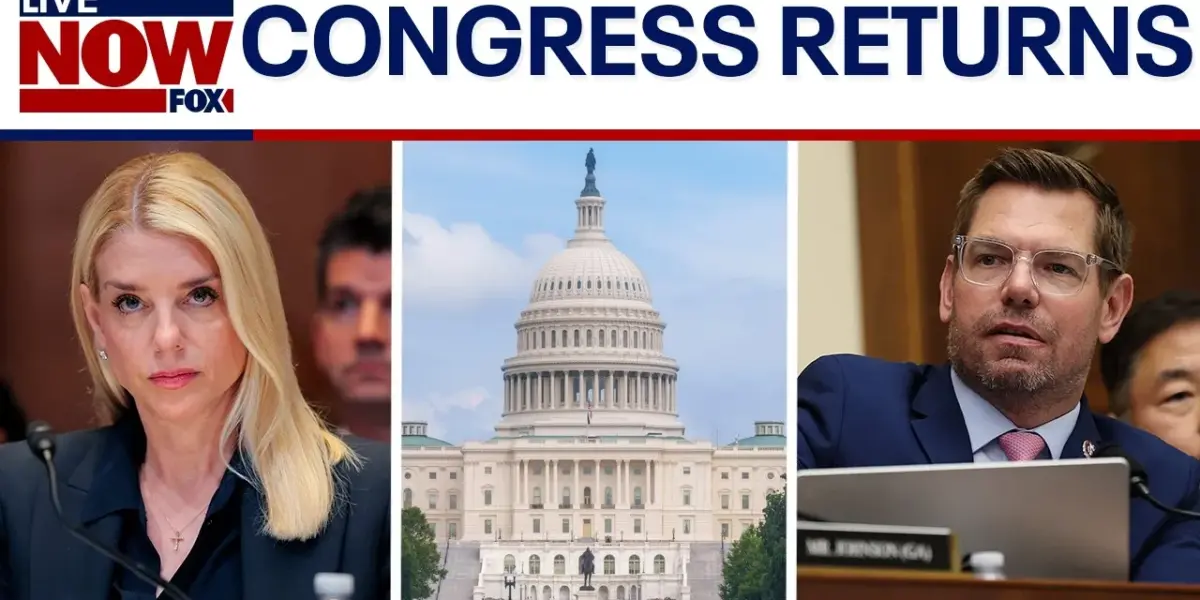
Congress returns to a packed schedule with debates on war powers for the Iran conflict, stalled DHS funding, and former AG Pam Bondi's refusal to testify. Meanwhile, Representative Eric Swalwell faces potential expulsion amid serious allegations, and a crucial FISA reauthorization vote is on the horizon.

Congress Faces Busy Week with Key Votes and Investigations
Lawmakers are returning to Capitol Hill this week after a two-week recess, facing a packed agenda that includes critical votes on war powers, funding for the Department of Homeland Security, and fallout from a deposition controversy and a prominent congressman’s alleged misconduct.
Debate Intensifies Over War Powers Resolution for Iran Conflict
A central focus this week will be votes in both the House and Senate on a War Powers Resolution concerning the conflict in Iran. While previous attempts saw limited bipartisan support, recent statements from President Trump have caused unease among some Republicans, potentially shifting the vote count. Democrats are reportedly eager to have Republicans officially on record regarding the war.
The 60-day deadline for the resolution looms, with the President holding the power to extend it for another 90 days. This approaching deadline adds pressure, especially as rising gas prices and the war’s growing unpopularity are becoming significant concerns for Republicans ahead of upcoming midterm elections. While a War Powers Resolution doesn’t carry the force of law due to the President’s veto power, a bipartisan vote would send a strong message about congressional sentiment.
“It’s likely that we could see some more support for that. And Democrats are eager to get Republicans on the record about this war.”
Billions in Funding for Iran Conflict Sparks Domestic Cut Concerns
The Pentagon is preparing to request billions of dollars in supplemental funding for the ongoing conflict. Democrats have voiced strong opposition to this, particularly concerning transparency and taxpayer cost. To bypass expected Democratic opposition, Republican leaders are considering using a reconciliation process, which allows for passage with a simple majority by party line vote.
However, this reconciliation approach requires budget offsets, meaning domestic program cuts would be necessary to fund the war. Axios has reported that potential cuts to essential programs like Medicaid and SNAP are being considered. Democrats have already begun to criticize this strategy, framing it as Republicans cutting vital domestic services to pay for overseas conflicts. This presents a difficult political challenge for Republicans, who would rather focus on their economic agenda.
The initial funding request was reportedly around $200 billion, though the final figure may be slightly less. The formal request is expected in the coming weeks, but significant domestic cuts would be required if this path is chosen.
DHS Funding Stalemate Continues Amidst Leadership Change
The Department of Homeland Security (DHS) remains in a state of partial shutdown for the eighth week, with no immediate resolution in sight. House Speaker Mike Johnson recently proposed a plan to fund the entire department except for Immigration and Customs Enforcement (ICE) and Border Patrol. This proposal marks a reversal from Johnson’s earlier stance, but it has been presented as the only viable option due to Democrats’ refusal to fund ICE without major reforms.
This approach has frustrated many House Republicans who want to see funding for ICE and Customs and Border Protection (CBP). These agencies are expected to be funded through the same reconciliation process as the Iran funding, which will take several weeks. Consequently, a vote to fully reopen DHS this week is considered unlikely.
Pam Bondi Declines Subpoena in Epstein Files Investigation
Former Attorney General Pam Bondi has stated she will not comply with a subpoena to testify before the House Oversight Government Reform Committee this week. The committee is investigating the handling of the Jeffrey Epstein files. Bondi’s argument for non-compliance is that the subpoena was issued to her as Attorney General, a position she no longer holds.
The subpoena followed bipartisan frustration with the Department of Justice’s handling of the Epstein files’ release, including allegations of millions of missing documents. The subpoena was initially offered by Republican Representative Nancy Mace. House Oversight Chairman James Comer plans to contact Bondi’s personal attorney to arrange a deposition. If Bondi continues to refuse, the committee could pursue holding her in contempt of Congress, a move that may gain support from some Republicans, including Mace.
Bondi previously appeared before the committee about a month ago, but Democrats reportedly walked out, stating she was not answering their questions and demanding she testify under oath. The committee plans to continue its investigation with further depositions, including those of Howard Lutnik and Bill Gates, and has already interviewed numerous witnesses.
“It’s clear that Republicans and Democrats still want to hear from her. It’s it’s not clear exactly how she’s going to handle that request, but one thing they could do is move to hold Bondi in contempt of Congress.”
Eric Swalwell Faces Expulsion Resolution Amid Allegations
The week could also see multiple expulsion votes, with Representative Eric Swalwell at the center of a growing scandal. Following a report detailing allegations of sexual assault by a former staffer, multiple California Democrats have called for Swalwell to end his gubernatorial campaign. Swalwell has denied the allegations and vowed to provide an update soon.
Representative Anna Paulina Luna announced she will introduce a privileged resolution to force a vote on Swalwell’s expulsion this week. While expulsion requires a two-thirds majority, which makes it a long shot, there is support from both parties. This movement could potentially lead to up to four expulsion resolutions being introduced this week, targeting two Democrats and two Republicans facing various allegations, including infidelity, financial misconduct, and potential sexual harassment.
The situation has significantly impacted Swalwell’s California gubernatorial bid, with many of his Democratic colleagues, including Congressman Adam Schiff, withdrawing their endorsements. Schiff stated he was “deeply distressed” by the allegations and believed the woman’s story should be taken seriously. Swalwell has lost virtually all support from his Democratic colleagues, making his candidacy appear untenable.
FISA Reauthorization Vote Looms Amidst Ideological Opposition
Another significant vote expected this week is the reauthorization of Section 702 of the Foreign Intelligence Surveillance Act (FISA). This vote is anticipated to be contentious, with members from both parties holding strong ideological opposition to FISA. Additionally, a group of House Republicans aims to attach their signature election bill, the SAVE Act, to the FISA reauthorization. However, the SAVE Act has struggled to gain sufficient votes in the Senate, and its inclusion could jeopardize the FISA extension. Neither Speaker Johnson nor President Trump support this linkage, preferring a clean extension before the April 20th deadline.
What to Watch Next
As Congress reconvenes, the coming days will be crucial in determining the fate of war powers resolutions, DHS funding, and the outcomes of ongoing investigations. The potential expulsion votes and the handling of the Pam Bondi subpoena will also be closely watched. Furthermore, the outcome of the FISA reauthorization vote will have significant implications for national security and surveillance powers.
Source: DHS funding, Bondi House deposition, Swalwell scandal take center stage as Congress returns (YouTube)

Related Articles


Rep. Walkinshaw Questions First Lady’s Epstein Remarks, Demands Action
Congressman James Walkinshaw criticized the First Lady's remarks on Jeffrey Epstein, stating survivors need action, not just testimony. He called for the release of files and prosecution of those involved. The discussion also covered potential contempt charges for Pam Bondi and the use of the 25th Amendment for President Trump.


Rep. Jayapal Slams US Oil Blockade on Cuba as ‘Outrageous’
Congresswoman Pramila Jayapal has strongly criticized the U.S. oil blockade on Cuba as 'outrageous' and a humanitarian crisis, advocating for direct negotiations over sanctions. She also called for accountability regarding allegations against Congressman Eric Swalwell and expressed support for a robust Democratic primary in 2028.
Jayapal Backs Expulsion for Swalwell, Gonzales Amid Abuse Allegations
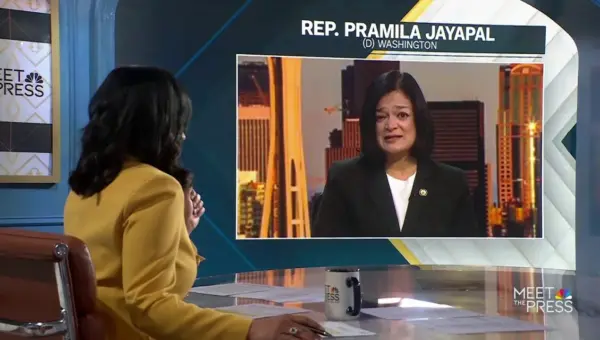
Representative Pramila Jayapal announced she would vote to expel lawmakers Eric Swalwell and Robert Menendez, calling the allegations of abuse and misconduct a non-partisan issue. Jayapal urged Swalwell to withdraw from his gubernatorial race, emphasizing the need to believe and support survivors of abuse. Her stance highlights a push for greater accountability for those in positions of power.