Comedian’s Fake ICE Tip Line Exposes Disturbing Public Attitudes
Comedian Ben Palmer's fake ICE tip line has exposed concerning public attitudes towards undocumented immigrants, revealing callers willing to report families based on flimsy suspicions. The project, designed as social commentary, highlights the emotional toll and ethical questions surrounding immigration enforcement.

Comedian’s Fake ICE Tip Line Exposes Disturbing Public Attitudes
In a move that has sparked widespread discussion and revealed uncomfortable truths about public sentiment, comedian Ben Palmer has created a fake Immigration and Customs Enforcement (ICE) tip line, attracting callers with varying motivations, some of whom exhibit alarming attitudes towards undocumented immigrants and their families. The project, born from Palmer’s exploration of parody websites and social commentary, has shed light on the complex and often divisive nature of immigration enforcement in the United States.
The Genesis of a Parody Hotline
Ben Palmer, known for his prank-style comedy, developed the fake ICE tip line as a way to “look behind the curtain of the crackdown.” The idea stemmed from his previous work with parody websites, including one impersonating ChatGPT. “One thing kind of leads to another,” Palmer explained in a recent interview. “Always just looking up to see what’s going on in the news, what the current state of affairs are.” The timing of the website’s launch, shortly after an election, tapped into the prevailing national conversation surrounding immigration policy.
A Kindergarten Call and Cognitive Dissonance
One particularly striking conversation highlighted by Palmer involved a woman who called to report a family she suspected of being undocumented. The caller, a teacher, expressed concern that the parents, who she identified as being from Honduras and El Salvador, were “taking up resources from our county.” Her suspicion was based on the fact that their child, born in New York, was a kindergarten student at her school. Palmer’s dialogue with the caller revealed a disturbing willingness to deport the parents, leaving their American-born child behind.
“So, we’re looking to uh deport the parents and leave the child,” Palmer recounted the caller saying. When pressed, she elaborated, “I’m just I just think it’s odd, you know? It’s just very odd… I mean, they seem like nice people or whatever, but I looked them up in our files and I was like, ‘Oh, he she was born in Honduras and he’s born in El Salvador.’ So, right there, it’s like, ‘Okay, maybe I’m on the right path.'”
The caller’s casual acceptance of a policy that would separate a family, and her justification based on the child’s age and birthplace, deeply affected Palmer. “It kind of makes her uncomfortable once she has to like sit with the, you know, the outcome of what would happen if me, who she thinks is, you know, an actual agent would go ahead and, you know, deport those people and what that would look like,” Palmer observed. “But to her, it was like, oh, I’m just going to call, make this call on the phone and then that’s it. I can hang up and let the the ICE or whoever take it from there and I don’t have to think about it.”
Palmer later called the woman back to inform her that the parents were, in fact, in the U.S. legally, a revelation that seemed to unsettle her. When Palmer suggested that the child could have been a threat to national security, the caller deemed him “rude,” a reaction Palmer contrasted with the far greater offense of attempting to deport parents and separate a family.
Broader Implications and Public Sentiment
Palmer’s project touches upon broader societal issues and historical parallels. He noted that many callers expressed a sense of duty, believing they were “just doing what I thought I was supposed to do” and “just exercising my right as an American.” However, upon deeper reflection prompted by Palmer’s questioning, some experienced what he described as “cognitive dissonance.” He found the experience to be “overwhelmingly sad” rather than humorous, despite his comedic intentions.
The U.S. immigration policy under the Trump administration has been a significant focus, with a February poll indicating that 60% of Americans disapprove of ICE’s actions, though support tends to align with partisan lines, with a majority of Republicans backing the agency. The existence of such a tip line, even a fake one, underscores the public’s role in reporting suspected immigration violations, a function ICE actively solicits.
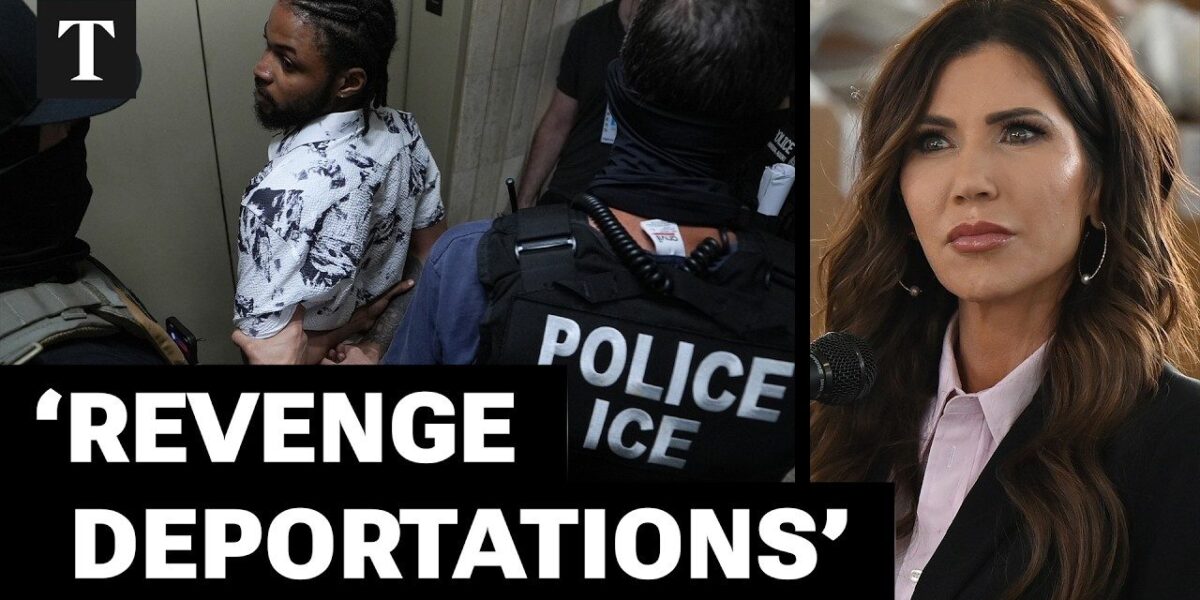
Palmer also encountered callers seeking to use the fake tip line for personal vendettas, such as reporting ex-partners. He consciously avoided engaging with these, stating, “A revenge deportation is not something I’m going to look into.”
Comedy as Social Commentary
While Palmer doesn’t explicitly style himself as a political comedian, he acknowledges that his work often veers into “social commentary.” He explained, “I always end up doing stuff that’s u somewhat political, more social commentary stuff. Uh, I try to stay out of it, but I always end up I end up back in it. Sometimes on accident.” He finds that his pranks need “a little bit of substance to them” to avoid feeling “silly or stupid.”
Palmer believes that the current polarized political climate in the U.S. makes it a fertile ground for comedy, offering opportunities for comedians to take “regular comedy” and also “take that lane where you go, I’m going to be a political comedian.” He clarified that he never claimed to be an ICE agent, often responding with a nonsensical mention of “ISIS” to deflect direct questions and keep callers engaged in his parody.
The Uncomfortable Truth
The fake ICE tip line, while a comedic premise, has inadvertently served as a stark illustration of how easily individuals can become complicit in policies that may be perceived as cruel. The willingness of some callers to report neighbors or acquaintances based on flimsy evidence, and their discomfort only when confronted with the human consequences of their actions, raises profound questions about civic duty, prejudice, and the normalization of harsh enforcement measures. Palmer’s project compels a re-examination of the human condition and the ease with which individuals can rationalize actions that, upon closer inspection, reveal a disturbing lack of empathy.
What’s Next
Ben Palmer’s work highlights the ongoing societal debate surrounding immigration and the role of ordinary citizens in enforcement. As immigration policies continue to be a focal point of political discourse, it remains to be seen how public attitudes will evolve and whether such comedic interventions will foster greater empathy or further entrench divisions. The project serves as a potent reminder of the human impact behind policy decisions and the importance of critical self-reflection in an increasingly complex world.
Source: Fake ICE Tipline: Comedian Reveals Shocking Conversations from | Ben Palmer (YouTube)

Related Articles


DHS Website Listing Immigrant Crimes Called Out for Inaccuracies
A DHS website showcasing "Worst of the Worst" immigrants has been exposed by CNN for listing fabricated crimes, including one individual accused of cannibalism. The department initially blamed a 'glitch' but faces skepticism and accusations of defamation.


Trump Links Immigrant Deaths to Poll Woes at ‘Angel Families’ Event
Donald Trump reportedly linked the pain of "angel families," whose loved ones were killed by undocumented immigrants, to his own political frustrations at a recent event. He allegedly criticized "fake polls" and suggested his current challenges have made a potential future term more powerful than a second term would have been.


ICE Acquires Military-Grade Weapons Amidst Spending Surge
A new report reveals that ICE and CBP have spent at least $144 million on military-grade weapons and ammunition in their first year under the Trump administration. Concerns are mounting over the lack of adequate training for agents handling this advanced arsenal.