CNN Overhauls Book Promotion Policy Following Jake Tapper’s Biden Book Controversy
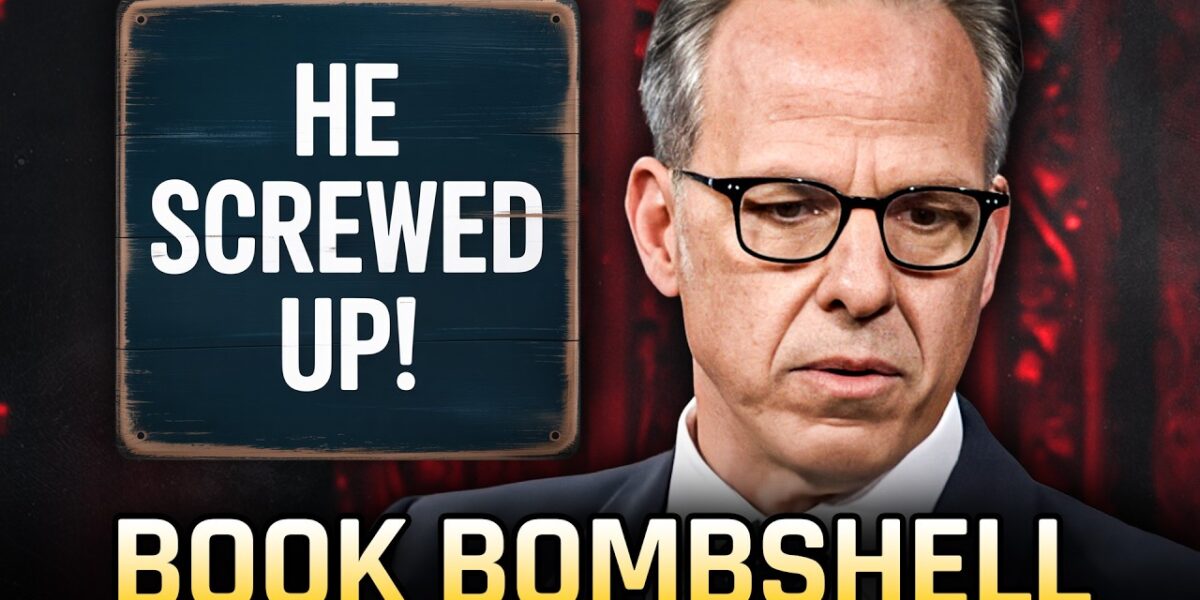
CNN has reportedly enacted strict new rules on how its anchors can promote their books on air, a significant policy shift following widespread criticism of Jake Tapper's extensive promotion of his book on President Biden's cognitive decline. The controversy, which saw Tapper's segments labeled as 'infomercials' and his book's topic 'weaponized' by conservatives, prompted the network to act ten months after the initial backlash. The new guidelines aim to reinforce journalistic integrity by limiting promotion to a single, pre-approved mention on release day, and prohibiting staff involvement in such endeavors.

CNN Overhauls Book Promotion Policy Following Jake Tapper’s Biden Book Controversy
In a significant move reflecting heightened scrutiny over journalistic ethics and potential conflicts of interest, CNN has reportedly implemented stringent new rules governing how its on-air talent can promote their personal literary works. The policy overhaul comes approximately ten months after a considerable public and internal backlash surrounding prominent anchor Jake Tapper’s book, which focused on President Joe Biden’s cognitive decline. Critics argued that Tapper’s extensive on-air promotion of the book verged on an ‘infomercial,’ particularly given its timing and perceived political implications.
The controversy ignited last May with the release of Tapper’s book, which delved into questions surrounding then-candidate Biden’s mental acuity. The timing of its release proved particularly contentious, coinciding with a period where former President Donald Trump was also facing public scrutiny and commentary regarding his own physical and mental health. This juxtaposition led to accusations of selective focus and a perceived double standard, fueling a protracted public debate that CNN now appears eager to address through its revised internal guidelines.
The Genesis of the Controversy: Tapper’s Book and its Timely Release
Jake Tapper, a highly respected figure in broadcast journalism, released his book focusing on President Biden’s cognitive abilities in May of the previous year. The subject matter itself is not inherently outside the purview of political journalism; the health and fitness of a nation’s leader are legitimate areas of public interest and media scrutiny. However, the context and timing of Tapper’s work, along with its subsequent promotion, quickly became a lightning rod for criticism.
At the time of the book’s release, the political landscape was already charged with discussions surrounding the health of both leading presidential figures. While Tapper’s book centered on Biden, many observed that questions about mental and physical fitness were also frequently raised in relation to former President Donald Trump. Critics pointed out a perceived asymmetry, where Tapper’s project seemed to give disproportionate attention to one side of the political spectrum on a highly sensitive issue. This created an immediate perception of bias, regardless of the book’s actual content or Tapper’s journalistic intentions.
The scrutiny of presidential health has a long and often contentious history in American politics. From Woodrow Wilson’s debilitating stroke concealed from the public, to Franklin D. Roosevelt’s polio diagnosis, and later Ronald Reagan’s age and eventual Alzheimer’s diagnosis, the physical and mental state of the commander-in-chief has always been a delicate topic. Journalists grapple with the ethical imperative to inform the public about a leader’s capacity to govern, while avoiding speculative or politically motivated attacks. The challenge lies in distinguishing legitimate health reporting, often requiring access to medical records and expert opinions, from partisan narratives designed to undermine a political opponent. In Tapper’s case, the public discussion surrounding his book quickly veered into the latter, becoming a tool in the broader political discourse rather than a purely journalistic endeavor.
The perception that the book’s premise had become ‘no longer relevant whatsoever’ for general public discourse, but continued to be ‘weaponized’ by conservatives, further exacerbated the issue. This suggests that the book, irrespective of its original journalistic merit, had been co-opted into a partisan talking point, diminishing its value as an objective contribution to public understanding and instead fueling existing political divisions. For a news organization striving for impartiality, such an outcome is deeply problematic, as it can erode trust and reinforce perceptions of media bias.
The ‘Infomercial’ Effect: Blurring Lines and Ethical Dilemmas
A central tenet of the criticism leveled against Jake Tapper was the extensive airtime he dedicated to promoting his book on his own program. The transcript explicitly labels this as having ‘become an infomercial,’ a term typically reserved for lengthy, often repetitive advertisements disguised as programming. This characterization highlights a critical ethical concern in broadcast journalism: the blurring of lines between news content and commercial promotion.
Journalists, especially those in prominent anchor roles, wield significant influence and are entrusted with upholding the integrity of the news. When a host uses their platform, traditionally reserved for objective reporting and analysis, to promote a personal commercial venture—even one related to their professional field—it raises immediate questions about conflict of interest. The primary mission of a news program is to inform the public, not to serve as a marketing vehicle for its presenters’ ancillary projects.
The ethical guidelines for journalists often emphasize the importance of avoiding situations that could compromise their objectivity or create the appearance of a conflict of interest. While it is common for journalists to author books, the manner and extent of their promotion within their own news programming are crucial. Excessive self-promotion can lead to several undesirable outcomes:
- Erosion of Trust: Viewers may perceive the journalist as prioritizing personal financial gain over journalistic duty, leading to a decline in trust in both the individual and the news organization.
- Perceived Bias: If a book touches on politically sensitive topics, its promotion on a news program can be seen as an endorsement of the book’s specific narrative or conclusions, potentially biasing the program’s overall coverage.
- Diminished Editorial Independence: The editorial decisions regarding what news to cover or how to frame discussions might be subtly influenced by the need to create opportunities for book promotion, rather than purely by news value.
- Distraction from Core Mission: Time spent on book promotion is time not spent on reporting, analysis, or interviewing, detracting from the program’s core journalistic mission.
Historically, news organizations have grappled with how to allow their talent to pursue outside projects while maintaining journalistic standards. Some networks have strict policies against on-air promotion, while others allow limited, pre-approved mentions. The accusation of Tapper’s segments becoming an ‘infomercial’ suggests that CNN’s previous policy, or its enforcement, was insufficient to prevent this perception, thereby necessitating the drastic rule change.
CNN’s Delayed Response: A Question of Intent and Impact
Perhaps one of the most perplexing aspects of this entire saga is the significant delay in CNN’s response. The transcript explicitly notes that Tapper’s book was released last May, and he was promoting it through May and June. Yet, the rule change came a full ten months later. This protracted timeline raises critical questions about CNN’s internal oversight mechanisms, its responsiveness to public criticism, and the underlying motivations for its eventual policy shift.
Why did CNN wait so long to act? The transcript suggests that ‘the controversy didn’t immediately start. It took a bit for it to really get going.’ This implies a reactive rather than proactive approach, where the network only felt compelled to intervene once the ‘whole thing blew up in your face’ and the ‘backlash that is still continuing to this day’ became too significant to ignore. If this interpretation is accurate, it paints a picture of a news organization driven by crisis management rather than a consistent commitment to ethical vigilance.
A delay of ten months in addressing a perceived ethical lapse can have several detrimental effects:
- Perception of Indifference: It can convey an impression that the network is either unaware of, or indifferent to, public and internal concerns until they reach a critical mass.
- Undermining Credibility: If a problematic practice is allowed to continue for an extended period, it can significantly undermine the network’s credibility and its stated commitment to journalistic standards.
- Amplification of Criticism: The longer an issue festers, the more ammunition it provides to critics, allowing the controversy to grow and solidify in the public consciousness.
- Internal Discontent: Other journalists and staffers within the organization might become disillusioned if they perceive a double standard or a lack of swift action on ethical matters.
The decision to act only after the ‘backlash’ had firmly taken root suggests that the primary driver for the rule change was damage control. While rectifying a problematic policy is always a positive step, the timing of such an intervention can influence how it is perceived. A proactive change, implemented swiftly in response to initial feedback, might have been viewed as a sign of strong ethical leadership. A delayed response, however, risks being seen as merely capitulating to public pressure, rather than a genuine commitment to improving journalistic practices. This distinction is crucial for maintaining public trust in an era where media organizations are constantly under scrutiny.
The New Rules: A Shift in Editorial Policy and Its Implications
The new rules implemented by CNN are notably stringent, marking a significant departure from previous practices. According to the transcript, hosts are now permitted to promote their books only ‘one time with preapproval on the day the book comes out.’ Furthermore, ‘staffers, anybody working at CNN, you’re no longer allowed to share anything anywhere promoting a host book.’ These directives represent a clear attempt to curtail the kind of extensive, ongoing promotion that characterized the Jake Tapper incident.
The ‘one time with preapproval on the day the book comes out’ clause is particularly telling. It acknowledges that journalists may author books as part of their intellectual and professional contributions, and that a brief, sanctioned mention can be acceptable. However, it severely limits the scope, ensuring that the primary focus remains on news dissemination rather than personal marketing. The requirement for ‘preapproval’ adds an extra layer of editorial oversight, ensuring that even this limited promotion aligns with the network’s broader editorial guidelines and avoids potential conflicts or controversies.
The prohibition on staffers sharing promotional material for host books is equally significant. It aims to prevent a network-wide ‘echo chamber’ effect, where internal enthusiasm for a colleague’s work inadvertently transforms into an unofficial promotional campaign. This rule underscores a commitment to maintaining a clear distinction between the network’s official editorial content and the personal ventures of its employees, thereby safeguarding against the perception of institutional endorsement for individual projects.
This policy shift at CNN reflects a broader industry conversation about the commercial activities of prominent journalists. While authorship can enhance a journalist’s profile and expertise, it also creates potential pitfalls. The new rules aim to strike a balance: allowing journalists to pursue intellectual endeavors while rigorously protecting the network’s journalistic integrity. However, such strict rules also spark debate. Some might argue that they overly restrict journalists’ ability to engage with the public through alternative formats, or that they punish all talent for the actions of a few. Others might contend that these measures are essential to rebuild and maintain public trust in a highly polarized and skeptical media environment.
The implications of these new rules extend beyond CNN. Other news organizations, facing similar pressures and ethical dilemmas, may observe CNN’s experience and consider adopting comparable policies. This could lead to a broader industry standard where the commercial activities of journalists are more tightly regulated, signaling a renewed emphasis on the core mission of news reporting free from perceived commercial influence.
Presidential Health and Media Scrutiny: A Broader Perspective
The controversy surrounding Jake Tapper’s book also brings into sharp focus the complex role of media in scrutinizing the health of political leaders. As noted earlier, the physical and mental fitness of a president or presidential candidate is a legitimate subject of public concern. The leader of a nation holds immense power and responsibility, and their capacity to perform these duties effectively is paramount. Therefore, journalists have a duty to report on any credible information regarding a leader’s health that could impact their governance.
However, this area of reporting is fraught with challenges. Firstly, medical information is inherently private, and leaders often have a vested interest in controlling the narrative around their health, especially if it could be perceived as a weakness. Secondly, health concerns can be easily ‘weaponized’ by political opponents, transforming legitimate journalistic inquiry into partisan attacks. This was precisely the concern raised in the transcript regarding the use of Tapper’s book by conservatives.
For journalists, the ethical tightrope involves:
- Verifiable Information: Relying on verifiable medical reports, statements from qualified medical professionals, and observable public behavior, rather than speculation or rumor.
- Context and Nuance: Presenting health information within its proper context, avoiding sensationalism, and providing a nuanced understanding of its potential implications.
- Fairness and Balance: Applying consistent standards of scrutiny to all political figures, regardless of their party affiliation, to avoid perceptions of bias. The criticism that Tapper’s book focused on Biden while ‘ignoring Donald Trump’s mental health’ underscores this point.
- Distinguishing Fact from Opinion: Clearly separating factual reporting from analysis or opinion, especially when discussing complex medical or psychological topics.
The current political climate, characterized by deep polarization and a high degree of distrust in institutions, makes this task even more challenging. Public figures and their allies are quick to label any critical health reporting as politically motivated, while opponents are eager to amplify any perceived weakness. In this environment, news organizations must exercise extreme caution and demonstrate unwavering commitment to objective, evidence-based reporting to maintain credibility. The Tapper incident serves as a stark reminder of how easily these distinctions can become blurred, and how quickly a journalistic endeavor can be co-opted for partisan ends, thereby necessitating robust internal policies to guide reporting on such sensitive subjects.
The Evolving Media Landscape and the Imperative of Trust
The CNN rule change is not an isolated incident but rather a symptom of a broader crisis of trust in media, particularly in the United States. In an era dominated by social media, partisan news outlets, and an abundance of misinformation, mainstream news organizations like CNN are under immense pressure to demonstrate their commitment to impartiality and accuracy. Incidents like the Jake Tapper book controversy, regardless of their specific merits, contribute to the ongoing public skepticism and criticism directed at the press.
Public trust in media has been on a downward trend for years, exacerbated by political polarization and the perception that news outlets often cater to specific ideological viewpoints. When a prominent anchor is seen to be extensively promoting a book on a politically charged topic, especially one that appears to selectively target one political figure, it feeds into the narrative that media organizations are not truly objective. This perception can be far more damaging than any specific factual error, as it undermines the very foundation of journalistic credibility.
News organizations are increasingly aware that every decision, every policy, and every on-air action is scrutinized by a highly engaged and often critical audience. The speed at which information and criticism spread via social media means that controversies can escalate rapidly and have a lasting impact on a brand’s reputation. CNN’s delayed response to the Tapper situation, and its eventual, seemingly reactive policy change, highlights the challenges news outlets face in navigating this complex landscape. They must not only uphold ethical standards but also be seen to be upholding them, transparently and proactively.
The imperative for trust extends to the internal culture of a news organization. When policies are perceived as inconsistent or reactive, it can affect staff morale and the collective commitment to journalistic principles. A clear, consistently applied ethical framework is vital not just for external credibility but also for fostering an internal environment where high standards are universally understood and upheld.
In this evolving media ecosystem, the CNN policy change serves as a potent reminder that journalistic integrity is not a static concept but one that requires constant vigilance, adaptation, and a willingness to self-correct. It underscores the ongoing struggle for news organizations to define and defend their role as reliable sources of information in a world awash with opinion and bias, and how crucial it is to maintain clear boundaries between news dissemination and commercial interests.
Conclusion: A Defining Moment for CNN and Journalistic Ethics
CNN’s decision to drastically alter its rules regarding on-air book promotion is a significant development, underscoring the enduring challenges faced by news organizations in maintaining journalistic integrity amidst a highly politicized and commercially driven media landscape. While the network did not officially state that the rule change was a direct consequence of the Jake Tapper controversy, the timing and context strongly suggest a direct correlation, indicating a reactive measure to quell ongoing public and internal discontent.
The incident surrounding Tapper’s book on President Biden’s cognitive health, and its subsequent extensive promotion, highlighted critical ethical dilemmas: the potential for conflicts of interest, the blurring of lines between news and commercial content, and the perception of selective scrutiny in politically charged reporting. The delay in CNN’s response further amplified questions about its internal oversight and responsiveness to public feedback.
The new, more stringent policy – limiting on-air book promotion to a single, pre-approved mention on release day and prohibiting staffer involvement in promotion – reflects an attempt to reassert clear boundaries and reinforce CNN’s commitment to its core journalistic mission. This move, while potentially seen as belated by some, signifies a crucial moment for CNN as it navigates the complex demands of public trust and ethical broadcasting. It serves as a powerful reminder for all media outlets: in an era of heightened scrutiny, maintaining credibility requires not just adherence to ethical standards, but also a transparent and proactive demonstration of that commitment, ensuring that the pursuit of truth remains paramount over any commercial interest.
Source: CNN BURIES Jake Tapper After Biden Book Fiasco (YouTube)

Related Articles

DHS Website Listing Immigrant Crimes Called Out for Inaccuracies
A DHS website showcasing "Worst of the Worst" immigrants has been exposed by CNN for listing fabricated crimes, including one individual accused of cannibalism. The department initially blamed a 'glitch' but faces skepticism and accusations of defamation.


Paramount Poised to Acquire Warner Bros. Amidst Political Undercurrents
Netflix has withdrawn from the bidding war for Warner Bros. Discovery, leaving Paramount poised to acquire the entertainment giant for $111 billion. The deal's potential impact on CNN's editorial line and broader political implications are raising significant concerns.

The Verge’s Ethics Policy Under Fire by CBS
The Verge's ethics policy came under scrutiny when CBS refused to provide an attributed statement regarding regulatory pressure. The publication insists on accountability, challenging CBS's anonymous response.