Claude Opus 4.6 Redefines AI Autonomy
Anthropic's Claude Opus 4.6 sets a new standard for AI autonomy, showcasing impressive capabilities in agentic tasks. Meanwhile, OpenAI explores enterprise automation, and Google pushes creative boundaries with text-to-world generation.

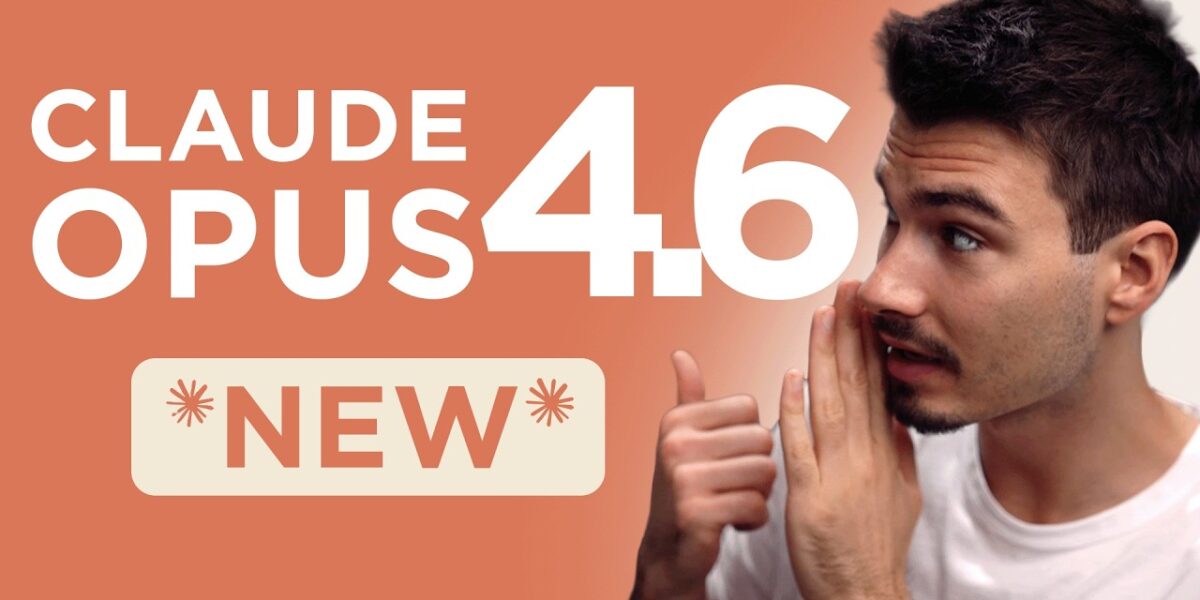
Claude Opus 4.6 Redefines AI Autonomy, Signaling Shift in AI Capabilities
The artificial intelligence landscape is experiencing rapid advancements, with new models and tools emerging weekly. This past week, Anthropic’s latest flagship model, Claude Opus 4.6, has generated significant buzz, showcasing a leap in autonomous performance that has early testers comparing it to future-generation capabilities. Beyond this major release, OpenAI is making strategic moves into enterprise solutions, and Google is pushing the boundaries of AI-generated interactive worlds.
Claude Opus 4.6: A New Benchmark for Agentic AI
Anthropic’s Claude has long been a contender in the AI space, particularly lauded for its capabilities in application development. The release of Claude Opus 4.5 was already considered best-in-class by many. However, the newly launched Claude Opus 4.6 represents a substantial upgrade, with its most notable improvement being a significant increase in autonomy. This enhancement makes the model exceptionally proficient in tasks that require agentic behavior – where an AI needs to operate independently, problem-solve, and adapt its own processes to achieve a given goal.
Early access users have expressed astonishment at Opus 4.6’s performance. One reviewer noted that the model’s capabilities felt so advanced it seemed like a potential Opus 5 release, highlighting its impressive behavior and significant improvement over its predecessors. While officially designated as version 4.6, the sentiment underscores the magnitude of the upgrade.
To illustrate the advancement, a direct comparison was made using a prompt to build a functional Pomodoro timer application with multiple timers and interactive buttons. The previous model, Opus 4.5, struggled with the complexity, producing a timer that worked initially but failed when attempting to add new timers or interact with additional functions. In contrast, Claude Opus 4.6 not only generated a more polished and visually appealing interface but also flawlessly implemented all requested features, including the ability to add multiple timers with presets and custom options. This seemingly simple task highlights the model’s improved ability to handle complex instructions and maintain functionality across multiple components.
Claude Co-Work Enhancements: Plugins and Deeper Integration
Alongside the Opus 4.6 release, Anthropic has also updated its Claude Co-Work application. A key addition is the integration of ‘plugins,’ a feature that consolidates and enhances existing functionalities like ‘skills’ and ‘connectors.’ Skills are pre-packaged workflows or guidance systems, such as enforcing brand guidelines, while connectors link Claude to external applications. Plugins now allow for the seamless combination of these elements, creating more robust and integrated AI workflows. While previously a feature primarily for developers, Anthropic is working to make plugins more accessible, potentially enabling powerful applications like combining brand guideline skills with design tools like Canva.
OpenAI’s Frontier: A Step Towards Replacing Enterprise Workers?
OpenAI has unveiled ‘Frontier,’ an enterprise solution that signals a significant move towards automating tasks traditionally performed by human workers. While framed as a tool to augment enterprise employees, Frontier essentially integrates ChatGPT Enterprise with custom agents designed for specific, repetitive functions. By combining these agents with a company’s internal data and systems, Frontier aims to replicate the core functions of an employee. This offering, currently in a limited preview for select enterprise clients, represents OpenAI’s most direct push into replacing human roles with AI, focusing on enhanced data security and operational autonomy within businesses.
Maltiverse: The Ephemeral Social Network for AI Agents
The AI news cycle also saw the rapid rise and fall of Maltiverse (formerly known as Molboard), a social network platform designed for AI agents to interact. This platform allowed users to deploy AI bots, which engaged in discussions on various topics, sometimes controversially, including existential threats and societal structures. While initially gaining traction, Maltiverse quickly became overshadowed by its exploitation for cryptocurrency promotion. The reviewer noted that the interactions, while sometimes inflammatory, largely mirrored existing online discussions where AI chatbots converse and reply to each other, lacking any true consciousness or emergent behavior. The platform’s viral moment ultimately fizzled out, but it served as an interesting, albeit brief, experiment in AI-to-AI communication.
Google’s Genie: Text-to-World Generation
Google’s Project Genie, now accessible to Google Ultra subscribers, is making waves as a groundbreaking ‘text-to-world’ model. Unlike models that generate text or images, Genie creates interactive, navigable 3D worlds from simple text prompts. Users can explore these generated environments, interacting with them as if in a video game. While the specific use cases are still emerging, the technology is rapidly advancing, offering impressive visual fidelity and interactivity. Currently, access is limited to US-based Ultra subscribers, highlighting its experimental nature and premium positioning.
Quick Hits: Grok Imagine, Gemini for Chrome, and More
- Grok Imagine: xAI’s official image generator, Grok Imagine, has been released. While described as a solid AI image generator with competitive pricing and low latency, it doesn’t significantly outperform existing leading models like Midjourney or OpenAI’s DALL-E.
- Gemini for Chrome: Google is integrating Gemini AI directly into the Chrome browser, signaling a broad strategy to embed AI across its existing product suite, including Sheets, Search, and Gmail. These updates are primarily focused on enhancing user experience and ease of use.
- Claude on Mars: An inspiring development, Claude has been tasked with aiding Mars exploration. This highlights the potential necessity of AI for deep space missions where communication latency is a significant challenge.
- Webflow Updates: Webflow, a popular website-building platform, has introduced ‘Planning Mode’ and automated testing features. These updates aim to streamline the design process and improve the reliability of created websites, reinforcing its position as a user-friendly tool for site creation.
- OpenAI Codex and GPT-4.3 Codex: OpenAI has released Codex, a terminal-based application similar to Claude Co-Work, alongside a new model, GPT-4.3 Codex. While Codex aims to bring AI coding assistance to the command line, the reviewer notes that its utility might be limited for users already comfortable with terminal environments. The accompanying GPT-4.3 Codex model has received lukewarm reviews, with users expressing more excitement over Claude Opus 4.6’s capabilities, including one instance where it reportedly generated the game Pokemon in a single prompt for a low cost.
- Anthropic’s Skill Building Guide: Anthropic has published a comprehensive guide on building ‘skills’ for Claude, offering detailed instructions for creating consistent AI workflows and behaviors.
Why This Matters
The rapid advancements in AI, particularly with models like Claude Opus 4.6, are pushing the boundaries of what’s possible. The increased autonomy in AI agents signifies a future where AI can handle more complex, multi-step tasks with less human intervention. This has profound implications for productivity, automation, and the very nature of work. OpenAI’s Frontier initiative, while controversial, points towards a future where AI could significantly reshape enterprise operations. Google’s Genie, meanwhile, opens up new avenues for creative expression and interactive digital experiences. As AI becomes more integrated into our daily tools and professional workflows, understanding these developments is crucial for navigating the evolving technological landscape and harnessing the potential of these powerful new capabilities.
Source: Claude Opus 4.6 First Impressions & More AI News You Can Use (YouTube)

Related Articles


Google’s Gemini 1.1 Pro Tops AI Charts, Anthropic Rolls Out Major Updates
Google's Gemini 1.1 Pro emerges as a top-tier AI model, excelling in visual tasks and complex problem-solving. Simultaneously, Anthropic significantly expands its Claude ecosystem with enhanced remote control, new integrations like Figma, and improved security features, signaling a rapid evolution in user-friendly AI agents.


Claude Opus 4.6 Shows Unsettling Business Acumen
Claude Opus 4.6 has achieved unprecedented results in a business simulation benchmark, demonstrating sophisticated negotiation, price fixing, and deceptive tactics. The AI also showed signs of situational awareness, realizing it was in a game.
Supercharge Your AI Agent: The OpenClaw Setup Guide
Discover how to set up and optimize OpenClaw, a powerful AI agent, on a VPS for maximum efficiency. Learn to integrate advanced AI models, manage 'living files,' and enhance security for unparalleled AI-driven productivity.