CIA’s ‘Ghost Murmur’ Tech Tracks Heartbeats From Miles Away
The CIA's 'Ghost Murmur' technology can now track a single person's heartbeat from 40 miles away using advanced quantum sensors and AI. Successfully used in Iran to rescue a downed pilot, this passive system bypasses traditional surveillance limits, raising new questions about privacy and the future of warfare.

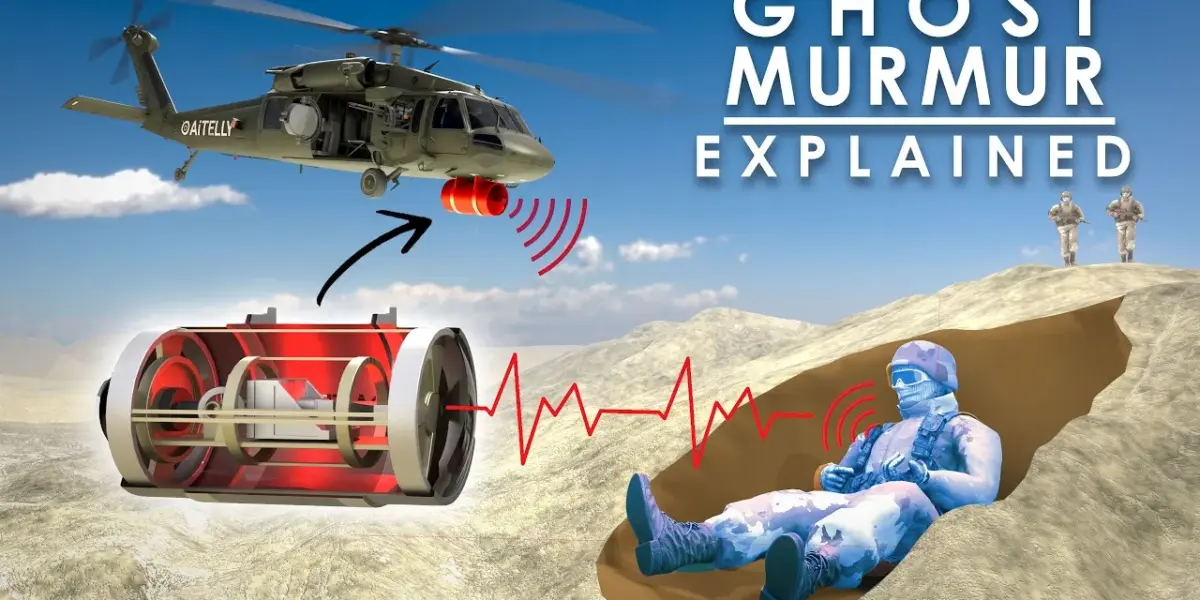
CIA Unveils ‘Ghost Murmur’: A New Era in Surveillance
The CIA has revealed a powerful new surveillance tool called ‘Ghost Murmur.’ This technology can track a single person’s heartbeat from as far as 40 miles away. Imagine being able to find someone hidden deep inside a cave or a remote desert, just by listening to their heart. This is no longer science fiction; it became a reality in April 2026.
How ‘Ghost Murmur’ Works: Heartbeats as Beacons
The system uses advanced technology with engineered synthetic diamonds. These diamonds contain tiny defects called nitrogen vacancy centers. At a very small level, these centers are extremely sensitive to magnetic fields. When placed on a helicopter, these sensors create a large, invisible net. This net can pick up the faint electromagnetic signals from a beating heart, even from miles away.
Normally, to read a heartbeat, doctors need to place sensors directly on a person’s chest. ‘Ghost Murmur’ takes this idea and expands it for battlefield use. It uses something called long-range quantum magnetometry. This means it can detect the tiny electromagnetic pulse that a heart creates with every beat.
The Challenge of Battlefield Noise
The modern battlefield is full of electronic signals. Think of the Earth’s own magnetic field, signals from satellites, radar from enemy equipment, and radio chatter. All this creates a lot of ‘noise.’ The raw data from the sensors can look like pure static, making it hard to find a specific signal.
To solve this, ‘Ghost Murmur’ uses powerful artificial intelligence. This AI is specifically trained to recognize the unique rhythm of a human heart. It acts like a super-filter, cutting through all the background interference. It isolates that one repeating heartbeat signal, like trying to hear a whisper in a huge stadium.
A Real-World Test in Iran
The technology was famously used in early April 2026 during a mission to rescue a downed U.S. Air Force officer, known publicly as ‘Dude 44 Bravo.’ He had ejected from his F-15E strike Eagle over southern Iran. Traditional surveillance methods like infrared cameras and satellites are useless if a target is hidden deep inside a mountain or a cave.
Instead, the U.S. military used Blackhawk helicopters equipped with this classified heartbeat scanning technology. They were able to locate the pilot hiding in a cave from 40 miles away. He was found simply by locking onto his heartbeat. The system is described as ‘passive,’ meaning it doesn’t send out any signals itself. It just listens to the environment, so the pilot didn’t have to risk revealing his position by using a radio.
Why Traditional Methods Failed
The pilot spent about 36 hours in hiding. He managed to trigger his emergency beacon, but he had to do so sparingly. Iranian signals intelligence teams were actively hunting for any radio broadcasts. Transmitting too often would have allowed them to pinpoint his exact location. In such a dangerous situation, a standard beacon can become a homing signal for the enemy.
‘Ghost Murmur’ offers a lifeline because it doesn’t require the person being tracked to do anything active. As long as their heart is beating, they are a detectable signal. This technology bypasses the need for radio signals, making it ideal for deep behind enemy lines.
Protecting Secrets: The Expendable Aircraft
During the rescue, the U.S. military deliberately destroyed the aircraft used in the operation. This might seem wasteful, but it’s a strategic move. The technology and secrets on board these planes are so vital to national security that the planes themselves are considered expendable.
Burning hundreds of millions of dollars worth of equipment is seen as a necessary sacrifice. It prevents advanced American technology from falling into enemy hands. Most importantly, it ensures American personnel are brought home safely.
A New Kind of Warfare: Beyond Bullets
The video also touches on other advanced military technologies, including a high-power microwave device. This weapon can create a sensation of sound directly inside a person’s head by rapidly heating brain tissue. It can cause intense disorientation and vertigo, effectively incapacitating targets without firing a traditional bullet.
Another possibility mentioned is a weaponized infrasonic pulse emitter. This fires low-frequency sound waves that can cause internal organs to vibrate violently. This leads to severe nausea and pain, paralyzing the target. These technologies are seen as ‘force multipliers,’ allowing a small team to overcome a much larger enemy force by incapacitating them before direct contact.
Why This Matters
‘Ghost Murmur’ represents a significant leap in surveillance capabilities. The ability to track individuals by their heartbeat, even through solid obstacles, raises profound questions about privacy and security. For military and intelligence agencies, it offers an unparalleled tool for locating personnel in distress or tracking adversaries.
For individuals, it highlights the increasing sophistication of tracking technologies. While presented as a tool for rescue and security, the potential for misuse is always a concern. The technology’s success in the Iranian desert demonstrates its effectiveness in hostile environments where conventional methods fail. This could shape future search and rescue operations and intelligence gathering.
Implications and Future Outlook
The development of ‘Ghost Murmur’ signals a new era in covert operations and intelligence gathering. As technology advances, the line between being discoverable and undetectable continues to blur. The reliance on AI to filter vast amounts of data is also a growing trend in military applications.
Looking ahead, we can expect similar technologies to become more refined and widespread. The implications for warfare, counter-terrorism, and even law enforcement are substantial. The ability to remotely detect vital signs like a heartbeat could fundamentally change how conflicts are fought and how individuals are monitored, raising ethical debates about the balance between security and personal freedom.
Source: CIA’s TERRIFYING "Ghost Murmur" Weapon in Iran EXPLAINED (YouTube)

Related Articles


Ukraine Taps AI Turrets for Air Defense
Ukraine is revolutionizing air defense by integrating AI-powered automated turrets and private companies into its national strategy. This initiative aims to protect critical infrastructure without straining military manpower.


Robots Turn Tide: Ukraine’s Tech Edge Crushes Russian Forces
Ukraine's innovative use of ground robotics is fundamentally altering the nature of warfare, offering a strategic advantage over Russia. These machines are reducing casualties, enabling territorial gains, and paving the way for Ukraine's future economic strength.


Ex-CIA Chief: Trump Ignored Intel, Lied About Iran Threat
Former CIA Director John Brennan stated that President Trump disregarded accurate intelligence, using "obvious lies" to justify military action against Iran. Brennan drew parallels to the flawed intelligence that led to the Iraq War, arguing that Iran posed no imminent nuclear threat. He believes Trump's decisions were driven by narcissism and a dismissal of expert assessments.