China’s Viral Marketing Strategy Sparks Outrage with Racist Knockoffs
A new wave of viral marketing from China is drawing heavy criticism for its blatant racism, allegedly created for profit and imitating a previous satirical trend. The content, described as "piss poor racism," highlights ethical concerns in China's pursuit of wealth and raises questions about corporate responsibility.


China’s Viral Marketing Strategy Sparks Outrage with Racist Knockoffs
In a disturbing trend emerging from China, a new form of viral marketing is drawing widespread criticism for its blatant racism and exploitation of social issues for profit. The phenomenon appears to be a crude imitation of a previously successful marketing approach pioneered by Tony from LC Signs, who gained popularity by creating satirical videos that offered a counter-narrative to Western ‘woke’ ideology. However, the copycat ventures have devolved into generating outright racist content, raising serious ethical questions about the pursuit of profit in China and the country’s selective approach to free speech.
The Rise of Satirical Marketing and its Dark Imitation
The original trend, as described, involved creators like Tony from LC Signs taking existing videos, often those perceived as promoting ‘woke’ agendas or addressing sensitive social issues, and adding their own humorous or critical spin. This approach resonated with a segment of the audience weary of perceived ideological overreach in Western media and society. By offering content that seemed to voice sentiments that many felt unable to express publicly for fear of backlash, creators like Tony achieved significant viral reach.
However, the current wave of content described in the source material represents a significant departure and a disturbing descent. Instead of offering a satirical commentary, these new iterations are reportedly generating pure, unadulterated racism for the sole purpose of financial gain. The content, characterized as “blatant garbage racism” and “piss poor racism for the sake of making money,” is described as low-class, in poor taste, and laughable.
Exploiting Racism for Profit: A New Low
One particular example cited involves a company that allegedly supplies major retailers like Walmart and 7-Eleven. This company’s marketing efforts are described as “vile and blatantly racist.” The content reportedly features individuals, including those seemingly from South Africa, engaging in racist behavior, such as shouting racial slurs and performing offensive acts. This is particularly galling given the historical context of racism experienced by Black individuals in China, including documented instances of exclusion from nightclubs and overt discrimination.
The source material expresses bewilderment at the lack of public outcry or self-correction within China regarding such content. “I’ve never seen a single Chinese person ever call out this kind of racism,” the narrator states, highlighting a perceived hypocrisy. The argument is made that China often leverages accusations of racism when it serves its geopolitical interests, citing instances where criticism related to COVID-19 origins was labeled as racist. Yet, when Chinese entities engage in overtly racist behavior, there appears to be a deafening silence, both domestically and internationally.
China’s Economic Culture: Money as the New God
The underlying issue, according to the analysis, is deeply rooted in China’s economic and cultural landscape. The assertion is that religion has been largely suppressed and replaced by a fervent pursuit of wealth, with “money [being] the new god.” This environment, it is argued, fosters a culture where ethical considerations are secondary to short-term financial gains. This mindset is blamed for a range of societal problems, including cheating fellow citizens, stealing intellectual property, environmental degradation, and even cutting corners in construction that lead to loss of life.
The current racist marketing trend is seen as a direct manifestation of this profit-driven ethos. The creators are not merely insensitive; they are allegedly engaging in deeply offensive behavior with a clear commercial intent. The content is described as “low,” “in the gutter,” and “laughable” not in an entertaining sense, but in a way that highlights the creators’ pathetic and desperate pursuit of revenue.
The Double Standard of Speech: Mocking the West, Silencing Dissent
A significant point of contention raised is the stark double standard regarding freedom of expression in China. While it is seemingly encouraged and even profitable to mock Western societal issues, ‘woke’ ideologies, or problems in the USA, any criticism directed at the Chinese government, local authorities, or societal structures within China is met with severe repercussions. The source mentions that a figure like Tony, if he were to criticize even something as seemingly minor as Xi Jinping’s appearance, could face severe punishment, including torture and detention.
This creates a situation where Chinese citizens are effectively silenced when it comes to addressing their own local problems. Protests are quickly suppressed, and information is censored. The narrative suggests that the freedom to speak out and effect change is reserved only for external targets, while internal dissent is ruthlessly quashed. This not only stifles genuine social progress within China but also creates a platform for the propagation of harmful content under the guise of satire or commentary, as long as it doesn’t challenge the status quo at home.
Data Brokers and the Fight for Privacy
Intertwined with the discussion of China’s ethical shortcomings is a segment addressing the pervasive issue of data brokers and the erosion of personal privacy. The transcript uses a metaphorical “evil Santa” analogy to describe data brokers, highlighting how they gather intimate details about individuals’ lives – financial information, personal habits, and more – to sell to interested parties. This information, it is warned, can be weaponized by malicious actors, including business competitors, jilted ex-partners, or anyone seeking to cause trouble, who can hire private investigators armed with sophisticated tools to obtain deeply personal data.
In this context, a service called Incogni is promoted as a solution. The narrator, who identifies as a target of the Chinese government and various online harassers, endorses Incogni for its ability to combat data brokers. The service reportedly works by scanning countless data broker websites and legally demanding the removal of personal information. Furthermore, their premium plans offer a custom removal feature, allowing users to report any instances where their data is found online, with Incogni then taking steps to have it deleted.
The promotion includes a specific call to action: visit incogn.com/winston and use the code winston for a 60% discount. This section, while seemingly tangential, underscores a broader theme of ethical concerns and exploitation, extending from marketing practices to the very infrastructure of digital privacy.
The Broader Implications and a Call for Accountability
The emergence of racist marketing tactics in China, particularly when linked to international retailers, raises significant questions about corporate responsibility and global supply chains. The fact that companies supplying major Western brands are allegedly engaging in such behavior highlights a potential blind spot for these corporations in their due diligence processes.
The narrative suggests that this trend, while currently generating outrage, may persist until it is met with widespread condemnation and a clear demonstration of consequences. The hope expressed is that this type of content will eventually be laughed at not for its humor, but for its sheer pathetic nature, prompting a cessation of such practices. The underlying message is a call for a higher standard of ethical conduct, both in marketing and in broader societal values, urging individuals to “be who you want to be, do what you want to do,” but with a clear consensus that blatant racism for profit is unacceptable.
The situation underscores a complex interplay of economic imperatives, cultural norms, and political realities within China. While the country’s economic engine continues to drive innovation and global influence, the ethical dimensions of its business practices and the control over public discourse remain subjects of intense scrutiny and, as exemplified by this trend, significant concern.
Source: China's Hilariously Bad Fake LC Tony Knockoff is Unbelievable! (YouTube)

Related Articles


AI Generates Disturbing Deepfakes of Celebrities
Advanced AI video generation tools are now capable of creating highly realistic deepfakes, raising serious ethical concerns. The ease of creating fabricated content, including harmful narratives about public figures, necessitates a multi-faceted approach to detection, regulation, and public education.
FBI Director Kash Patel’s Olympic Locker Room Appearance Sparks Ethics Concerns
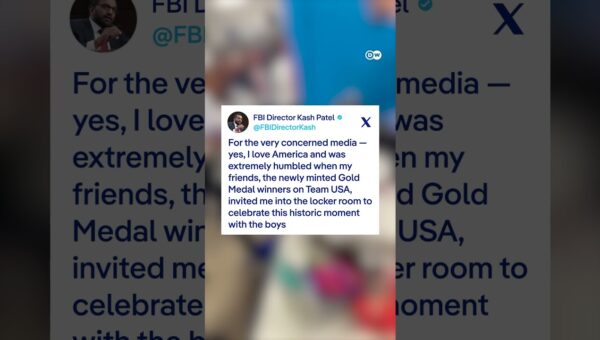
FBI Director Kash Patel is facing criticism after joining the U.S. Men's Olympic Hockey Team in their locker-room celebrations following their gold medal win. The incident has sparked debate about ethical boundaries for public officials and perceived conflicts of interest.
Trump Declares War on Iran, Vows ‘Certain Death’ for Resisters
President Donald Trump has announced ongoing combat operations in Iran, vowing "certain death" for those who resist and calling on Iranians to overthrow their regime. The escalation follows the deaths of three U.S. service members, with the administration citing the need to prevent nuclear proliferation and counter terrorism. Congressional reactions are divided, and public opinion remains largely skeptical.