China’s NPC: Inside the Political Spectacle That Shapes Policy
China's annual "Two Sessions" legislative meetings in Beijing bring together the National People's Congress and the Chinese People's Political Consultative Conference to set national policy. While characterized by pageantry, these gatherings offer insights into economic targets, demographic challenges, military spending, and the CCP's overarching agenda.

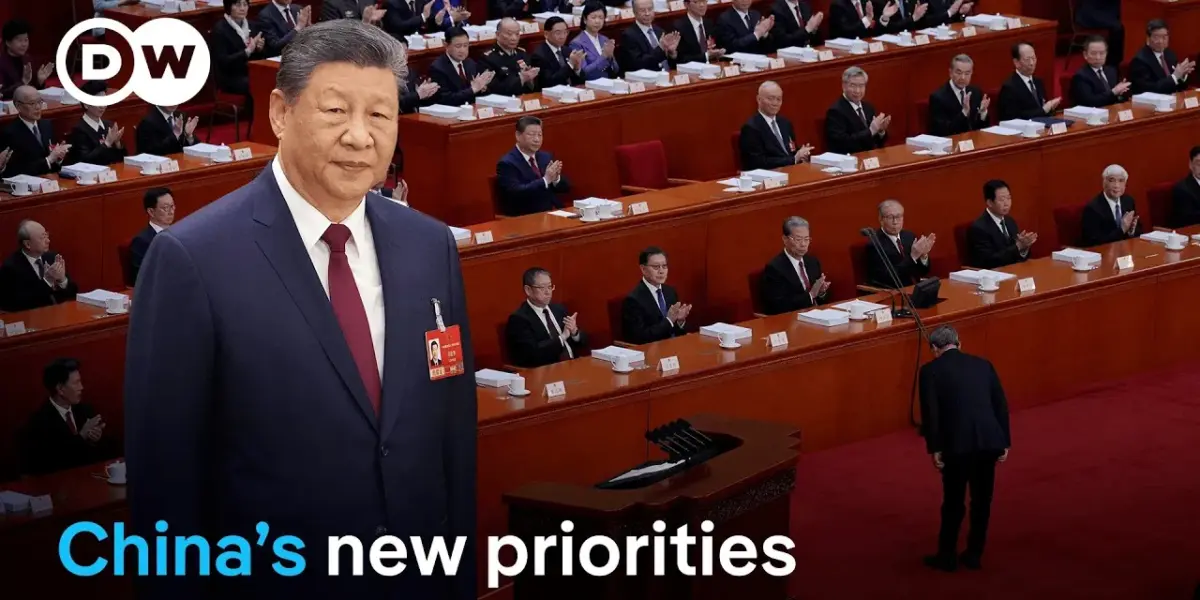
China’s Annual Political Gathering: The ‘Two Sessions’ Explained
Beijing, China – Every year, the heart of China’s political power beats within the imposing walls of the Great Hall of the People on Tiananmen Square. This is the venue for the “Two Sessions” (Yang), a critical annual gathering where the nation’s most influential figures convene to deliberate and rubber-stamp policies that steer the course of the world’s second-largest economy. While often characterized by its elaborate pageantry and choreographed proceedings, the Two Sessions offer a vital, albeit opaque, glimpse into the priorities and direction of the Chinese Communist Party (CCP).
Understanding the Mechanics of the Two Sessions
The Two Sessions comprise two distinct, yet interconnected, legislative bodies: the National People’s Congress (NPC) and the Chinese People’s Political Consultative Conference (CPPCC). The NPC, often referred to as the national legislature, is where official decisions are formally approved. The CPPCC, on the other hand, functions as a political advisory body, bringing together a diverse array of elites from various sectors of society.
The National People’s Congress (NPC)
The NPC is the primary legislative body responsible for approving key government policies and appointments. While it serves as the ultimate decision-making forum, its proceedings are largely a formality, with outcomes largely predetermined by the CCP’s leadership. As veteran China correspondent Clifford Kunan notes, “it’s not a parliament as we would understand it in Germany or in the west where you have a lot of people… or you have people even criticizing any of the measures that are being adopted.” The NPC’s role is to provide the official endorsement for policies already formulated at higher echelons of power.
The Chinese People’s Political Consultative Conference (CPPCC)
The CPPCC, while lacking direct legislative power, plays a significant role in showcasing China’s societal development and gathering input from influential figures. Its membership includes prominent actors, film directors, and business tycoons, such as martial arts star Jackie Chan and Baidu founder Robin Li. Kunan explains that the CPPCC serves “as a way of getting the elite together” and displaying “that China has developed into this sort of you know this aspect of society is there now that you have these very important cultural figures for example and and financial figures.” This broad representation allows the CCP to project an image of inclusivity and to engage with various influential segments of society, even if their direct impact on policy is limited.
The Five-Year Plan: A Window into Economic Ambitions
A cornerstone of the Two Sessions’ agenda is the unveiling and approval of the latest Five-Year Plan. This document outlines China’s economic and social development goals for the next five years, offering observers a crucial insight into the government’s priorities. “The five-year plan is very significant, as I said, because that’s our that’s our window into how how the economy is expected to develop and and what sort of what priorities they have set on the economy,” Kunan states. While the targets are meticulously worked out in advance, the symbolism of provincial leaders taking these plans back to implement them remains an important aspect of the process.
Economic Growth and Shifting Priorities
A key metric closely watched during the Two Sessions is the government’s economic growth forecast. Typically set between 4.5% and 5%, these targets are generally met, reflecting the state’s capacity to manage economic performance. Beyond raw growth figures, the narrative is shifting towards “high-quality growth.” China aims to move beyond its role as the “world’s factory” producing low-end goods, focusing instead on high-tech industries such as advanced chips, AI-driven robotics, and other sophisticated manufacturing. This strategic pivot reflects a desire to climb the global value chain and address emerging economic challenges.
Demographic Shifts and Social Challenges
The Two Sessions also grapple with significant demographic shifts, most notably China’s declining birth rate. Having fallen to its lowest point since 1949, this trend poses a substantial challenge to China’s long-term economic prospects. The legacy of the one-child policy, coupled with rising costs of education and housing, has contributed to a reluctance among younger generations to have children. Kunan highlights the global nature of this issue, noting similar trends in Japan and Taiwan, and emphasizes the resulting strain on the dependency ratio – the burden placed on the working population to support an aging society. China faces the difficult task of becoming prosperous before it becomes old, a challenge that has historically proven difficult to overcome.
Language Standardization and Cultural Homogenization
Amidst discussions on economic and social policy, the promotion of Mandarin as the national language emerges as a contentious issue. The CCP is actively encouraging the use of Mandarin across the country, including in regions with distinct linguistic traditions like Xinjiang (Uygur) and Tibet. This push for linguistic standardization, while aimed at fostering national unity, raises concerns about cultural assimilation and the potential marginalization of minority languages and dialects, including Cantonese in Hong Kong and Guangdong province, and even the Shanghai dialect.
Military Spending and Geopolitical Tensions
The annual work report, delivered on the second day of the Two Sessions, invariably reveals updates on China’s defense budget. This year, the military spending is set to increase by 7%, a figure slightly higher than the projected economic growth. While this represents a significant increase in absolute terms, it is a more modest rise compared to previous years. The substantial and growing military budget, though still considerably less than that of the United States, underscores China’s regional ambitions and its increasing assertiveness in areas like the South China Sea and concerning Taiwan.
Regional Security and Taiwan
The heightened military spending is closely scrutinized in the context of regional security dynamics. The ongoing tensions in the Middle East and China’s own territorial claims over self-ruled Taiwan are key factors influencing defense strategy. Observers watch to see if the increased budget will be directed towards potential actions concerning Taiwan or a greater military presence in the South China Sea.
China’s Stance on Global Conflicts
The war in the Middle East presents a complex challenge for China, primarily due to its significant reliance on the region for energy security. China is a major buyer of Iranian oil, and ensuring the safe passage of oil tankers through the Strait of Hormuz is a critical concern. However, direct intervention is unlikely, as Kunan points out, given that this is largely perceived as an area of U.S. influence. China’s primary focus remains on protecting its energy supply lines and navigating the volatile geopolitical landscape with a minimal role, though it is reportedly unhappy with the disruptions caused by the conflict.
The Enduring Nature of China’s Political System
Clifford Kunan concludes by emphasizing that despite the modern facade, the Two Sessions serve as a powerful reminder that China remains a centrally planned economy and a communist country. “It is a rubber stamp piece of political theater. But it’s also should be a reminder that China is still a centrally planned economy and it’s still a communist country. And I think people forget that,” he states. The CCP views itself as the most successful communist party in history, having navigated the ideological shifts that led to the downfall of many other communist regimes. The Two Sessions, with their blend of spectacle and substance, continue to be the primary mechanism through which this enduring political system shapes China’s present and future.
Source: China's NPC: what it is and why it matters | DW News (YouTube)

Related Articles


US Strikes Iran: Operation Epic Fury Decimates Navy, Neutralizes Missiles
The United States has launched 'Operation Epic Fury,' reportedly crippling Iran's navy and neutralizing missile sites in a matter of days. U.S. forces are executing precise strikes, establishing air and sea dominance, and demonstrating strong resolve against perceived Iranian miscalculations.


Iran Strikes US Base: Escalation or Provocation?
Reports of an Iranian strike on a US base in Kuwait, met with US B-2 bomber deployments, signal a dangerous escalation. This analysis delves into the historical context, potential motivations, and far-reaching implications of this critical development in US-Iran relations.


US Forces Strike Iran’s Industrial Base Amid Escalating Regional Conflict
U.S. forces are now targeting Iran's missile and drone production capabilities, a significant escalation in the regional conflict. Defense Secretary Lloyd Austin declared "We have only just begun to fight," indicating a potentially prolonged engagement as attacks on regional allies intensify.