China’s Elite Power Struggle: Three Factions Eye Deadline
China's top leadership is embroiled in a fierce power struggle as three factions vie for control ahead of crucial March legislative meetings. The crisis, fueled by the disappearance of top generals, could escalate to a forceful confrontation. Key developments to watch include the upcoming Politburo meeting and the loyalty of military units.

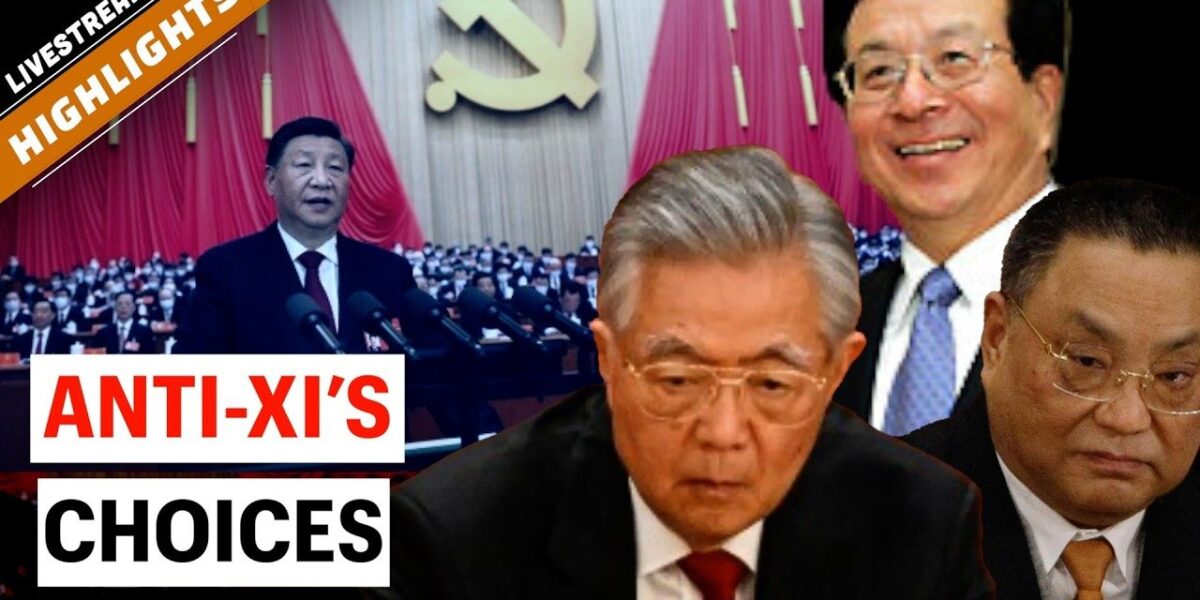
China’s Elite Power Struggle: Three Factions Eye Deadline
Beijing is reportedly embroiled in an intense, high-stakes power struggle at the highest echelons of the Chinese Communist Party (CCP), with at least three major factions actively maneuvering ahead of a critical deadline. The unfolding crisis, centered around the disappearance of high-ranking military officials, threatens to destabilize the regime and could lead to a forceful confrontation, according to sources close to the internal dynamics.
The Three Competing Forces
The internal CCP landscape is currently defined by three primary power blocs, each with distinct objectives and strategies:
- The Conservative Camp: Associated with former leader Jiang Zemin, this faction is reportedly attempting to negotiate with current leader Xi Jinping. Their primary demand is to know the whereabouts of General Zhang Yang. Sources indicate they have offered Xi Jinping a three-month window to produce Zhang, a compromise many insiders view as dangerously protracted, potentially jeopardizing Zhang’s life and allowing Xi time to consolidate his position.
- The Bureaucratic Establishment: Often linked to former leaders Hu Jintao and Wen Jiabao, this group, sometimes referred to as the reformist faction, is adopting a wait-and-see approach. They are monitoring the situation closely, poised to act when the opportune moment arises to challenge Xi Jinping.
- The Red Princeling Clans: This faction, which includes descendants of former paramount leader Deng Xiaoping, such as Deng Pufang, has reportedly lost patience with Xi Jinping. They believe his removal is necessary, even if it risks fracturing the party itself. This group is considered the most volatile, viewing negotiation as a losing strategy and advocating for decisive action.
Escalating Information Control and Underlying Fear
Amidst this internal turmoil, the CCP’s propaganda apparatus has significantly escalated information control. Searches for key figures like Zhang Yang are reportedly being flooded with distracting content, such as pornography, posted by state-linked bot accounts to bury sensitive information. Despite these efforts, a significant number of Chinese military officers and officials are reportedly circumventing censorship to seek genuine information about the situation. For them, this is not an abstract political game but a matter of personal survival, as they attempt to gauge the stability of the regime and decide which side to align with.
The Looming Deadline: The “Two Sessions”
The approaching annual legislative meetings, known as the “Two Sessions” (the National People’s Congress and the Chinese People’s Political Consultative Conference), scheduled for early March, represent a critical juncture. This event brings together delegates from across the country, including nearly all CCP generals who are NPC deputies, to Beijing. This convergence poses a significant risk for those not fully aligned with Xi Jinping. If Xi Jinping remains unyielding or the anti-Xi factions fail to gain control before the sessions, attending generals could be pressured to publicly pledge loyalty. Refusal could lead to their downfall, mirroring the fate of Zhang Yang and other purged officials.
Last year, Zhang Yang reportedly used the “Two Sessions” to remove Xi loyalists from the military. This year, Xi Jinping may use the same event as a pretext to target generals perceived as disloyal. The late February Politburo meeting, preceding the “Two Sessions,” is therefore seen as a crucial focal point. Key developments to watch include whether the Politburo retroactively approves Xi’s actions against Zhang Yang and General Li Zhanshu, and whether the anti-Xi camp can push for the promotion of Hu Chunhua to Vice Premier, replacing a Xi loyalist.
The Princelings’ Ultimatum and Security Concerns
The red princeling faction, in particular, is reportedly issuing stark warnings. Their message, disseminated through various channels, is clear: if the targeted generals are not produced, they will resort to “non-procedural methods,” with some hinting at direct retaliation against Xi Jinping’s supporters. This faction believes that direct action, rather than negotiation, is the only viable path forward, leveraging their historical networks and security channels.
Shifting Military Control and Potential Confrontation
Behind the scenes, significant shifts in security command are reportedly occurring. Chen Yuan, a close associate of Xi Jinping and his wife Peng Liyuan, who previously commanded the Shanghai garrison, has allegedly been transferred to oversee the capital garrison. However, reports suggest that many officers within the capital garrison are aligned with the princeling networks, potentially sidelining Chen Yuan and leaving Xi Jinping without full control of the capital’s security. This situation raises concerns about the safety of party elders, with some reportedly seeking protection from field army units outside Beijing.
While the Central Guard Bureau could theoretically detain opposition figures, Xi Jinping is reportedly hesitant to act without firm control of the People’s Liberation Army (PLA). Any direct confrontation or PLA intervention in Beijing could lead to the swift collapse of Xi’s camp. The capital garrison is reportedly expected to remain neutral in such a scenario. Xi’s reliance appears to be on the Central Security Bureau and special security units, described as his “private army.” However, the PLA, potentially backed by the princeling-aligned capital garrison, is perceived to hold a significant advantage.
The Dilemma of Force and the Specter of “North Korea”
The anti-Xi factions face a critical decision. If Hu Jintao and Wen Jiabao order PLA units into Beijing, Xi Jinping’s camp could be decisively defeated, potentially leading to his resignation under the guise of illness. However, the conservative faction warns that such a move risks splitting the party, potentially making Hu and Wen hesitant to deploy the PLA and favoring a negotiated settlement.
Deng Pufang, reportedly losing trust in the conservatives, suspects they may have already reached a time-buying deal with Xi. Without PLA backing, the red families alone cannot confront Xi’s security forces in Beijing. The loyalty of the newly appointed commander of the Central Theater Command, Hen, responsible for protecting the capital, is also in question, with some suspecting he could be targeted by Xi’s camp. Calls are reportedly emerging for General Liu Yuan to lead PLA units into Beijing, a move anticipated to decisively defeat Xi’s forces but at the cost of potentially thousands of casualties.
Failure to resolve the situation before the “Two Sessions” could result in Hu Chunhua being unable to secure a promotion, preventing him from being positioned as Xi’s successor. This scenario could allow Xi Jinping to consolidate power indefinitely, potentially transforming China into a larger version of North Korea. The upcoming Politburo meeting is therefore critical; failure to address Xi Jinping’s actions could allow him to regain control of the military and reverse the current trajectory. The crisis surrounding Zhang Yang is thus not merely about an individual’s downfall but represents a fundamental struggle for the future of China’s leadership and its political system.
Source: Three Factions, One Deadline How Beijing’s Power Struggle Will Break (YouTube)

Related Articles

China’s Info War: Rumors, Ads Hint at Deep Political Strife
Unusual rumors of executions and a provocative game advertisement hint at a brewing information war within China. State media's own subtly critical reports further suggest deep political undercurrents and potential dissent.
Xi’s Military Purge Sparks Questions of Paranoia and Weakness
President Xi Jinping's extensive purge of top military commanders has triggered debates about his paranoia and the PLA's readiness. Analysts question if these dismissals signal a consolidation of power or reveal deep-seated corruption and incompetence within China's armed forces, with significant implications for regional stability, particularly concerning Taiwan.


Rubio: War’s End Lies in Talks, Not Military Might
U.S. Secretary of State Marco Rubio stated that the Ukraine war lacks a military solution and will ultimately be settled through negotiation, highlighting America's crucial role in facilitating talks. Meanwhile, Hungary's PM Viktor Orbán accused Kyiv of election interference and disrupting energy supplies, while China's Xi Jinping called for inclusive peace negotiations.