China’s Dollar Support Fuels US Economic Dilemma
China's strategic support for the US dollar, by weakening its own yuan, creates a complex economic paradox for America. While bolstering the dollar's global standing, this move is argued to cripple domestic manufacturing and exacerbate job losses, a consequence of decades of policy decisions favoring corporate interests over working-class stability.

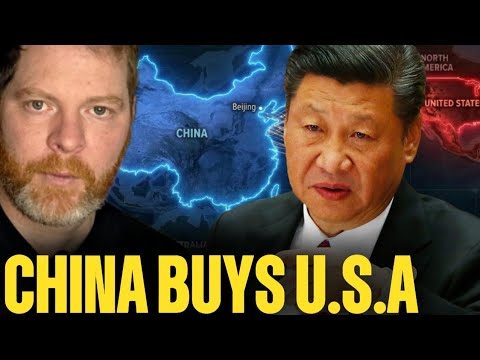
China’s Strategic Move to Bolster US Dollar Sparks Economic Debate
In a surprising turn of global economic strategy, China’s People’s Bank is reportedly intervening in currency markets to intentionally weaken the Chinese yuan and, by extension, prop up the U.S. dollar. This development, occurring amidst discussions of the dollar’s potential loss of reserve currency status, places the United States in a complex and potentially detrimental economic position, according to recent analysis.
The Paradox of a Strong Dollar
While a strong U.S. dollar is often touted by politicians as a symbol of national strength and economic prosperity, a deeper examination reveals a more nuanced reality. For American consumers, a strong dollar can mean cheaper imported goods, contributing to a perception of affordability. However, for domestic industries, particularly manufacturing, it presents a significant challenge. A stronger dollar makes American exports more expensive on the global market, thereby reducing demand and competitiveness.
“The truth is, corporate America, Wall Street, they sold out small town America for a Q3 earnings bump and called that free trade.”
This dynamic has had a particularly harsh impact on the U.S. “Rust Belt” regions, which have historically relied on manufacturing. The exodus of manufacturing jobs to countries with lower labor costs, facilitated by currency policies, has led to economic decline in many of these communities.
Understanding the Triffin Dilemma
The current economic situation is often viewed through the lens of the Triffin dilemma, a concept articulated by economist Robert Triffin. The dilemma posits that a country issuing the world’s primary reserve currency must run persistent trade deficits to supply sufficient currency to global markets. This necessitates importing vast quantities of goods, often manufactured more cheaply abroad, which can lead to the erosion of domestic industrial capacity.
The analysis suggests that the U.S. corporate and financial sectors have leveraged this dilemma, shifting manufacturing overseas to countries like China. In return, China’s strategy of maintaining a weaker yuan, by purchasing U.S. dollars and debt, helps keep its manufactured goods inexpensive for American consumers and supports the dollar’s global standing. This creates a symbiotic, albeit controversial, relationship that benefits multinational corporations and financial institutions but potentially at the expense of American manufacturing and the broader working class.
Economic Consequences and Job Losses
The economic repercussions of this strategy are significant. Data from the Economic Policy Institute indicates that the U.S. trade deficit with China alone cost the country an estimated 3.7 million jobs between 2001 and 2018. Since the year 2000, the United States has experienced a total loss of approximately 5 million manufacturing jobs. While some argue that automation is the primary driver of job losses, critics contend that this overlooks the deliberate hollowing out of the U.S. industrial base.
Unlike countries such as Germany and Japan, which have maintained robust industrial sectors alongside automation, the United States has pursued a path of large trade deficits, leading to the liquidation of its manufacturing capabilities. This has been framed as a Faustian bargain, where short-term financial gains for a select few have come at the cost of long-term economic stability and the well-being of the American working class.
Historical Parallels and Future Concerns
Historical parallels are drawn to the British Empire in the late 19th and early 20th centuries. Britain, once the world’s factory, gradually shifted its focus to finance and services, relying heavily on imports. This strategy, while initially successful in establishing London as a global financial center, left the nation vulnerable when global crises, such as World War I, emerged.
The current situation in the U.S. raises similar concerns. The reliance on imported goods and the diminished capacity to produce essential items domestically could pose significant strategic risks in times of geopolitical instability or global conflict. The commentary suggests that a nation focused on services and digital economies, rather than tangible manufacturing, may lack the fundamental resources needed to withstand severe external shocks.
The Role of Political and Corporate Elites
The article places significant blame not on China’s efforts to protect its own economic interests, but on domestic political and corporate elites. It argues that decisions made by Washington D.C. politicians and Wall Street executives have facilitated this economic dependency. The pursuit of “free trade” agreements, often championed by both major political parties, is seen as having benefited a small group of elites while undermining the broader American economy.
“The call is really coming from inside the house.”
The sentiment expressed is that the American populace has been largely misled about the true beneficiaries and consequences of these economic policies. The current cost of living crisis is linked to this structural economic disadvantage, where multinational corporations leverage suppressed foreign currencies, creating an uneven playing field for domestic businesses.
A Call for Localized Economic Resilience
The analysis concludes with a stark assessment: external saviors are unlikely to materialize. The path forward, it suggests, requires a fundamental shift towards building a localized, physical economy within the United States. This involves recognizing the nation’s dependencies on other countries, including major trading partners like China, Canada, Mexico, and Europe, and fostering domestic production and self-sufficiency.
The argument is made that without a conscious effort to rebuild domestic industries and foster economic resilience, the U.S. faces a trajectory towards becoming a “third world country.” The responsibility, therefore, lies not with geopolitical rivals seeking to protect their own interests, but with the American leadership and populace to acknowledge the “grift” and actively pursue policies that prioritize national economic health and stability.
Looking Ahead
As global discussions continue regarding the future of the U.S. dollar as the world’s reserve currency, China’s strategic role in supporting it presents a critical juncture. The long-term implications of this complex economic interdependence—whether it leads to sustained U.S. economic vulnerability or spurs a necessary domestic industrial revival—will be crucial to monitor in the coming years. The debate over trade policy, currency valuation, and the future of American manufacturing is far from over, with significant consequences for the global economic order.
Source: China is Propping Up the US Dollar (And It’s Destroying America) (YouTube)

Related Articles

US Economic ‘Choke Points’ Reshape Global Order
The U.S. dollar's dominance grants America significant economic leverage through 'choke points,' but China is building parallel infrastructure as an insurance policy, not a replacement. A recent Supreme Court ruling curtails U.S. tariff powers, while Europe grapples with its position between global giants.


Germany’s $90 Billion China Trade Gap Looms Large
Germany's trade deficit with China has surged to nearly 90 billion euros, revealing a significant imbalance that poses a challenge for Economics Minister Phil Matz. As China reclaims its status as Germany's top trading partner, the nation faces deep industrial ties and shifting export dynamics.


The Dollar’s Dilemma: A Global Reserve Currency’s Curse
The U.S. dollar's status as the world's reserve currency creates a paradox, making American exports expensive and hindering domestic industry. Policymakers face a difficult choice between unpopular austerity or managing the dollar's value, impacting global competitiveness and investor strategies.