China’s Dark Secret: Author Recounts Forced Organ Harvesting
Investigator Ethan Gutman's new book, 'The Shing Jang Procedure,' details China's horrific forced organ harvesting, particularly targeting Uyghurs. Gutman describes his harrowing field research, the dangers involved, and a new "political opening" created by medical boycotts. He estimates 25,000-50,000 deaths annually from this practice.


China’s Dark Secret: Author Recounts Forced Organ Harvesting
A chilling new book, ‘The Shing Jang Procedure,’ by Ethan Gutman, shines a harsh light on a human rights crisis that many find difficult to believe: China’s state-sponsored forced organ harvesting. Gutman, a seasoned China analyst and human rights investigator, builds upon his earlier work, ‘The Slaughter,’ to expose the horrors faced by Uyghurs and other minority groups in China’s Xinjiang region.
A Descent into Nightmares
Gutman describes his latest book as a “three-ring circus,” admitting that the first chapter doesn’t immediately focus on organ harvesting. Instead, it introduces a compelling woman whose story is one of the most disturbing he has ever encountered. “This one gave me nightmares,” Gutman states, a testament to the gut-wrenching nature of the testimonies he has gathered. He feels it’s his duty to present these accounts, acting as a “shock therapy” for those who find it hard to accept such atrocities can occur.
The author stresses that this horrific practice has not stopped; it has merely evolved and moved. He aims to make readers understand that this is a real, ongoing program happening today. For many, the idea of forced live organ harvesting is almost incomprehensible. When numbers are discussed, like the tens of thousands of victims, it can be hard to remember that each number represents a human life.
Field Research: The Only Path to Truth
Gutman relies heavily on field research, believing it’s the only way to get reliable information and estimate the true scale of the problem. His witnesses are not always Uyghurs themselves but often Kazakhs who were also persecuted and held in the camps. These individuals, while not Uyghurs, acted as “middlemen.” They saw what was happening and are willing to share their experiences, even though they don’t have the same close ties to the Uyghur community.
These witnesses offer a crucial perspective because they are escaping in larger numbers than those from other regions. Gutman finds their stories deeply convincing. Some accounts are ordinary, but others are extraordinary. One particularly important testimony comes from a woman who was involved in the initial stages of organ harvesting, removing organs from corpses. She eventually escaped China, facing immense personal trauma, including gang rape and the poisoning of a colleague, fleeing with little more than $100.
A Harrowing Escape and a New Life
This woman’s interview took place in a secret safe house in Almaty. Gutman recounts how she broke down crying shortly after arriving, needing ten minutes to compose herself before recounting her harrowing experiences. After sharing her story, she was eager to leave, emphasizing the profound pain these memories still hold.
The Dangers of Investigation
Gathering these stories today is far more dangerous than in the past. Gutman explains that he can no longer simply travel openly to these countries. He must operate “unseen and unknown,” constantly “tricking the system.” This aspect of his investigation, the cloak-and-dagger methods required to protect himself and his sources, also forms a significant part of the book. Some readers might find these chapters difficult, while others may see them as the most gripping.
Protecting Sources, Evading Detection
To avoid detection by Chinese authorities, who monitor social media closely, Gutman employed elaborate deception tactics. He had his son post old photos on his Facebook page, creating the illusion he was still in London during holidays. This helped him disappear “from an electronic point of view.” The team went off the grid, driving an untraceable car through the Kazakh desert with no gas stations for hours, a journey that deeply unnerved Gutman’s daughter, who accompanied him.
They shut down all computers and used only burner phones. The car, a 2003 model with no tracking chip, was bought anonymously. Their journey through the desert, battling bad weather, was a tense experience, but they eventually reached Almaty. There, pre-arranged fixers and translators helped them begin the slow process of interviewing witnesses, a process that eventually accelerated.
Near Misses and Meticulous Documentation
Gutman admits they became “sloppy” at one point, nearly getting caught at the Russian border. Throughout their operations, they never took digital photographs. Instead, they used a film camera, knowing that developing the film would slow down any potential pursuers. All notes had to be destroyed, and sometimes Gutman had to rely on his memory alone. The lengths they went to ensure the safety of the witnesses and the integrity of the information were extreme.
Despite the risks, Gutman found the process “addictive” and continued his work, later moving on to extract families from Tajikistan and Kyrgyzstan. This dedication explains why the book took so long to complete. The research provided a deeper understanding of China’s actions in Central Asia and the estimated death toll from organ harvesting. Gutman stands by his estimate of 25,000 to 50,000 deaths per year, calling them the best available numbers.
Shifting Victim Groups and Evolving Practices
Since Gutman’s first book, the landscape of victims has changed. While Falun Gong practitioners remain targets, Gutman notes that China may be “running out of” them, partly because they are often not within the preferred age range for harvesting (around 28-29 years old). He also suggests that the Falun Gong’s successful advocacy has increased the “pain threshold for Beijing,” leading them to “rationalize the system.”
This “rationalization” meant moving operations to Xinjiang, a remote desert region. China is reportedly building eight new hospitals there, showing a new level of “brazenness” in their approach. Simultaneously, a significant portion of the medical community in America and Europe has begun boycotting China’s transplant programs, refusing to collaborate or attend conferences with Chinese doctors until the issue is resolved. This split, particularly among heart and lung transplant specialists, has created a political opening.
A New Political Opening
Gutman was invited to speak at a conference for these dissenting doctors, marking a turning point. He believes this medical boycott has removed a major “impediment” to political action. Previously, politicians were hesitant to act forcefully, partly because the medical community seemed to maintain good relations with China. Now, with the “fig leaf gone,” the reality of the situation is more apparent. This emergence coincides with a slight easing of tensions in some parts of the world, creating an opportunity for this issue to regain attention.
Gutman and others, like Yan, who focuses on the political and party aspects, are working together. They believe their combined approach, focusing on victims and politics, is powerful. The upcoming book by former Senator Sam Brownback is also anticipated to add further momentum.
Calls for Action and Hope for Change
The issue remains urgent, with a bipartisan bill targeting forced organ harvesting recently reintroduced in the U.S. Senate by Senators Jeff Merkley and Ted Cruz. Gutman emphasizes that the medical community’s stance was the “key impediment” to progress. He credits researchers like Matthew Robertson and Jacob Lavi for their crucial work in keeping the investigation alive.
“Whenever the research starts to die, the fresh research, that’s when we start mouldering,” Gutman explains. “That’s when we start dying on the vine and the other side gains traction.” By providing current, real evidence, researchers regain the initiative. Gutman acknowledges this is a “long struggle” and a “twilight struggle,” but he feels honored to be a part of it, believing there are “worse fates to have in life.”
Source: 'This One Gave Me Nightmares': Author on New Book Exposing Forced Organ Harvesting in Xinjiang (YouTube)

Related Articles


Sweden Deports Young People Amid Strict New Immigration Law
Sweden is enforcing a stricter immigration policy, leading to the deportation of young people who have grown up in the country. Despite learning Swedish, building lives, and having family ties, individuals as young as 19 are facing removal, sparking widespread protests and public concern.

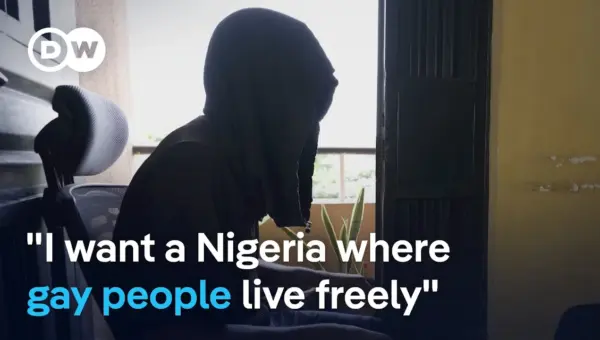
Nigeria’s ‘Kito’ Scam Targets LGBTQ+ People with Violence
Nigeria's LGBTQ+ community is facing a surge in violent 'Kito' scams, where victims are lured online, ambushed, beaten, and blackmailed. Rights groups report over 50 cases since December, highlighting the dangerous exploitation of anti-gay laws and societal homophobia. Survivors share harrowing accounts of physical and emotional trauma, living in constant fear.


China Sends Old Jets Reborn as Drones Toward Taiwan
China has converted old J6 fighter jets into attack drones, deploying over 200 near Taiwan. These drones could overwhelm air defenses and present a costly challenge for Taiwan's interceptors. This move highlights evolving military tactics and regional tensions.