China Targets Singapore to Control Vital Strait
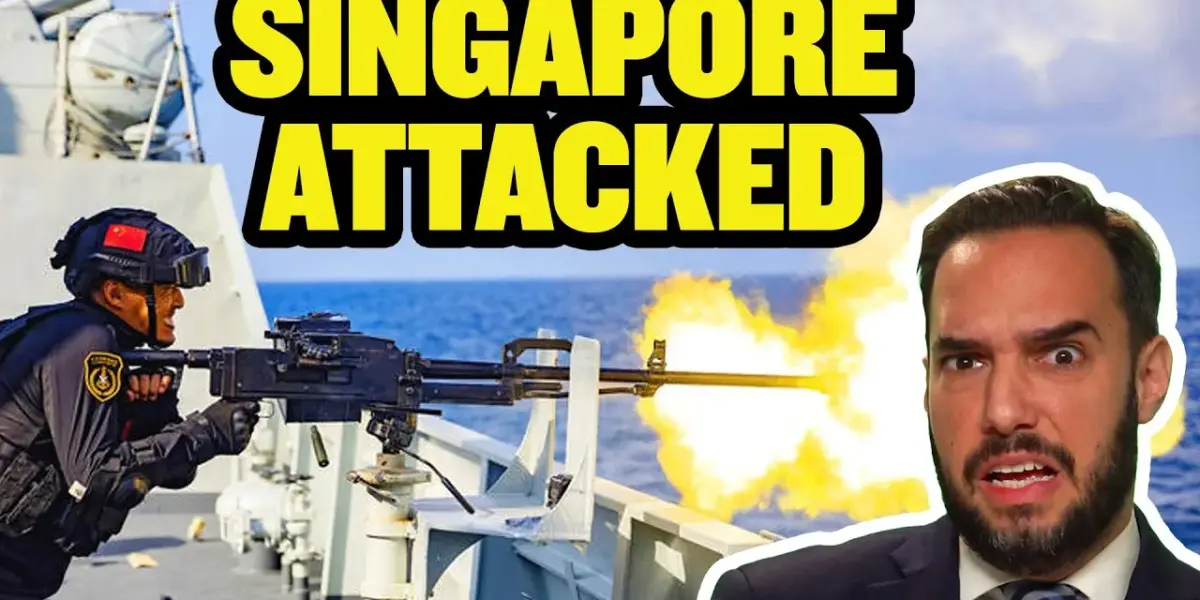
China's strategic ambitions may extend to Singapore, a nation vital for controlling the Strait of Malacca. Beijing views the strait as crucial for its economy and power projection, while Singapore serves as a key logistics hub for the U.S. military in the Indo-Pacific. China is using influence operations to weaken ties between Singapore and the U.S., aiming to control the strait without direct conflict.

China Targets Singapore to Control Vital Strait
China’s growing military ambitions cast a long shadow across the Indo-Pacific. While many focus on a potential invasion of Taiwan, Beijing’s strategic calculations may extend to Singapore. Control of the Strait of Malacca, a critical global shipping route, is vital for China’s economy and its ability to project power. Singapore, a key partner for the U.S. military in the region, sits at the heart of this strategic chokepoint.
The Strait of Malacca: A Lifeline for China
The Strait of Malacca is a narrow waterway, less than 1.5 miles wide at its narrowest point. It connects the Pacific Ocean to the Indian Ocean, making it one of the busiest shipping lanes on Earth. Each year, trade worth $3.5 trillion, about one-third of the world’s total economic output, passes through this strait.
For China, the Strait of Malacca is even more crucial. It handles two-thirds of China’s total trade volume. Over 83% of China’s oil imports also travel through this vital passage. Any disruption here, like a blockade by the United States, could cripple China’s economy and its ability to wage war.
Singapore’s Strategic Role for the U.S.
Beyond its geographic importance, Singapore serves as a major logistics hub for the U.S. military in the Pacific. While it doesn’t host permanent U.S. bases, agreements between the U.S. and Singapore allow for significant military cooperation.
Since 1990, a Memorandum of Understanding has allowed U.S. forces access to facilities in Singapore. This agreement was renewed in 2019. Other agreements, like the 2005 Strategic Framework Agreement and the 2015 Enhanced Defense Cooperation Agreement, further solidify this partnership.
These pacts enable the U.S. to use Singapore’s Changi Naval Base, which includes a U.S. Naval Ship Repair Facility. The U.S. also uses Paya Lebar Air Base, where spy planes like the Boeing P8 Poseidon are deployed. The Simbang naval wharves are also important for U.S. military logistics and coordination across the Pacific.
Command and Control Hub in Singapore
Singapore hosts key U.S. military command structures. Commander Logistics Group Western Pacific, known as Commlog Westpak, and Commander Task Force 73 are based there. Established in 1992, Commlog Westpak is the U.S. 7th Fleet’s main logistics agent for Southeast Asia.
This group plans and manages ship repairs, refueling, and funding for repairs in the Pacific. It also coordinates training exercises with Asian countries. Commlog Westpak is essential for planning resupplies of food and ammunition. It supports naval patrols in the South China Sea, acting as a critical node for U.S. operations.
Losing access to Singapore would significantly hinder U.S. military operations in the Pacific, especially during a conflict over Taiwan. It would force the U.S. to conduct operations with much greater difficulty.
China’s Influence Operations
China seeks to neutralize Singapore’s strategic importance without resorting to military force. Over 75% of Singapore’s population is ethnically Chinese. The Chinese Communist Party (CCP) often views ethnic Chinese people worldwide as subjects.
Reports suggest that the CCP uses influence operations, primarily through Chinese business, clan, and grassroots organizations. These groups aim to pressure the Singaporean government to distance itself from the U.S. and its allies. Beijing wants Singapore to stop joint military training with Taiwan and halt its annual Project Starfighter drills.
If Beijing can achieve these goals through diplomatic or economic pressure, it would be a significant victory. However, if war breaks out, China cannot afford to have the U.S. controlling access to the Strait of Malacca through Singapore.
Singapore’s Strong Defense
Despite China’s efforts, Singapore is not an easy target. It is considered one of the most densely defended countries globally. Singapore has invested heavily in its military, possessing advanced troops, tanks, warships, and aircraft relative to its size.
Its defense spending ensures its military assets rival those of many major global powers. This strong defense posture acts as a significant deterrent against any potential aggression.
Global Impact
The strategic importance of Singapore and the Strait of Malacca highlights the complex geopolitical dynamics in the Indo-Pacific. China’s desire to control this vital waterway is driven by its economic needs and its ambition to challenge U.S. influence in the region.
The U.S.-Singapore partnership is a key element in maintaining regional stability and freedom of navigation. Any conflict or shift in this balance would have far-reaching consequences for global trade, security, and the international order.
Source: When China Attacks Singapore… (YouTube)

Related Articles

Gulf Allies Urge Trump to Continue Iran Conflict
U.S. allies in the Persian Gulf are urging President Trump to intensify military action against Iran, believing Tehran has not been sufficiently weakened. The ongoing conflict raises concerns about regional stability and global energy prices, while questions linger about the administration's long-term strategy.


Middle East Conflict Sends Gas Prices Soaring Past $4
The national average gas price has surpassed $4 per gallon for the first time since 2022, driven by escalating conflict in the Middle East. Recent attacks on oil tankers and military strikes have heightened fears of energy supply disruptions, impacting consumers globally.
US Weighs Troop Deployment Amid Iran Deal Push
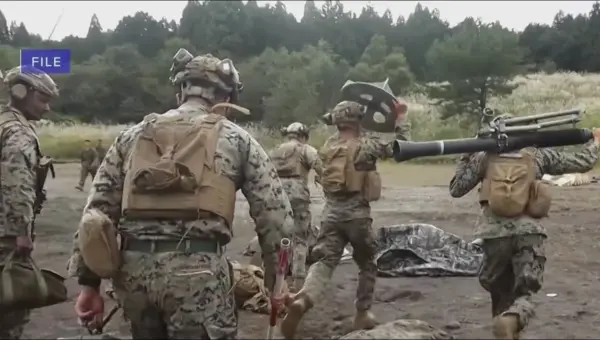
The U.S. is considering deploying ground troops to Iran while simultaneously pushing for a diplomatic deal to reopen the Strait of Hormuz. Air strikes are ongoing as President Trump increases pressure on Iran.