China Faces Tariff Threat Over Iran Arms Aid
President Trump is threatening China with a 50% tariff on all goods if Beijing provides military assistance to Iran. U.S. intelligence reports allege China is sending shoulder-fired missiles to Tehran. This move escalates U.S.-China tensions and has significant global economic and security implications.


China Faces Tariff Threat Over Iran Arms Aid
President Trump has issued a strong warning to China, threatening significant economic penalties if Beijing provides military aid to Iran. This move brings China directly into the complex geopolitical situation involving Iran and the United States. The White House is closely watching China’s actions and their potential impact on regional stability.
U.S. Intelligence Alleges Military Shipments
Reports from American intelligence agencies suggest that China has either sent or is preparing to send shoulder-fired missiles to Iran. These weapons could significantly alter the military balance in the Middle East. If confirmed, such a transfer would be seen as a direct challenge to U.S. interests in the region.
Staggering 50% Tariff Threat
President Trump announced earlier this week that any country supplying military weapons would face a 50% tariff on all goods exported to the United States. He explicitly stated this would apply to China if they are found to be assisting Iran militarily. This proposed tariff rate is exceptionally high, aiming to make any such trade economically unviable.
“I doubt they would do that because I have a relationship and I think they wouldn’t do that. But maybe they did a little bit at the beginning. But I don’t think they would anyone know. But if we’re doing that, they get a 50% tariff, which is a staggering, that’s a staggering amount.”
China’s Strategic Interests
China has long sought to maintain a stable energy supply, much of which comes from the Middle East. Iran, as a major oil producer, is a key part of this equation. Beijing also views its relationship with Tehran as a way to counter U.S. influence globally. China’s Belt and Road Initiative also involves significant investments in countries near Iran, making regional stability important for its economic goals.
U.S. Motivations and Objectives
The United States aims to prevent Iran from developing nuclear weapons and to curb its regional influence. The U.S. also seeks to isolate Iran economically and diplomatically. Allowing Iran to acquire advanced weaponry from a major power like China would directly undermine these objectives and could lead to increased regional conflict.
Historical Context of U.S.-China Relations
The relationship between the U.S. and China is multifaceted, marked by both cooperation and intense competition. They are major trading partners, but also rivals in areas like technology and military power. Past trade disputes and disagreements over issues like Taiwan and the South China Sea have created a tense dynamic. This current threat is an escalation of that complex relationship.
Economic Leverage and Trade
The proposed 50% tariff represents a significant economic weapon. In 2023, U.S. imports from China totaled hundreds of billions of dollars. A tariff of that magnitude would severely disrupt trade flows, harming both economies. China’s reliance on the U.S. market for its exports makes it particularly vulnerable to such measures.
Global Impact and Shifting Order
This situation highlights the growing interconnectedness of global security and economics. A trade war between the U.S. and China, triggered by actions in the Middle East, could have far-reaching consequences. It could force other nations to choose sides, disrupt global supply chains, and potentially weaken international institutions designed to manage such disputes. The world order is increasingly shaped by these complex interactions between major powers.
Future Scenarios
One possibility is that China reassesses its support for Iran to avoid the severe economic consequences threatened by the U.S. Another scenario involves China calling the U.S. bluff, proceeding with military aid, and bracing for a significant trade conflict. A third outcome could be a diplomatic resolution, where China reduces its military support for Iran in exchange for concessions from the U.S. on other trade or geopolitical issues. The upcoming meeting between President Trump and Chinese leadership will be crucial in determining the path forward.
Source: Trump threatens China with 50% tariffs if they assist Iran | NewsNation Prime (YouTube)

Related Articles
U.S. Readies Military Might as Iran Tensions Spike
U.S. military readiness is heightened as tensions with Iran escalate, particularly concerning the Strait of Hormuz. While diplomatic channels are being explored, the potential for military action looms. The crisis has significant implications for global energy security and regional stability.
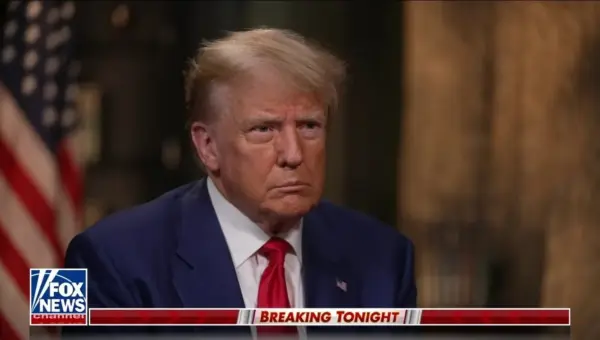
Trump’s Fox Interview Reveals Reckless Global Threats, Economic Risks
Donald Trump's recent Fox interview revealed alarming threats against Iran and questionable economic predictions. He discussed potentially destroying Iran's infrastructure and acknowledged the economic risks, yet also claimed current economic success. The interview highlights concerns about his foreign policy and economic judgment.
Trump Orders Strait of Hormuz Blockade; Oil Prices Surge
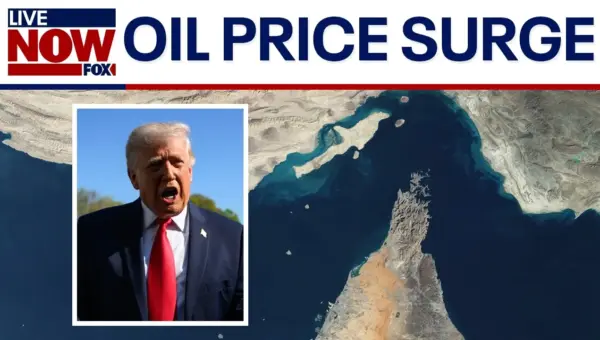
President Trump announced an immediate blockade of the Strait of Hormuz, a vital global oil chokepoint, following failed Iran negotiations. This move has triggered an $8-$9 surge in oil prices, with experts warning of further increases in gasoline and diesel costs worldwide. The blockade raises concerns about global supply and potential inflation.