Chaos Erupts: US Prepares Middle East Evacuations Amidst Crisis
The U.S. State Department is preparing complex Noncombatant Evacuation Operations across a dozen Middle Eastern countries, as thousands of Americans remain stranded. Retired Army Major General Spider Marks described the process as 'the definition of chaos,' highlighting immense logistical and identification challenges.


US Scrambles to Evacuate Citizens from Volatile Middle East
In a rapidly escalating geopolitical situation, the United States is preparing to launch Noncombatant Evacuation Operations (NEO) to extract American citizens from a dozen countries across the Middle East. The announcement, made by the State Department, signals a critical phase in the ongoing crisis, as thousands of Americans find themselves stranded amidst escalating tensions.
Defining the ‘Chaos’ of Evacuation
Retired Army Major General and head of geopolitical strategy at Academy Securities, Spider Marks, described the daunting logistical challenges of such an operation. “An operation like this is called a Noncombatant Evacuation Operation,” Marks explained. “It’s exceptionally chaotic primarily because you have to identify those that have declared where they are, what their intentions are.” He highlighted the difficulty in locating all American travelers, many of whom do not declare their presence in foreign nations, leaving the State Department and consulates uncertain about the exact number of citizens needing assistance. “So the State Department and consulates are kind of at a loss as to who is out there and who they need to try to assemble.”
The process involves identifying the population, establishing assembly areas, and managing the complex desires of individuals wanting to depart. “You can just imagine as people begin to gather how they want to depart, where they should go, when are they going to return? So it’s the definition of chaos,” Marks stated. He painted a vivid picture of the scene: “People are dragging bags, dragging parrots, dragging their pets. It’s incredibly difficult to get this done well.”
Broader Military Operations and Strategic Objectives
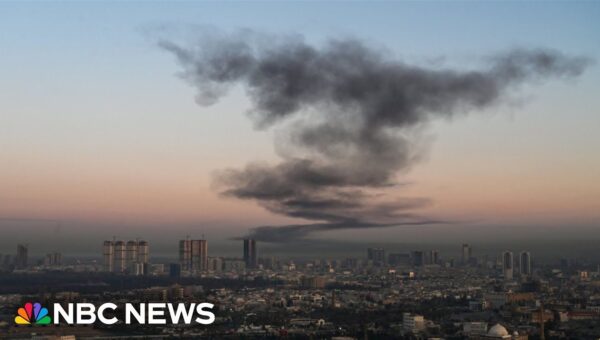
The evacuation efforts are unfolding against a backdrop of significant military action, aimed at suppressing air defense capabilities and missile stockpiles in the region. President has indicated that these operations could continue for an extended period, potentially up to four weeks. Major General Marks characterized the current phase as a “grind it out” period, focusing on “targets of opportunity and immediate suppression of air defense capabilities, missile launchers, missile stockpiles, going after leadership targets, communications, command and control.”
These actions are designed to dismantle the nodes of power for both the clerical regime and the Islamic Revolutionary Guard Corps (IRGC), described as the apparatus of brutal control within Iran. The objective is to suppress these elements to facilitate a potential transition within the Iranian government.
The Uncertain Future of Iranian Governance
Marks elaborated on the potential transition scenarios within Iran, noting the uncertainty surrounding the country’s future governance. “Is it going to be constitutional or is it going to be kind of a guardianship where the IRGC step in and say we got it for now, clerics are still here but we’re kind of in charge now? Or is the IRGC going to come in and say clerics are out, we’ve got it until further notice we’re in charge?” A popular uprising remains a less likely scenario, according to current observations.
While the President has expressed a desire for the Iranian people to control their own country, the strength and size of the Iranian military, estimated at around a million people, present a formidable challenge. Marks cautioned against direct American military intervention on the ground, citing historical precedents. “We have a very checkered history in terms of it’s a very difficult time. We are affecting regime change, enforcing our will onto a people that are not prepared to accept that and want to be a part of the new future.”
The End State: Punishment and Deterrence
The strategic objective appears to be the punishment of leadership and the delay or destruction of Iran’s capability to develop a militarized nuclear program. Marks suggested that even if a new regime emerges that is not entirely comfortable for the United States and its regional partners, the ongoing operations aim to inflict pain and punishment. “And we can go back and inflict some real pain and punishment if this new regime, whatever it looks like, continues along the path of its predecessors,” he stated.
The complexity of the situation, coupled with the need to manage domestic political will, suggests a careful calibration of objectives. The U.S. aims to achieve its strategic goals, including preventing nuclear proliferation, while navigating the intricate internal dynamics of Iran and the logistical nightmare of evacuating its citizens from a volatile region.
Looking Ahead
As the evacuation operations continue, the world will be watching to see how effectively the U.S. can extract its citizens while simultaneously pursuing its broader strategic aims in the Middle East. The coming weeks will be critical in determining the trajectory of the conflict, the future of Iran’s leadership, and the stability of the region.
Source: 'Definition of chaos': Ret. Army Maj. Gen. on Americans trying to evacuate Middle East (YouTube)

Related Articles


Americans Stranded Overseas Amid Iran Strikes: “Can’t Find a Way Home”
Americans are stranded overseas, including a father and daughter in Jerusalem, due to widespread flight cancellations following Iran strikes. The group describes the fear and uncertainty but also a strengthening of faith amidst the crisis, as they await news on when they can return home.


Ukraine Strikes Deep: Russia’s ‘Untouchable’ Assets Hit
Ukraine has successfully launched long-range drone attacks deep inside Russia, hitting a crucial chemical plant in Perm and an oil terminal in Krasnodar. These strikes dismantle Russia's perceived geographical safety and target key economic lifelines, impacting its ability to sustain the war effort. The attacks highlight Ukraine's evolving strategy of systematic disruption and innovative use of technology, including high-altitude balloons, to degrade Russian capacity.

Iran’s Supreme Leader Killed in Joint US-Israel Strikes
Iran's Supreme Leader Ayatollah Khamenei and top military officials were killed in a joint US-Israel "Operation Epic Fury." The strikes have led to significant casualties in Iran, while the US reports no personnel losses. President Trump has endorsed regime change and warned of severe retaliation if Iran strikes back.