Castro Denies Communism, Defends Cuba’s Future
In a 1959 'Meet the Press' appearance, Cuban Prime Minister Fidel Castro denied being a communist, instead advocating for 'humanism' and social justice. He addressed concerns about his government's direction, affirmed his commitment to democracy, and promised free elections, while pushing back against accusations of communist influence and defending Cuba's role in Latin America.

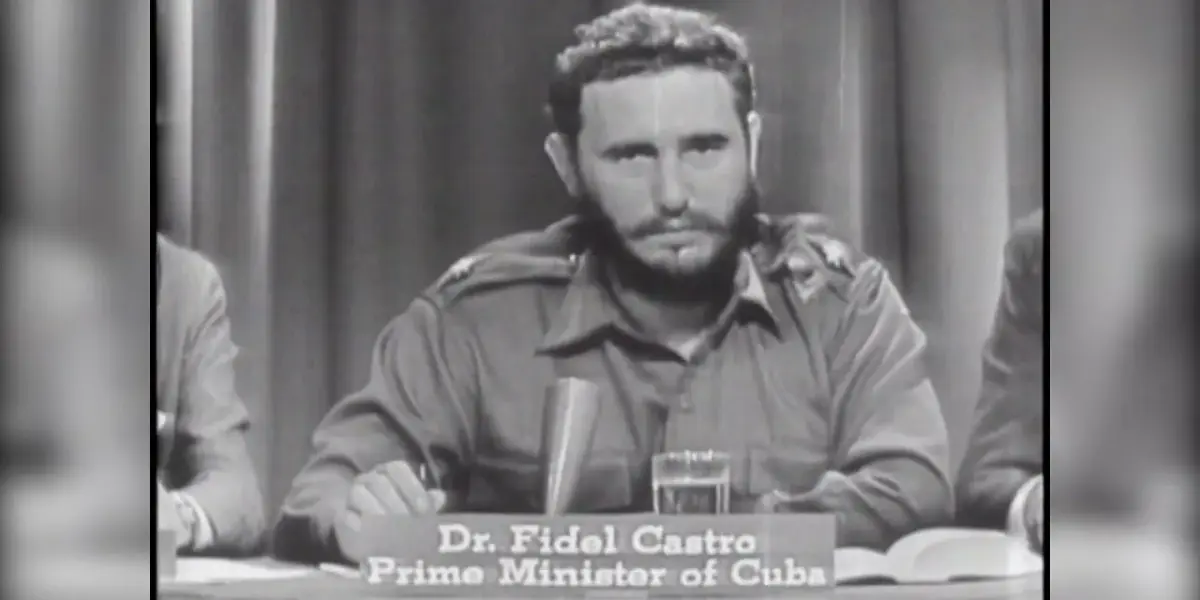
Castro Denies Communism, Defends Cuba’s Future on ‘Meet the Press’
In a rare 1959 television appearance on the program ‘Meet the Press,’ Cuban Prime Minister Fidel Castro addressed accusations of communism and clarified his government’s direction before a panel of American journalists. Speaking just months after overthrowing dictator Fulgencio Batista, Castro asserted his commitment to democracy and human rights, while pushing back against what he described as misinterpretations of his government’s policies and his personal beliefs.
Addressing Accusations of Communism
During the interview, Castro directly confronted claims that his government was communist. When asked if he was neutral in the struggle between communism and democracy, he emphatically stated, “No. No. That was the interpretation that we are giving to our words.” He explained that his remarks about not being prepared for war were misconstrued as a declaration of neutrality. Castro stressed that his ideology was not communism, stating, “I am not communism. I am not agree with communism.” He instead described his government’s ideas as “humanism,” aiming to provide people not only with freedom but also with the means to live.
When pressed by Senator Smith of Florida, who alleged communists were in his government, Castro questioned the basis of such claims. He pointed out that critics often labeled Cubans as communist for traveling to Europe, while Americans could travel to Moscow without similar accusations. Castro also defended his brother and sister-in-law against claims of communist ties, stating he knew them best and they were not communist, comparing the accusations to calling Stevenson communist because he traveled to Moscow.
Commitment to Democracy and Elections
A central theme of Castro’s appearance was his commitment to establishing a democratic government in Cuba. He assured the panel that he was the person most interested in holding elections, emphasizing that for him and his ministers, power was a sacrifice, not a personal gain. Castro aimed to create the conditions for free elections as soon as possible, suggesting that this process could take up to four years.
He explained that the delay was due to the immense task of rebuilding Cuba after years of dictatorship and civil war. “We have to attain many problems,” he stated, citing the need to address widespread unemployment, establish schools, and build hospitals. Castro argued that true democracy could not exist on an empty stomach and that social justice, ensuring employment for all, was a necessary foundation. He contrasted this with the corruption of the past, where politicians allegedly bought votes and offered favors instead of genuine solutions.
When questioned about the timeline for elections, Castro acknowledged past statements suggesting shorter periods but explained that the exact timing depended on overcoming the significant challenges left by the previous regime, including a near-empty treasury. He defended his stance by asking why the United States needed three years to recover after its own revolution. He also noted that while he championed free elections, he would not impose them if the Cuban people, focused on working and rebuilding, were not yet ready.
Cuba’s Role in Latin America and Human Rights
Castro also addressed Cuba’s relationship with other Latin American countries and the principle of non-intervention. He rejected accusations of trying to dictate governments in other nations, stating he spoke about democracy in the same way the United States did. He declared himself against all forms of intervention in the internal affairs of other countries, a principle he felt was crucial for Latin America, which had long struggled against tyranny.
He invoked the U.S. Declaration of Independence, questioning what would be done to those who abolished the fundamental rights of freedom and life. This sentiment underscored his belief in universal human rights and his critique of governments that denied them. Castro maintained that Cuba’s doors were open to political exiles, a stance he defended as just.
Broader Implications and Future Outlook
Castro’s appearance on ‘Meet the Press’ offered a crucial glimpse into his early leadership and his efforts to shape international perceptions of his revolution. He strategically used the platform to appeal directly to American public opinion, believing that public support would pave the way for governmental understanding. His emphasis on humanism, social justice, and democracy, while distancing himself from communism, was a calculated move to garner favor in the United States.
The interview highlighted the complex geopolitical climate of the Cold War era, where emerging nations often found themselves caught between competing ideologies. Castro’s nuanced position, attempting to forge a path independent of both Soviet communism and perceived U.S. dominance, set the stage for future challenges and alignments. The panel’s probing questions reflected American concerns about the direction of Cuba and the potential for communist influence in the Western Hemisphere.
Looking Ahead
Fidel Castro’s appearance on ‘Meet the Press’ in 1959 marked a pivotal moment in his early years as Cuba’s leader. The interview showcased his rhetorical skill and his determination to present his revolution in a favorable light to the American public. As Cuba navigated its post-revolution landscape, the world would continue to watch closely to see if Castro’s vision of a democratic, just society would materialize, or if the pressures of the Cold War and internal challenges would lead Cuba down a different path.
Source: Fidel Castro says he is 'not a communist': Meet the Press Archive (YouTube)

Related Articles
Rep. Jayapal Slams US Oil Blockade on Cuba as ‘Outrageous’
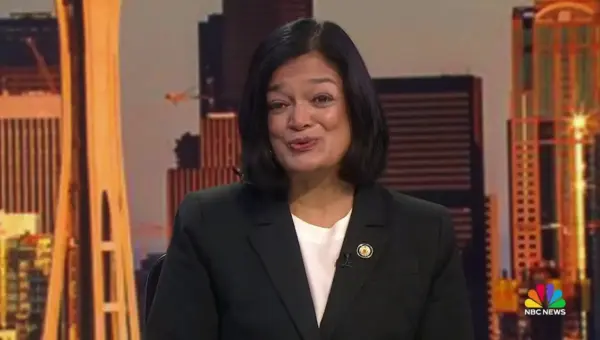
Congresswoman Pramila Jayapal has strongly criticized the U.S. oil blockade on Cuba as 'outrageous' and a humanitarian crisis, advocating for direct negotiations over sanctions. She also called for accountability regarding allegations against Congressman Eric Swalwell and expressed support for a robust Democratic primary in 2028.
Cuba Vows Fierce Resistance to U.S. Invasion Threats
Cuban President Miguel Díaz-Canel issued a strong warning against U.S. invasion, vowing fierce resistance and sacrifice. He highlighted Cuba's resilience under a decades-long blockade, rejected narratives of collapse, and detailed the nation's defensive strategies and efforts to overcome economic hardship.
Cuba Rejects U.S. Demands on Prisoners, Elections
Cuban President Miguel Díaz-Canel rejected U.S. demands for releasing political prisoners and holding multi-party elections, calling them internal matters not subject to negotiation. He attributed the suffering of the Cuban people to the U.S. blockade, not to internal policies or his leadership.