Carvana’s Rally Under Scrutiny Amid Fraud Allegations
Carvana's remarkable stock rally is facing intense scrutiny following allegations of fraud by Gotham City Research. The report claims the online used car retailer inflates profits through opaque transactions with its affiliated company, DriveTime, potentially masking a precarious financial structure.

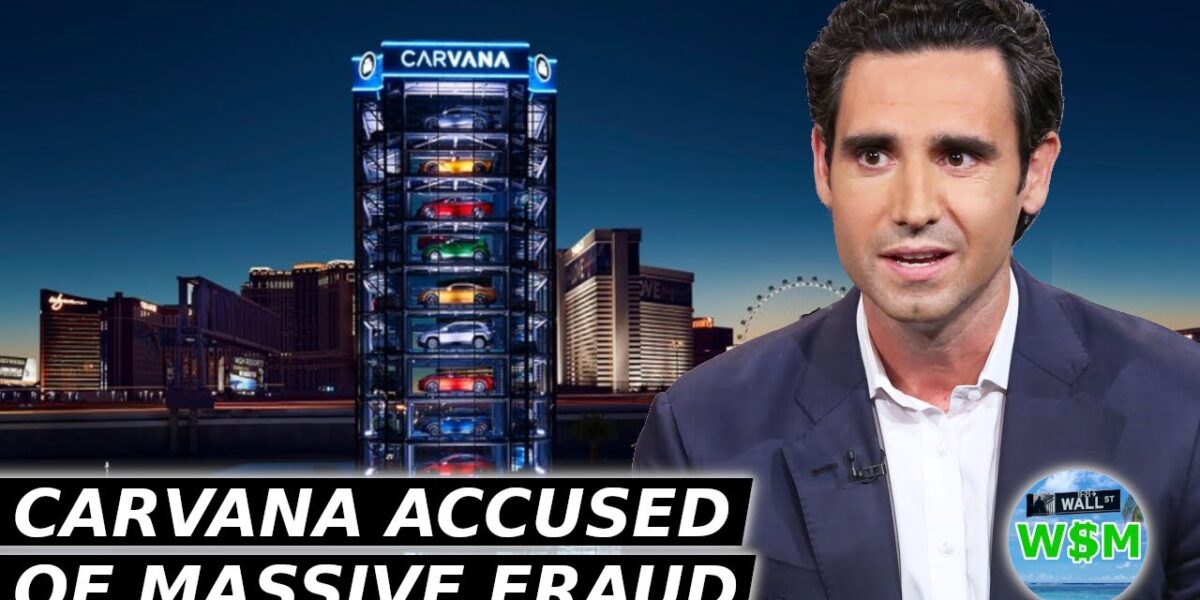
Carvana’s Remarkable Turnaround Faces Fraud Accusations
In a stunning reversal of fortune, online used car retailer Carvana (CVNA) has transformed from a near-bankrupt entity to a Wall Street darling, only to find itself at the center of serious fraud allegations. The company, known for its innovative car vending machines and home delivery service, has experienced a monumental stock price surge, climbing from below $5 per share in 2022 to over $400 per share by early 2025. This dramatic comeback, however, is now being questioned following a critical report by activist hedge fund Gotham City Research, which accuses Carvana of engaging in a sophisticated scheme to inflate profits through related-party transactions.
From Near Collapse to Billions in Market Cap
Carvana’s journey has been nothing short of extraordinary. Burdened by significant debt and substantial losses in 2022, the company appeared on the brink of bankruptcy. A crucial debt restructuring agreement in September 2023 provided a lifeline, allowing Carvana to defer billions in maturities until 2028-2031 and implement an interest-in-kind (PIK) payment structure, where interest accrues to the principal rather than requiring immediate cash outlay. This, coupled with cost-cutting measures like widespread layoffs and a stabilization in used car prices, propelled Carvana into profitability. By the first nine months of 2025, the company reported a profit of $1.5 billion, leading to a market capitalization approaching $90 billion.
The Heart of the Allegations: Related-Party Transactions
The controversy stems from the intricate and reportedly opaque relationship between Carvana and DriveTime, a privately held used car dealership company owned by Ernie Garcia II. Carvana was initially founded by DriveTime in 2012. Gotham City Research alleges that Carvana’s founder and CEO, Ernie Garcia III, along with his father, Ernie Garcia II, are using DriveTime to artificially inflate Carvana’s reported profits. The core of the accusation centers on Carvana’s lucrative financing arm.
Carvana’s business model relies heavily on ancillary services, with financing being the largest profit driver. While the gross profit from selling a car itself is relatively slim—around $3,400 in the first nine months of 2025 on an average retail price of $23,968—the company generates substantial revenue from selling auto loans and offering extended warranties and insurance commissions. The company boasts an exceptionally high loan approval rate, with 99% of applicants reportedly approved. Eligibility requirements are notably relaxed, requiring only being 18 years old, having $10,000 in annual income, and not being bankrupt or having defaulted on a Carvana loan in the past two years. Critics point out that these lenient standards, particularly the low income threshold, are designed to attract subprime borrowers.
A key element of Gotham’s report is the alleged role of Bridgerest, a subsidiary of DriveTime. Gotham claims that Bridgerest, controlled by the Garcia family, is purchasing a significant portion of Carvana’s auto loans at above-market prices. This practice, according to the report, allows Carvana to book large, immediate profits from the sale of these loans, even though many are likely high-risk and originated from subprime borrowers. Carvana typically sells these loans to external investors, thus offloading the default risk. However, Gotham alleges that Bridgerest is absorbing the lower-quality loans that unaffiliated entities like Ally Bank (which has committed to purchasing up to $4 billion in loans in 2025) may not acquire. DriveTime, which is not publicly traded and thus not required to disclose its financials, reportedly experienced negative cash flow of $1 billion in 2023 and 2024, largely attributed to its significant investment in originating finance receivables—auto loans.
Ancillary Revenue Streams Under the Microscope
Beyond financing, Carvana also generates revenue from its Carvana Care extended warranty program and commissions from insurance partners like Root. Notably, the fulfillment of Carvana Care obligations is subcontracted to DriveTime, suggesting another avenue for related-party transactions. While Carvana’s financial statements indicate substantial gross profit per vehicle—around $6,400 after including ancillary services—Gotham City Research suggests that these profits are artificially boosted by the transactions with DriveTime and its subsidiaries, rather than being solely derived from Carvana’s core operations.
The report contrasts Carvana’s financial performance with that of CarMax, a publicly traded competitor. In the first nine months of 2025, Carvana reported a gross profit of $3,400 per car, versus CarMax’s $2,300. However, the disparity in financing income is stark: Carvana generated over $2,000 per car in net finance income, compared to CarMax’s approximately $700. This difference is largely explained by CarMax holding most of its loans on its balance sheet, thereby bearing the associated risks, while Carvana immediately sells its loans.
Market Impact and Investor Concerns
The allegations have cast a shadow over Carvana’s impressive stock performance. If Gotham’s claims are accurate, the company’s profitability could be unsustainable, relying on a practice that may eventually deplete the financial resources of DriveTime and Bridgerest. The strategy of originating high-risk loans and selling them at inflated prices to related entities could lead to significant future losses for the Garcia-controlled businesses, potentially unraveling the entire structure.
Investors are now faced with a critical decision: Is Carvana a testament to innovative business strategy and resilience, or is its current valuation built on a foundation of financial engineering and potentially fraudulent practices? The opacity of DriveTime’s financials makes it difficult to independently verify Gotham’s claims. However, the detailed nature of the report, referencing specific loan records and financial data obtained through a Freedom of Information Act request, has raised serious concerns.
What Investors Should Know
- Related-Party Transactions: The core of the allegations involves transactions between Carvana and DriveTime/Bridgerest. Investors should scrutinize the financial reporting around these dealings.
- Financing Business Model: Carvana’s profitability is heavily reliant on its financing arm, which uses relaxed lending standards. The sustainability of this model, especially if low-quality loans are being offloaded to related entities, is a key concern.
- Debt Load: While restructured, Carvana still faces significant debt maturities in the coming years. The company’s ability to service this debt will depend on sustained profitability, which is now in question.
- Gotham City Research: This activist short-seller has a history of publishing critical reports that have impacted stock prices. Their allegations warrant thorough investigation by regulators and investors alike.
The coming months will likely see increased scrutiny from regulators, auditors, and investors as they attempt to disentangle the complex financial web involving Carvana and its related entities. The outcome of this situation could have significant implications for the used car retail sector and the broader market for securitized auto loans.
Source: Carvana Accused of Massive Fraud (YouTube)

Related Articles


Quirk Over Quality: 10 Unusual Cars Under $25K
Discovering the most unusual and character-filled vehicles doesn't require a bottomless wallet. This list explores ten quirky cars, from three-wheeled wonders to vintage military machines, all available for under $25,000, proving that unique style can be remarkably affordable.


Covered Calls: A Costly Illusion for Investors
Covered call strategies, while appealing for their income generation, are criticized for hindering long-term wealth growth by limiting upside participation. Despite some downside protection, historical data and detailed analyses show these funds often underperform broader market indexes over time, making them a potentially costly illusion for investors.


AI’s Economic Shift: Ownership is the New Wage
Artificial intelligence is projected to significantly reduce the economic value of human labor within a decade. Experts suggest that capital ownership, rather than wages, will become the primary means of wealth accumulation. Investors are urged to consider this shift in their long-term strategies.