Cartels Unleash Modern Warfare Tactics: A Glimpse Inside
Recent footage reveals drug cartels employing sophisticated, militarized tactics, including armored vehicles, weaponized drones, and urban ambushes. This evolution challenges state security forces and blurs the lines between organized crime and asymmetric warfare, particularly in Mexico and Colombia.

Cartels Unleash Modern Warfare Tactics: A Glimpse Inside
The escalating conflict between drug cartels and state forces, particularly in Mexico and Colombia, is revealing a disturbing evolution in criminal organizations. Far from being mere street gangs, these cartels are increasingly employing sophisticated, militarized tactics, blurring the lines between organized crime and asymmetric warfare. Recent footage offers a stark, often brutal, look at the methods and sheer violence these groups are capable of, highlighting a reality that many remain surprisingly unaware of.
Border Skirmishes and Collusion Fears
One particularly unsettling incident occurred along the Mexico-Guatemala border, where Mexican Quick Reaction Force (FRIP) teams pursued cartel gunmen across the international line. What unfolded was a chaotic firefight that raised serious questions about regional law enforcement cooperation. In footage analyzed, Guatemalan soldiers appeared not only to refrain from engaging the cartel members but, in one instance, a soldier in an idling vehicle seemed to provide cover for the fleeing gunmen. This has fueled suspicions among observers in Mexico that Guatemalan forces may be colluding with the cartels, a testament to the pervasive corruption and complex allegiances that define these conflict zones.
The engagement saw Mexican armored vehicles returning heavy fire while navigating a densely populated border town, La Mesia. The narrow streets and close proximity of civilian businesses and residences illustrate the perilous conditions under which these operations take place. Mexico’s president acknowledged the border breach and initiated an investigation, while local governors have offered justifications, framing such cross-border actions as necessary to intercept cartel members evading justice. Reports indicate Mexican troops killed four gunmen in this specific incident, yet the broader implications of potential state-sanctioned complicity or inaction remain a significant concern.
Urban Ambushes and Civilian Risk
The violence is not confined to remote border regions; it extends into urban centers. A shocking incident outside a municipal police office in Veracruz showed a van delivering cartel hitmen in broad daylight. The targeted officer, demonstrating remarkable situational awareness and reflexes, managed to take cover inside a nearby house. The attackers unleashed sustained gunfire on the residence, with local police providing backup. The getaway vehicle abandoned two hitmen, highlighting the risks and potential disorganization within cartel operations, even as their offensive capabilities are clearly on display.
The audacity of such attacks, particularly when civilians are caught in the crossfire, underscores the cartels’ ruthlessness. In the Veracruz incident, a woman on a motorcycle was positioned between the officer and the attackers. The hitmen proceeded with their assault despite her presence, raising the grim possibility that she was either a deliberate distraction or that the cartels simply do not prioritize civilian safety in their violent operations. This event, reportedly linked to fallout from the killing of a top cartel boss, illustrates how retaliatory violence can quickly escalate and endanger innocent lives.
The Militarization of Cartel Operations
The footage reveals a concerning trend: cartels are increasingly adopting military-grade tactics and equipment. This includes the use of armored vehicles, often homemade but heavily modified with welded plates, mounting heavy machine guns. These ‘narco tanks’ are not only used for offensive operations but also for defense, as seen in clashes where rival cartels engage in protracted firefights, their vehicles absorbing significant punishment. The sheer destructive power and the willingness to engage in head-on armored combat are indicative of a significant escalation.
Furthermore, cartels are leveraging advanced technologies. The use of weaponized drones, learned in some cases from conflicts like the one in Ukraine, is becoming more prevalent. These drones are employed against rival gangs and pose a growing threat to security forces. The fear of drone incursions even led to the temporary closure of El Paso airport, with an estimated 2,000 such incursions per month at the border. The visual of cartel members casually firing belt-fed machine guns into the sky, not necessarily at a target but as a display of power and intimidation, further emphasizes their move towards a paramilitary posture.
State Response and Evolving Battlefield
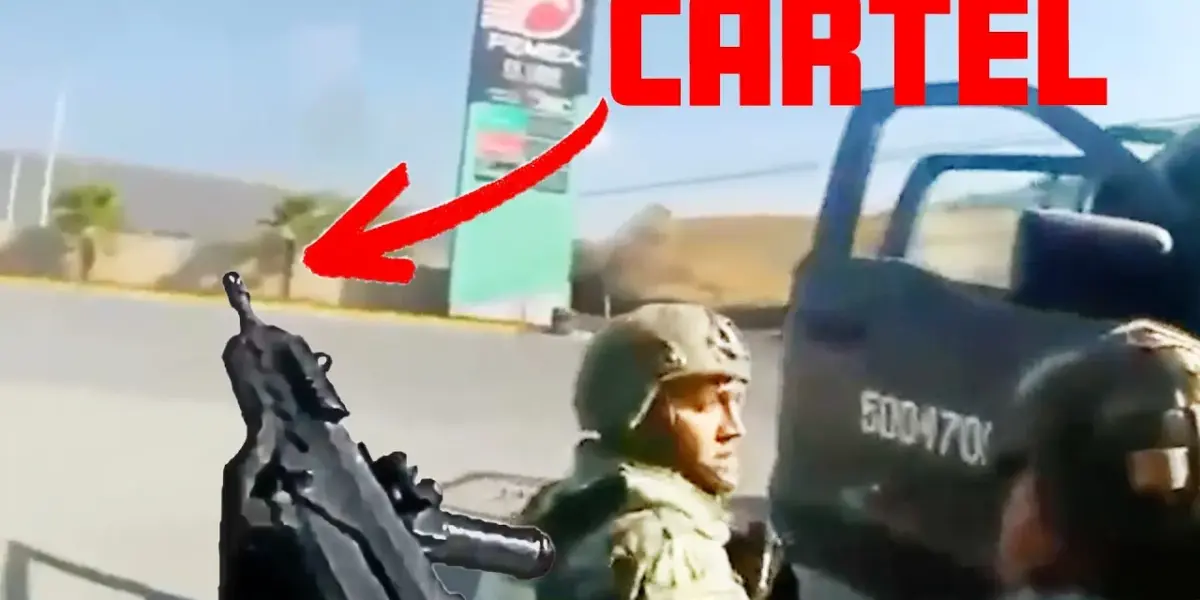
The response from state forces is also evolving, though not always effectively. Mexican troops are seen deploying in unarmored, open-top vehicles, prioritizing speed and mobility, but leaving them vulnerable. They engage cartel vehicles and gunmen, utilizing domestically produced firearms like the FX05. In retaliation for high-profile cartel leader deaths, such as El Mencho, cartels have responded with coordinated ambushes on National Guard convoys, creating ‘textbook kill zones’ and demonstrating meticulous planning. Some engagements involve sophisticated tactics like sniper fire and the use of improvised explosive devices (IEDs), mirroring insurgent warfare seen in places like Iraq and Afghanistan.
Colombia’s special forces are engaged in high-risk operations, including helicopter insertions for hostage rescues, such as Operation Thor to save lawyer Yannis Zabalita from the ELN. These operations often involve Blackhawk helicopters armed with M134 miniguns, suppressing enemy positions with high volumes of fire. The jungle terrain of regions like Catatumbo becomes a war zone, with mass kidnappings and intense clashes. While successful operations like the hostage rescue can be achieved with zero casualties, the risks are immense. Helicopters have become targets, with one pilot narrowly escaping after a round struck his Blackhawk cockpit, and other instances of drones downing aircraft highlighting the evolving threat landscape.
Historical Context and Future Outlook
The roots of this conflict lie in the long-standing drug trade and the cartels’ adaptation to pressure. Groups like the Sinaloa and Jalisco New Generation Cartels (CJNG), and remnants of organizations like FARC in Colombia, have consistently evolved. The CJNG, in particular, has shown remarkable adaptability, targeting logistics nodes like mechanic shops, which are crucial for manufacturing armored vehicles and maintaining their fleet. This suggests a strategic understanding of the war economy.
The militarization of cartels presents a profound challenge. They are not just fighting each other; they are increasingly engaging state forces with tactics and equipment that blur the lines between criminal organizations and non-state armed groups. The reliance on social media to broadcast their exploits, showcase their weaponry, and amplify their victories serves as a form of psychological warfare. The future outlook suggests a continued arms race, with cartels adopting new technologies and tactics, and security forces attempting to counter them. The question remains whether state actors can effectively address the root causes of cartel power – corruption, poverty, and demand – or if they will be forced into an increasingly conventional, and costly, war against these formidable non-state actors.
Source: The Worst Cartel Combat Footage (YouTube)

Related Articles


US Bombs Dairy Farm: Military Strikes Questioned
An investigation revealed the US military struck a dairy farm in Ecuador instead of a cartel compound, raising questions about intelligence and propaganda. Further operations in the Caribbean have also faced criticism for lack of evidence and potential illegality, with the DOJ reportedly investigating a critical Colombian president.


York’s Drug War: County Lines Explode After Gang Takedown
Police investigations reveal how the fall of a powerful local drug gang in York created a vacuum, allowing "county lines" operations to flourish. These phone-based drug networks, often run from other cities, have brought a new wave of violence and exploitation to the historic city. This article explores the tactics, branding, and brutal reality of county lines, and the police response.


Drug Lords Found: Kinahan Cartel Leaders Spotted in Dubai
Investigative journalists have located and photographed Daniel and Christy Kinahan, leaders of the notorious Kinahan cartel, attending an MMA fight in Dubai. The cartel, a global criminal enterprise with billions in assets, has evaded international law enforcement for years, operating from the UAE. Their continued activities fuel drug addiction and fund terrorist groups worldwide.