Captain America’s Humble Beginnings Resonate Today
A look back at 2011's 'Captain America: The First Avenger' highlights its crucial role in the MCU. The film's introduction of key characters, plot points, and the Tesseract continues to influence the franchise, setting the stage for future Avengers installments.

Captain America’s Humble Beginnings Resonate Today
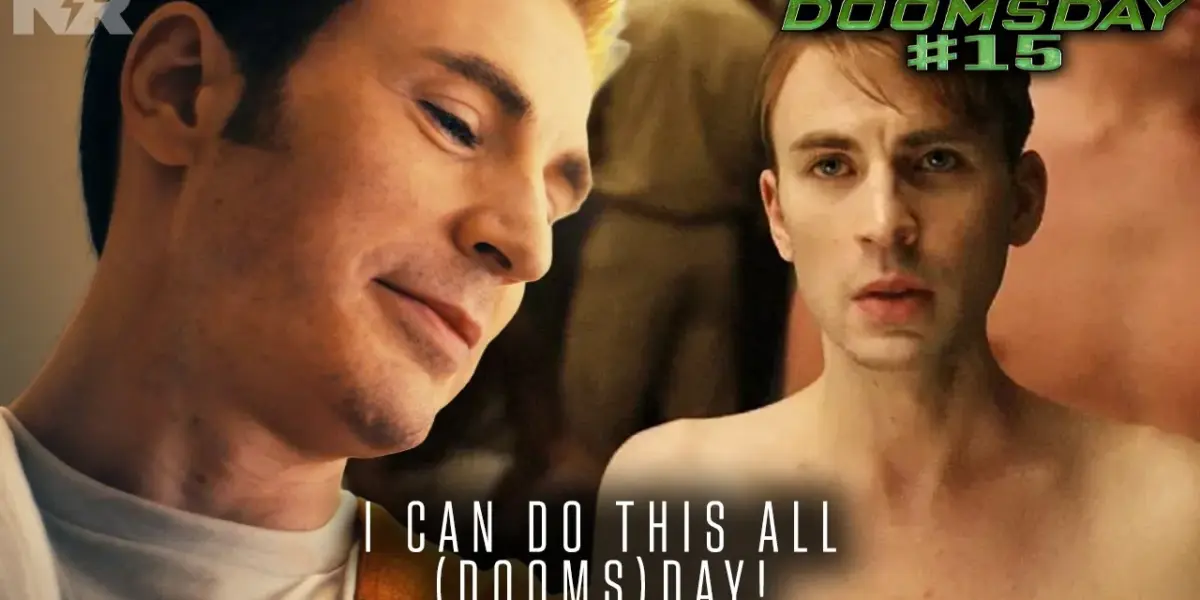
As the Marvel Cinematic Universe (MCU) gears up for its next major chapter, a look back at 2011’s Captain America: The First Avenger reveals just how much this origin story still matters. The film, which introduced us to a scrawny Steve Rogers transforming into the super-soldier, laid the groundwork for much of what has followed. From the shadowy depths of Hydra to the introduction of the Tesseract, this movie is a crucial piece of the MCU puzzle that continues to influence new stories, including the upcoming Avengers: Doomsday.
Chris Evans’ portrayal of Steve Rogers is central to the film’s enduring appeal. Even before he became the father figure seen in later films, or finally got his dance with Peggy Carter, Rogers’ journey in The First Avenger set a powerful example. This movie is more than just a World War II story; it’s the start of the Steve Rogers saga, a narrative thread that the Russo brothers have skillfully continued in films like Captain America: The Winter Soldier and the Avengers series.
A Strange but Wonderful Beginning
Looking back at Captain America: The First Avenger, it’s a bit surprising that such a movie was even made. The film, directed by Joe Johnston, known for his work on The Rocketeer and parts of the Indiana Jones franchise, blends historical drama with fantastical science fiction. The collaboration between Johnston and screenwriters Christopher Markus and Stephen McFeely, who would go on to write many of the Captain America films and later Avengers movies, proved to be a winning combination.
Released on July 22nd, 2011, by Paramount Pictures, the movie begins in the present day with the discovery of a vibranium shield frozen in ice, hinting at the ancient origins of Captain America. The story then flashes back to World War II, where Nazi officer and scientist Johann Schmidt, played by Hugo Weaving, seeks the powerful Tesseract. Meanwhile, in Brooklyn, the frail but determined Steve Rogers, played by Chris Evans, struggles to enlist for the war due to his poor health.
The Heart of a Hero
Despite his physical limitations, Steve Rogers consistently shows immense moral courage. A standout scene involves a bully disrupting a newsreel; Rogers stands up to him, famously declaring, “I can do this all day.” This moment, followed by his friend Bucky Barnes (Sebastian Stan) stepping in, highlights Rogers’ unwavering spirit. His desire to serve is so strong that it catches the attention of Dr. Abraham Erskine (Stanley Tucci), a scientist working on a top-secret super-soldier program for the Strategic Scientific Reserve (SSR).
The visual effects used to shrink Chris Evans’ body are notable for their time, though some shots create a slightly “bobblehead” effect. However, the emotional core of the story remains strong. Rogers is chosen for the super-soldier serum over others, including the confident Bucky, who is heading overseas. Dr. Erskine sees beyond Steve’s small stature, recognizing his pure heart and potential.
During his training, Steve proves his selflessness when he jumps on a dummy grenade thrown by Colonel Chester Phillips (Tommy Lee Jones), protecting his fellow cadets. This act solidifies his worthiness for the super-soldier program. The film also introduces MI6 agent Peggy Carter, played by Hayley Atwell, with whom Steve develops a strong connection.
Hydra’s Rise and Captain America’s Dawn
Dr. Erskine reveals that Johann Schmidt used an earlier, unstable version of the serum, transforming him into the villainous Red Skull and affecting his mind. Schmidt, working in an Alpine laboratory, uses the Tesseract to power advanced Hydra weaponry. Back in New York, the SSR agents, including Peggy Carter and Howard Stark (Dominic Cooper), engage in spycraft, blending into the community to monitor threats.
Steve Rogers undergoes a dramatic transformation, becoming the physically powerful Captain America. However, an undercover Hydra operative disrupts the experiment, killing Dr. Erskine and attempting to escape with the serum. Steve pursues the agent, who, before being captured, cryptically states, “Cut off one head, and two more shall take its place. Hail Hydra.” This line foreshadows the organization’s persistent threat throughout the MCU.
Initially tasked with a propaganda tour to sell war bonds, Steve feels unfulfilled. He learns that Bucky’s division has been captured and, with the help of Peggy Carter and Howard Stark, flies behind enemy lines. He successfully rescues Bucky and numerous other prisoners, including the future Howling Commandos. During this mission, he has his first encounter with Schmidt, who reveals his Red Skull form.
The Legacy of the First Avenger
After the rescue, Howard Stark designs Captain America’s iconic uniform and vibranium shield, reportedly sourced from Wakanda. A montage shows Captain America and the Howling Commandos fighting Hydra across Europe. Tragically, Bucky falls to his apparent death during an attempt to capture scientist Arnim Zola (Toby Jones).
The information gained from Zola reveals Red Skull’s plan to use the Tesseract to destroy the United States. Captain America leads a final assault on the Hydra stronghold. In a climactic confrontation aboard Red Skull’s Tesseract-powered bomber, the Valkyrie, Steve manages to disable the Tesseract. Red Skull, attempting to harness its power, appears to be vaporized or teleported.
Facing the bomber’s imminent destruction of New York City, Steve makes the ultimate sacrifice. He crashes the plane into an ice field, promising Peggy he will get that dance someday. Howard Stark later recovers the Tesseract from the ocean floor.
Awakening to a New World
Steve Rogers awakens in a modern hospital room, only to realize he has been frozen for nearly 70 years. He emerges into a bustling, unrecognizable New York City. His disorientation leads to an encounter with Nick Fury (Samuel L. Jackson), who reveals the truth about his long slumber and presents him with a mission, setting the stage for the first Avengers trailer.
The film’s impact is undeniable. The introduction of the Tesseract, the origins of Hydra, and the foundational relationships of Steve Rogers, Bucky Barnes, and Peggy Carter have been revisited countless times in subsequent MCU projects. From the animated series What If…? to films like Captain America: Civil War and The Falcon and the Winter Soldier, the threads of The First Avenger are woven deeply into the fabric of the MCU.
The chemistry between Chris Evans and Hayley Atwell is a highlight, making their connection believable and impactful. While some of the action sequences might feel a bit campy by today’s standards, the film’s charm and its earnest portrayal of heroism make it a beloved entry in the MCU canon. It successfully captures the spirit of adventure, echoing films like Raiders of the Lost Ark and The Rocketeer, while establishing a crucial cornerstone for the expansive universe that would follow.
Source: CAPTAIN AMERICA THE FIRST AVENGER (2011) REVISITED! | Road to Doomsday Ep 15 (YouTube)

Related Articles

Spider-Man Trailer Hints at Mutant Saga!
The trailer for Spider-Man: Brand New Day features a mysterious voiceover and subtle clues that hint at a much larger story. Fans speculate the film is secretly setting up the introduction of mutants into the MCU, potentially involving characters like The Jackal.

Marvel’s Heroes Show Real Feelings
Marvel movies often show epic battles, but the most memorable moments are often the most human. From Ant-Man geeking out over Captain America to Spider-Man enjoying a burger, these scenes reveal the relatable struggles and simple joys of our favorite heroes. Discover which moments truly capture the everyday experiences within the Marvel Cinematic Universe.

Venom Lurks: Is Black Suit Coming to MCU’s Spider-Man?
Fans are buzzing with theories that Venom and the iconic black suit could be making a secret debut in 'Spider-Man: Brand New Day.' Subtle clues in the trailer, Peter's emotional state, and comic book history all point towards a potential symbiote takeover.