Canadian Housing Correction Boosts Renter Wealth
Canada's housing market correction has seen renters outpace homeowners in wealth accumulation. Analysis from January 2005 to December 2025 shows renters, by investing savings in stocks, built 14% more wealth on average than homeowners.

Canadian Housing Correction Boosts Renter Wealth
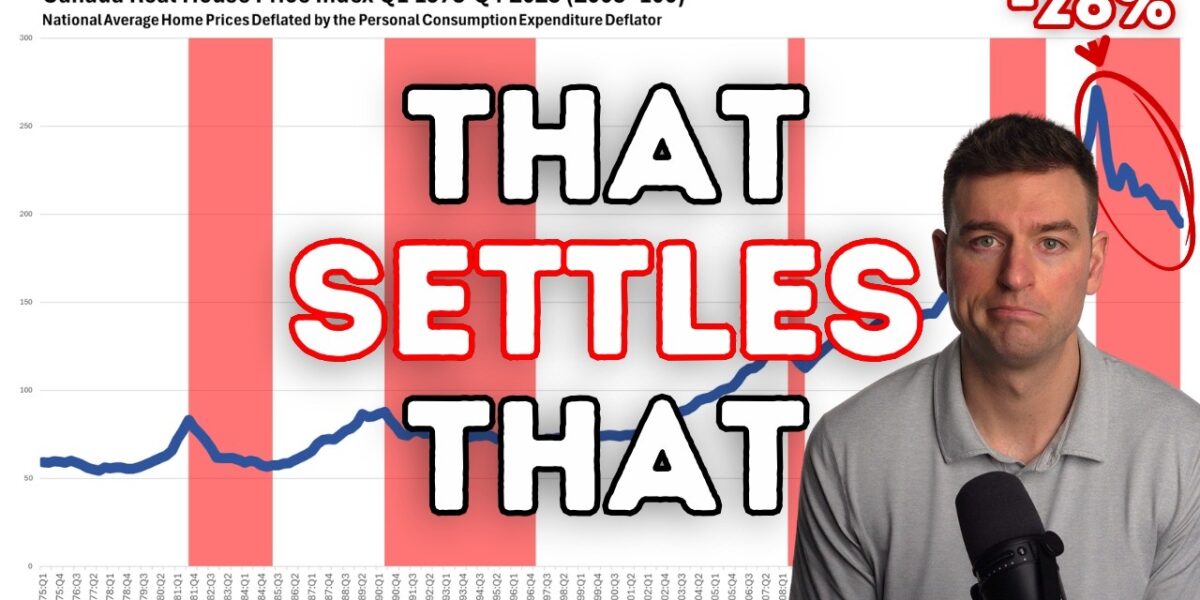
Canada’s housing market is undergoing a significant price adjustment, with inflation-adjusted home prices experiencing their second-worst decline on record. As of December 2025, the peak-to-trough decline stands at 28%, trailing only the severe downturn of the 1980s, which saw a 31% drop. This market shift has fundamentally altered the long-standing narrative that homeownership invariably leads to greater wealth accumulation compared to renting.
Renters Outpace Owners in Wealth Accumulation
New analysis, incorporating data up to December 2025 across 12 major Canadian cities, reveals a striking financial disparity. In 2024, a hypothetical renter and homeowner were statistically neck-and-neck in wealth accumulation over the preceding 20 years, with a renter-to-owner wealth ratio of 0.99. However, the continued decline in Canadian real estate prices throughout 2025, coupled with robust performance in global stock markets where hypothetical renters typically invest, has shifted the balance. By the end of 2025, the geometric mean wealth ratio across the 12 cities has risen to 1.14, indicating that the average hypothetical renter has accumulated 14% more wealth than their homeowner counterpart since January 2005.
Understanding the Market Dynamics
The current housing correction is not an anomaly but a response to escalating affordability issues that plagued Canada in recent years. Several factors contributed to the overheated market, including:
- Monetary Policy: Historically low borrowing costs enabled buyers to bid up property prices.
- Immigration Levels: High immigration rates intensified demand in a market with constrained housing supply.
- Foreign Investment: Influx of foreign capital further inflated prices beyond the reach of many domestic buyers.
- Money Laundering Concerns: Allegations of illicit funds entering the real estate market.
- Supply Shortages: A persistent lack of new housing construction failed to keep pace with demand.
These pressures, combined with expectations of continually rising rents and property values, created an environment where Canadian housing became exceptionally expensive on a global scale. The common assumption of a 1% annual real estate price appreciation above inflation, once considered conservative, was frequently challenged by rapid market gains.
Policy Interventions and Market Adaptation
In response to the affordability crisis, policymakers implemented various measures:
- Interest Rate Hikes: Significant increases in mortgage rates, particularly from the low points seen in 2021, have cooled demand.
- Immigration Policy Adjustments: Revisions to Canada’s immigration system have aimed to moderate population growth.
- Foreign Buyer Restrictions: Introduction of foreign ownership taxes and a temporary federal ban on certain foreign real estate purchases.
- Housing Supply Initiatives: Government programs designed to boost the development of affordable housing.
These interventions have had a tangible impact, leading to price and rent declines in many urban centers. While this correction can be painful for real estate owners, investors, and landlords, it is largely seen as a necessary step toward improving housing affordability.
The Rent vs. Own Calculation: Methodology
The analysis comparing renters and owners employs a sophisticated model that tracks hypothetical financial outcomes using historical data from January 2005 to December 2025. The methodology assumes:
- Initial Setup: A renter pays average city rent, while an owner purchases a median-priced property with a 20% down payment and a 25-year mortgage at prevailing rates. The renter invests their down payment capital in a diversified stock portfolio (30% Canadian, 70% global, similar to a VEQT ETF with a 0.25% annual fee).
- Ongoing Costs: The homeowner’s expenses include mortgage payments, property taxes, maintenance, insurance, and condo/strata fees. The renter’s costs are primarily rent and insurance.
- Cash Flow Differential: The difference in monthly cash flow between renting and owning is invested by the renter if positive, or drawn upon if negative. This assumes the renter diligently saves and invests this difference, a critical assumption for the renter’s financial success.
- Portfolio Allocation: The renter’s investment portfolio is assumed to be 30% Canadian equities and 70% global equities.
This model allows for a direct comparison of net worth accumulation under two distinct housing strategies, controlling for other financial decisions like saving and investing.
Market Impact and Investor Considerations
The recent performance of Canadian real estate versus global equities highlights the importance of diversification. While Canadian real estate experienced a downturn, global stock markets, including the U.S., Canadian, and international equities, demonstrated resilience and strong growth. This divergence has significantly benefited renters who maintain diversified investment portfolios.
What Investors Should Know:
- Real Estate as an Asset: The period of rapid price appreciation has ended, revealing real estate to be a riskier asset than often perceived, with potential for significant drawdowns.
- Diversification is Key: Renters who invested their savings in a diversified stock portfolio have, on average, outperformed homeowners over the past two decades, particularly in the recent period of real estate decline and stock market growth.
- The Importance of Saving: The renter’s advantage is contingent on their ability and discipline to save and invest the difference in costs compared to homeowners.
- Non-Financial Factors: Homeownership offers benefits beyond financial returns, such as stability, protection against displacement in rising markets, and personal fulfillment. These factors are not captured in a purely financial analysis.
- Personalized Analysis: Individual financial outcomes can vary significantly. Tools like the PWL Capital Rent vs. Own calculator allow Canadians to model these scenarios based on their specific circumstances, including provincial tax implications.
Long-Term Implications
The analysis suggests that renting, combined with disciplined saving and investing in diversified assets, can offer comparable, and in the current environment, superior long-term financial outcomes to homeownership. This does not diminish the personal value or other benefits of owning a home, but it challenges the dogmatic view that owning is always the financially superior choice. The data underscores that real estate is subject to market cycles and risks, just like any other asset class. For those considering the rent versus own decision, a thorough financial analysis, alongside personal preferences and life circumstances, is crucial.
“Renting combined with discipline, saving, and investing can be expected to offer comparable long-term financial outcomes to owning.”
The findings from this analysis, particularly the shift in wealth accumulation favoring renters as of December 2025, provide valuable insights for Canadians navigating the current housing market and making critical financial decisions about where to live and how to invest.
Source: Renting vs. Buying a Home: The Reckoning (YouTube)

Related Articles
AI Picks Surge 14.5% in 6 Months, New Strategy Boosts Gains
An experimental AI stock-picking strategy yielded a 14.5% return in six months, with a new approach of holding winners longer showing even greater profit potential. The experiment highlights AI's market prediction capabilities and the benefits of a diversified, long-term investment outlook.


Breaking Into Real Estate: Opportunity Knocks
High property prices and interest rates dominate current real estate discussions, leading many to believe market entry is impossible without wealth. However, historical perspective and strategic thinking suggest opportunity persists for those willing to learn and adapt, regardless of their starting financial position.


Florida Housing Market Sees Sellers Face Losses
Sellers in Florida are increasingly facing significant financial losses as the housing market experiences a notable downturn. Properties bought just a couple of years ago are now being sold for less than their purchase price, highlighting the cyclical nature of real estate and the importance of data-driven decision-making.