Canada’s Quiet Rise: A New North American Superpower?
As the United States grapples with internal issues, Canada is strategically positioning itself as a new North American superpower. With a focus on resource security, defense independence, and pragmatic leadership, Ottawa is forging new alliances and economic strengths, challenging America's traditional dominance.


Canada’s Quiet Rise: A New North American Superpower?
While the United States grapples with internal turmoil and a perceived “nervous breakdown,” its northern neighbor, Canada, is quietly charting a new course. Under the leadership of figures like Prime Minister Mark Carney, Canada is actively pursuing strategic alliances and bolstering its defense and economic independence, signaling a potential shift in the North American power dynamic.
A Strategic Pivot Away from American Dependence
The narrative emerging from Canada suggests a deliberate move towards greater self-reliance, particularly in defense and trade. Discussions with European Union nations and Pacific countries to form larger trading blocs, coupled with a new defensive industrial system, indicate a proactive strategy. This includes the procurement of 12 new attack submarines and a recent alliance with Denmark to secure the Arctic. Notably, these submarines are not being purchased from the United States, a stark departure from historical patterns and a move that signals a desire to diversify its defense industrial base.
This strategic pivot appears to be a direct response to the unpredictable nature of American foreign policy under the Trump administration. Concerns about the potential dissolution of existing trade agreements and a perceived “personal affront” to President Trump if Canada pursues new alliances highlight the delicate geopolitical tightrope Canada is walking. The sentiment is that America, preoccupied with its own domestic issues and projecting an image of instability, is inadvertently pushing its allies to seek alternative partnerships.
Historical Context: From “America’s Hat” to Independent Actor
For decades, the United States has viewed Canada through a lens of proximity, often referring to it as “America’s hat.” This perspective, rooted in a lack of deep engagement with geopolitical realities beyond its borders, now faces a challenge. Canada’s new government, elected with a mandate for strength, resilience, and independence, is actively working to shed this subservient image.
The “Whiskey War” over Hans Island with Denmark, once a lighthearted territorial dispute involving exchanging flags and spirits, has transformed into a significant strategic alliance. This, alongside Canada’s efforts to reduce its reliance on the U.S. military-industrial complex, underscores a growing assertiveness. The implications for joint security frameworks like NORAD and the Five Eyes intelligence alliance are significant, as Canada seeks to forge its own path.
Economic Foundations: Resources and Resilience
Beyond defense, Canada’s long-term strategy appears to be anchored in its abundant natural resources. Mark Carney’s focus on what will be crucial for national survival in the coming decades—resources, food, water, and energy—contrasts with a perceived American focus on immediate, often reactive, geopolitical maneuvers. Canada’s strategic positioning, with vast reserves of water, uranium, and energy, coupled with its development of an energy superpower grid and battery manufacturing deals with South Korea, positions it favorably for the future.
The U.S. defense budget, while vastly larger, is seen by some as inefficient and plagued by corruption and bureaucratic delays. Canada’s approach, prioritizing efficiency and cost-effectiveness by sourcing defense equipment from nations like Germany and South Korea, represents a pragmatic shift. The potential for the U.S. to even outsource naval repairs to South Korea is cited as a stark indicator of the decline in American industrial capacity and a testament to Canada’s strategic sourcing.
The “Boring” Technocrat vs. The “Entertaining” Empire
Mark Carney is described as a “boring” but efficient technocrat, a stark contrast to the perceived chaotic and entertainment-driven political culture in the United States. While American politics is characterized by constant drama and what some describe as a “reality show” approach to governance, Canada’s leadership is focused on long-term industrial strategy and practical governance. This “boring” efficiency is seen as a strength, a return to a more stable era that many Americans apparently miss.
The transcript draws a sharp dichotomy: America as the “loud drunk at the bar,” engaging in “exotic wars” and financial disasters, while Canada is the “quiet guy who’s buying the building.” This metaphor encapsulates the perceived difference in approach—one is reactive and self-destructive, the other is proactive and building for the future.
Why This Matters
The implications of Canada’s strategic maneuvers are profound for North America and the global order. If Canada successfully transitions into a more independent and capable power, it could lead to a recalibration of regional alliances and security architectures. For the United States, it represents a potential loss of influence and a humbling realization that its traditional dominance is not guaranteed, especially if it continues to prioritize internal discord over external alliances.
The narrative suggests that by 2035, while Washington D.C. may remain the technical capital, real decision-making power in North America could increasingly reside in Ottawa. This shift is driven by a perceived lack of competent leadership and a focus on internal “soul-searching” in the U.S., contrasted with Canada’s pragmatic, resource-driven, and alliance-building approach.
Trends and Future Outlook
Several trends are highlighted: a move away from American exceptionalism towards multipolar alliances, a renewed focus on resource security as a cornerstone of national power, and the growing importance of efficient, pragmatic governance over charismatic but unstable leadership. The future outlook suggests a North America where Canada plays a more significant, independent role, potentially forcing the United States to re-evaluate its position and its relationships with its neighbors.
The advice to “sell your Bitcoin and buy land in Saskatchewan” or invest in “maple syrup futures” is a tongue-in-cheek acknowledgment of this potential power shift, urging a pragmatic approach to future investments and relationships. The underlying message is clear: the geopolitical landscape is changing, and Canada is positioning itself to be a key player in the new order.
The American Predicament
The transcript paints a bleak picture of contemporary America, characterized by financial precarity, a healthcare system that leads to medical bankruptcy, and a political culture seen as chaotic and self-absorbed. The emphasis on “buy now, pay later” for essential needs like insulin and the constant threat of financial ruin for the average American stand in stark contrast to Canada’s social safety nets, such as universal healthcare, which prevent medical bankruptcy.
Furthermore, the ongoing scandals and a perceived lack of justice in the U.S. are presented as factors that could lead to the nation’s unraveling. The argument is that without the ability to deliver justice on egregious issues, America risks solidifying its position as a “global bad guy” and losing its legitimacy on the world stage. This internal crisis, it is argued, makes it difficult for the U.S. to maintain its traditional leadership role and its alliances.
Conclusion: A Quiet Revolution
The video’s central thesis is that while America is preoccupied with its internal struggles and projecting an image of an “unstable girlfriend,” Canada is quietly and effectively building its own power and influence. This is not a loud, aggressive takeover, but a calculated, strategic evolution. The emphasis on Mark Carney’s “boring” but effective leadership, Canada’s resource wealth, and its proactive alliance-building suggest a nation poised to become a significant force, potentially reshaping the North American continent and beyond.
Source: CANADA JUST FIRED AMERICA (The New Superpower) (YouTube)

Related Articles


Trump Threatens “Unseen” Force on Iran After Leader’s Death
Following the assassination of Supreme Leader Ayatollah Ali Khamenei, U.S. President Donald Trump has vowed to unleash unprecedented force on Iran. While outlining ambitious goals including regime change, experts express skepticism about the effectiveness of airstrikes and the potential for popular uprising against a resilient Iranian government.

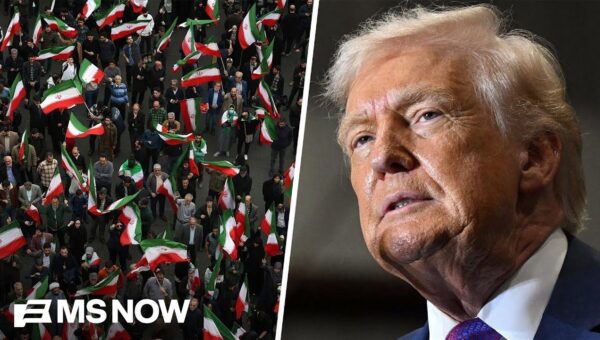
Senator Coons Questions Trump’s Iran Strategy After Troop Deaths
Senator Chris Coons has sharply criticized President Trump's strategy in Iran following the deaths of three U.S. service members. Coons questioned the intelligence regarding Iran's nuclear proximity and the lack of clear strategy and congressional debate for the "war of choice."


Trump’s War Rhetoric: Casualties Are a Burden He’ll Bear
Donald Trump's acknowledgment of potential casualties in a conflict, described as illegal and unconstitutional, has drawn criticism for perceived detachment. The analysis explores the implications of such rhetoric and the leader's responsibility for initiating warfare.