Canada’s Arrow: A Sovereignty Wound That Won’t Heal
The Avro Arrow's cancellation in 1959 remains a pivotal, unresolved moment in Canadian defense history. Far from a simple procurement failure, its legacy continues to shape debates on sovereignty and dependence, particularly concerning the current F-35 fighter jet acquisition. The question isn't just about aircraft, but about who controls Canada's skies.

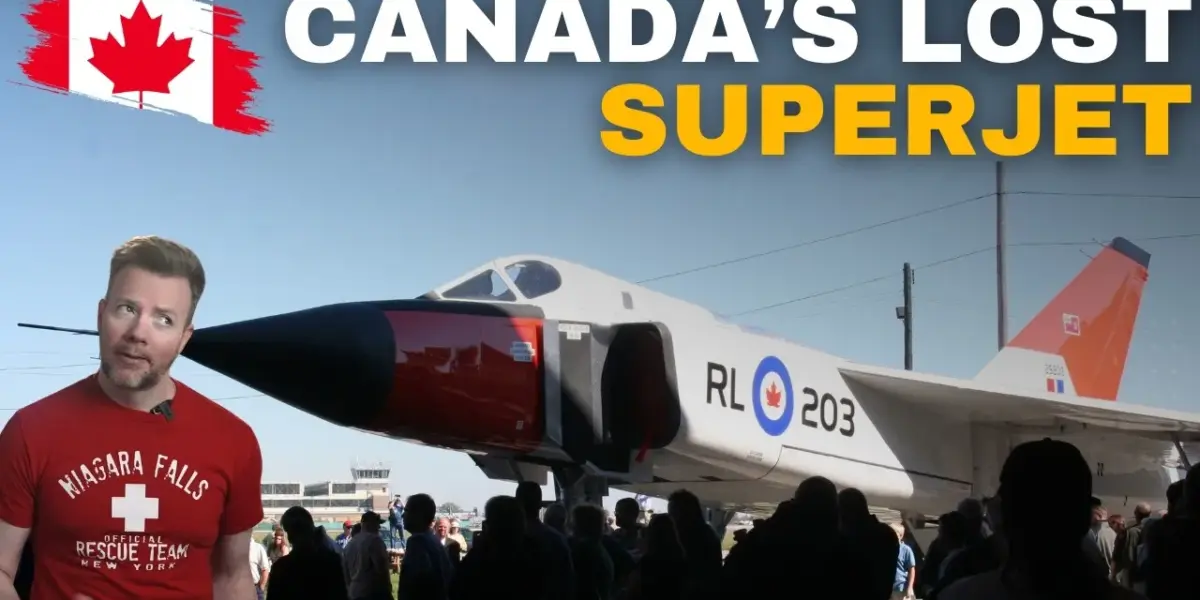
The Ghost in the Machine: Why Canada’s Avro Arrow Still Haunts Defense Debates
The specter of the Avro Arrow, Canada’s ambitious but ultimately canceled supersonic interceptor program, continues to loom large over contemporary defense procurement debates. Far from a mere nostalgic footnote, the Arrow’s legacy resurfaces whenever Canada finds itself at a crossroads in defense spending or facing external pressure on air power. It transcends engineering discussions and budget lines to become a potent symbol of national sovereignty: who truly controls Canada’s skies?
This question is particularly relevant today as Canada grapples with its commitment to purchasing 88 F-35 fighter jets, having only funded the initial 16. With alternatives like Saab’s Gripen and France’s Rafale being openly discussed, the familiar pressure from Washington D.C. is palpable. The implicit, and sometimes explicit, warning is clear: deviate from the F-35, and the United States will fill the void, potentially altering the very structure of North American air defense and NORAD itself.
A Strategic Imperative Born of Necessity
To understand the Arrow’s enduring significance, one must strip away the mythology and examine its historical context. In the early 1950s, Canada occupied a critical strategic position. The shortest path for Soviet nuclear-armed bombers to reach American cities ran directly over the Canadian Arctic, a reality that arguably persists today. Canada was not merely a junior partner in continental defense; it was the front line, akin to Ukraine or the Baltic states in contemporary geopolitical landscapes.
The Royal Canadian Air Force initially attempted to extend the service life of its CF-100 Canuck, a capable but subsonic interceptor. However, the evolving threat environment, characterized by the potential for high-speed aerial attacks, rendered the Canuck insufficient. By 1953, the RCAF issued specification Air 7-3, a document that underscored Canada’s serious commitment to its own defense. This specification demanded an interceptor capable of reaching Mach 1.5 at 50,000 feet within minutes of takeoff, possessing long range, rapid turnaround capabilities, and the ability to operate from relatively short, scattered runways across the vast Canadian landscape.
Ambition Meets Reality: The Birth of the Arrow
After surveying available American, British, and French designs, it became evident that no existing aircraft met these demanding requirements. Consequently, Canada embarked on the ambitious path of designing and building its own frontline interceptor. This decision alone placed Canada in rarefied company; successfully developing such an aircraft from scratch requires immense industrial depth, unwavering political will, and a tolerance for risk often found wanting in democracies.
Avro Canada accepted the challenge, resulting in the CF-105 Arrow. The Arrow was not merely ahead of its time; it was fundamentally advanced. It featured a large delta wing optimized for high-speed, high-altitude flight, a two-person crew configuration, sophisticated integrated avionics for its era, and was designed to carry advanced radar-guided missiles. Avro engineers were pioneers in early fly-by-wire concepts, integrated computerized navigation, and pushed the boundaries of materials science and manufacturing techniques within Canada’s industrial base. Some of these engineers would later contribute to NASA’s programs.
Interdependence and the Seeds of Doubt
The Arrow’s ambition was such that Canada lacked the domestic facilities to test all its advanced features. Avro Canada relied on American test ranges and research infrastructure, including NASA facilities. This dependence, while practical at the time, would later fuel conspiracy theories. Canada did not possess the necessary wind tunnels, material labs, high-altitude test ranges, or engine testing infrastructure to validate an aircraft operating at the very edge of mid-1950s aerodynamic and metallurgical capabilities.
Avro engineers utilized American facilities and suppliers because those resources were readily available. U.S. test centers had already been established for such purposes, and American firms dominated key subsystems, from interim engines to avionics. This reliance did not imply sabotage at the time; it reflected Canada’s integration into a North American aerospace ecosystem that was already deeply interconnected, inherently asymmetric, and heavily weighted towards the United States.
The Cancellation and the Scorched Earth Policy
The Arrow program culminated in the public rollout of the first prototype in October 1957, coinciding with the Soviet Union’s launch of Sputnik. The aircraft first flew in March 1958, achieving supersonic speeds early in its test program. While developmental aircraft naturally encounter challenges, none were catastrophic. By early 1959, several prototypes were flying, and the production-standard Mark 2, equipped with Canadian-designed Iroquois engines, was nearing completion. Canada stood on the precipice of fielding one of the world’s most advanced interceptors, having completed 66 flights totaling just over 70 flight hours.
Then, on February 20, 1959, Prime Minister John Diefenbaker’s government abruptly canceled the Arrow and the Iroquois engine program. This date, known as Black Friday in Canadian aerospace circles, marked the end of a national endeavor. The stated reasons were not mysterious, though they remain controversial: the Arrow was exceedingly expensive. Concurrently, Canada was facing pressure to invest in missile defense systems and deepen its integration into NORAD, which had recently been formalized with the United States. Furthermore, strategic thinking in Washington was shifting towards intercontinental ballistic missiles (ICBMs) as the primary threat, diminishing the perceived value of manned interceptors.
Faced with competing priorities and budget constraints, the Diefenbaker government opted for missile defense, closer U.S. alliance integration, and cost control over domestic aerospace ambition. This decision alone would have been significant, but what followed was unprecedented. After canceling the Arrow, the government ordered the destruction of the prototypes, the tooling, and vast amounts of program documentation. Airframes were dismantled, blueprints were incinerated, and the program was effectively erased with a thoroughness that stunned even its detractors. This act transformed the Arrow from an aircraft into a national trauma, fueling suspicion and denying any opportunity for rational processing of the decision.
The Lingering Question of Sabotage
The destruction of the Arrow led to the loss of thousands of skilled jobs, with many engineers emigrating to the United States, contributing to American aerospace and NASA programs. Canada lost not only a potential fighter jet but also significant aerospace momentum and a degree of self-confidence.
To this day, the question persists: Did the United States sabotage the Arrow program? The sober answer is that there is no credible evidence of covert U.S. sabotage. While Washington undoubtedly benefited from the cancellation—Canada became more dependent on American aircraft, weapons, and support systems, and NORAD’s asymmetry increased—this was the outcome of Cold War geopolitics, not necessarily a direct intervention. The Arrow was politically vulnerable on its own.
The United States did not need to sabotage the Arrow; Canada, under significant political and economic pressure, effectively dismantled it itself. This choice, common for middle powers, often carries unforeseen long-term consequences. While rumors of a surviving Arrow, spirited away to a secret Scottish base, persist, they lack credible evidence. While some documents and components may have survived due to the actions of engineers, the notion of a complete airframe remaining hidden for decades is implausible given the logistical and observational trails aircraft leave.
Why This Matters: The Unfilled Void and the Sovereignty Question
The Avro Arrow remains relevant not as a museum piece but because Canada has never truly replaced what was lost. Unlike France, which cultivated independent combat aircraft capabilities through programs like the Mirage and Rafale, or Sweden, which evolved its indigenous fighter development with the Gripen, Canada abandoned its path in 1959 and has relied on imported aircraft ever since. Each subsequent fighter acquisition has involved compromises between capability, cost, and political alignment.
The current F-35 debate is intrinsically linked to this history. It is not merely about the aircraft’s technical merits but about Canada’s willingness to accept a high degree of dependence on the United States. The F-35, as a system of systems, involves tight integration within an American-controlled ecosystem for software, data, logistics, and upgrades. This alignment is beneficial when political relations are strong but potentially catastrophic when they are not.
Implications, Trends, and Future Outlook
The Arrow’s cancellation locked Canada into a perpetual role as a customer in the highest echelons of military aviation, rather than a designer or sovereign producer. Every time Canada faces a decision regarding its defense procurement and its relationship with Washington, the underlying question of its industrial capability and autonomy surfaces. Sovereignty, in this context, extends beyond flags and borders to encompass industrial capacity, secure supply chains, and the ability to maintain operational control amidst political friction.
Canada relinquished this capability in 1959. The Arrow was not stolen or covertly destroyed; it was surrendered by a government that prioritized the path of least resistance, a decision whose full cost has continued to be paid through subsequent procurement cycles. The legacy of the Arrow serves as a perpetual reminder, prompting the same question it has posed for over six decades: Who truly controls Canada’s skies?
Source: Canada's Arrow Wasn't Sabotaged, It Was Something Worse (YouTube)

Related Articles

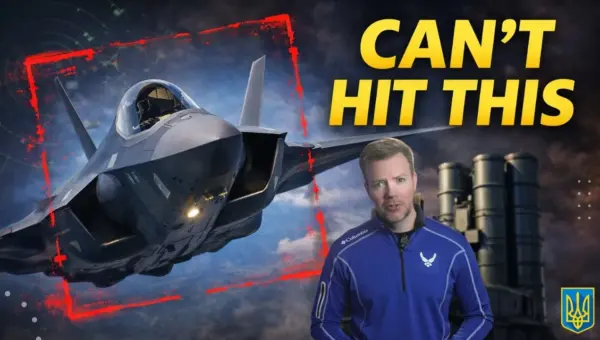
Russia’s S-500 Air Defense Fails Stealth Fighter Test
Russia's S-500 air defense system, touted as a threat to F-35 stealth fighters, faces critical limitations. Analysis suggests its detection capabilities do not translate to reliable engagement due to stealth physics and radar design. Production delays and cost overruns, exacerbated by sanctions, further question its strategic value.

Iran Claims F-35 Downing, But Video Fuels Doubt
Iran claims to have shot down a U.S. F-35 fighter jet, but released video footage is highly suspect and likely AI-generated. U.S. Central Command confirmed an F-35 made an emergency landing after being hit during a mission. The incident highlights the ongoing conflict and the use of disinformation.
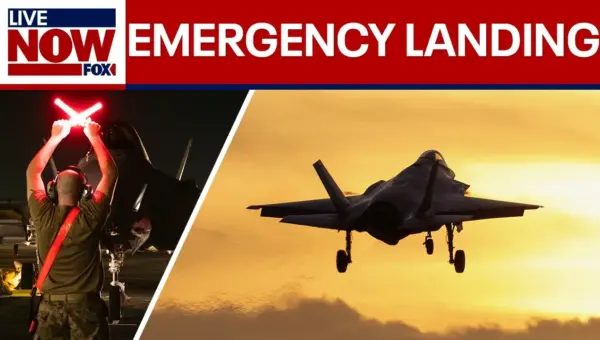
F-35 Jet Lands After Iran Combat Mission; Pilot Safe
A U.S. F-35 fighter jet made an emergency landing after sustaining damage during a combat mission over Iran, marking a potential first in the ongoing conflict. The pilot is safe, but the incident highlights the risks involved. Meanwhile, diplomatic efforts are underway, with Turkey exploring a mediation role, and Japan expressing a strong interest in securing vital shipping lanes.