Canada-China Trade Deal: EV Tariffs Eased, Diversification Gains Pace
Canada has signed a new trade deal with China, easing tariffs on up to 49,000 Chinese electric vehicles and lowering duties on canola oil. This move signals Canada's strategic effort to diversify its trade away from heavy reliance on the United States, amidst ongoing geopolitical tensions.


Canada Eases EV Tariffs in New Trade Deal with China, Eyes Diversification
In a significant shift in its trade policy, Canada has inked a new trade agreement with China, notably easing previously imposed tariffs on Chinese-produced electric vehicles (EVs). The deal, finalized on January 14th, marks a pivotal moment as Canadian Prime Minister Mark Carney becomes the first Canadian leader to visit China since 2017, signaling a thaw in what has been a strained bilateral relationship.
Key Provisions of the Trade Deal
The cornerstone of the agreement involves Canada waiving its 100% tariff on up to 49,000 Chinese EVs. This move effectively reduces the import duty on these vehicles to the pre-2024 level of 6.1%. This places Canada in a unique position among USMCA (United States-Mexico-Canada Agreement) members, as it will be the only country in the bloc to permit Chinese vehicles entry without substantial levies. Analysts suggest this could be interpreted as a strategic divergence from the United States’ more adversarial stance towards China.
In return for this market access for EVs, China has agreed to reduce its tariffs on Canadian canola oil from a combined rate of 84% to 15% by March. Additionally, China will remove tariffs on canola meal, lobsters, crab, and peas by the same month, with exemptions extending at least until the end of the year. While tariffs on pork are expected to be lifted, they remain in place for now. The Canadian government anticipates these measures could generate nearly $3 billion in new export orders.
It is crucial to note that the EV tariff reduction does not represent a completely new policy but rather a return to previous import conditions. Canada, in concert with the United States and the European Union, had imposed a 100% tariff on Chinese electric and hybrid vehicles in August 2024, citing concerns over subsidized production, labor, and environmental standards, as well as data privacy risks. Prior to this, these vehicles faced a standard Most Favored Nation tariff of 6.1%.
Context: The Canada-China Trade Dispute
The recent trade deal seeks to mend a relationship strained by tit-for-tat retaliatory measures. Following Canada’s EV tariffs, China responded in March 2025 with its own tariffs, including a 100% levy on Canadian rapeseed oil, oil cakes, and peas, and a 25% tariff on pork and seafood. In August 2025, China further imposed a 75.8% tariff on Canadian canola seed. These agricultural products, particularly canola—Canada’s largest agricultural export and second-largest export to China behind crude oil—represent significant revenue streams for Canadian provinces.
Before the tariffs, Canada imported approximately 44,000 EVs from China in 2023. The subsequent tariffs caused these imports to plummet. Similarly, canola seed exports to China dropped dramatically, from 67.7% of total Canadian exports in 2024 to effectively 0% by September 2025 due to the retaliatory measures.
Broader Economic and Geopolitical Implications
The agreement signifies Canada’s strategic objective to diversify its trade relationships, a priority for Prime Minister Mark Carney. With over three-quarters of Canada’s exports historically directed to the United States, the country is seeking to reduce its heavy reliance on its southern neighbor. Carney aims to double non-US exports, currently at 23%, over the next decade, bringing them on par with US exports. China, as the world’s second-largest importer after the US, presents a critical market for this diversification strategy, especially for commodities like crude oil, where Canada is heavily dependent on US demand.
Beyond the specific tariff adjustments, the deal includes broader commitments to enhance bilateral trade, strengthen investment, and deepen cooperation. The Prime Minister’s office anticipates considerable new Chinese joint venture investment in Canada within three years and aims to bolster Canadian exports to China by 50% by 2030, reaching approximately $30 billion annually. The agreement also revives the dormant Canada-China joint economic and trade commission and facilitates visa-free travel for Canadians to China, a move seen as beneficial given the significant Chinese immigrant population in Canada.
Furthermore, the deal could attract much-needed foreign investment to address Canada’s productivity challenges and revitalize its position as a hub for infrastructure investment, particularly in the EV and battery sectors. This could lead to the establishment of Chinese EV manufacturing facilities in Canada, bolstering the sector.
Market Impact and Investor Considerations
While the face value of the deal primarily involves reversing recent tariffs, its long-term implications are rooted in Canada’s pursuit of economic diversification and its navigation of a complex geopolitical landscape. The agreement positions Canada to potentially benefit from China’s immense import demand, particularly in sectors like crude oil and agriculture.
However, the move is not without controversy. Concerns have been raised by some Canadian officials and industry leaders regarding potential risks associated with deepening ties with an authoritarian government, including national security threats, cyber espionage, and intellectual property theft. Premier Doug Ford of Ontario, a major auto manufacturing hub, has voiced apprehension about subsidized Chinese vehicles potentially impacting Canadian industries.
Moreover, the deal could complicate Canada’s relationship with the United States. The USMCA agreement, crucial for Canada’s export access to the US market, is up for review in 2026. Given the volatile US trade policy under President Trump, particularly his past tariff actions and rhetoric towards Canada, there is apprehension that this new trade accord with China could be used by the US to exert pressure on Canada, potentially leading to modifications or even a threat to the USMCA itself.
Despite these concerns, Canada maintains that it is open to expanding trade with various nations. The country’s trade relationship with China, while growing, still represents a smaller portion of its exports (4%) compared to the US. The current deal essentially restores trade levels to what they were a few years ago, with some tariffs, such as those on Chinese steel and aluminum, remaining in place.
Investors should monitor how this strategic pivot impacts Canada’s economic resilience, its trade balance with major partners, and its ability to attract foreign investment. The success of this diversification strategy will depend on managing geopolitical risks while capitalizing on new market opportunities. The ongoing protectionist trends globally suggest that such strategic trade realignments may become more common as nations seek to balance economic interests with security concerns.
Source: The Canada-China Trade Deal (YouTube)

Related Articles


FedEx Leads Tariff Lawsuits: Who Really Pays?
FedEx is leading a new wave of lawsuits against the U.S. government, seeking refunds for Trump-era tariffs. While businesses may recoup costs, consumers are unlikely to see price reductions or reimbursements.


Trump’s Tariffs Linked to Stagnant Job Growth in First Year Back
The U.S. economy saw minimal job growth in 2025, adding just 181,000 jobs, a figure attributed to business uncertainty fueled by Donald Trump's volatile tariff policies. While January 2026 showed gains, they were heavily concentrated in healthcare, masking broader economic weakness and significant layoffs.

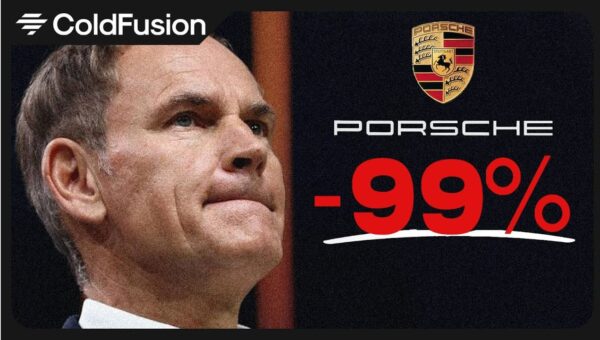
Porsche’s Profit Plunge: A Business Model in Crisis
Porsche's operating profit has plummeted by 99%, signaling a crisis for its long-standing business model. The luxury automaker faces challenges from shifting market demands, intense EV competition, and the high costs of electrification, forcing a strategic recalibration.