California Rail Project Blows Budget, Strains Newsom’s Image
California's high-speed rail project, once a symbol of progress, is now a costly concern. Doubling its original budget to $126 billion, the project faces criticism for its delays and spending. This situation raises questions about its future and Governor Newsom's leadership.

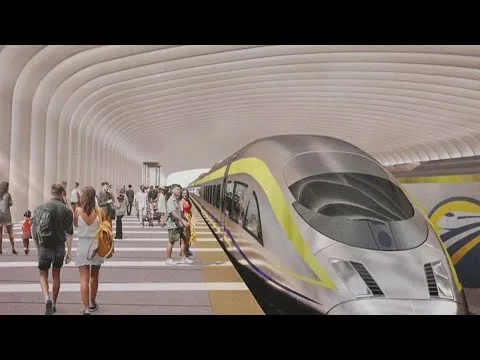
California Rail Project Blows Budget, Strains Newsom’s Image
California’s ambitious high-speed rail project, once hailed as a transformative investment, is now facing intense scrutiny. Governor Gavin Newsom has often pointed to this project as a sign of his vision. However, recent reports show the cost has ballooned dramatically, raising questions about its future and Newsom’s leadership.
The Grand Vision and Soaring Costs
Governor Newsom described the high-speed rail project as more than just transportation. He called it a “transformation project” and a “great economic investment.” The goal was to connect Los Angeles and San Francisco, making travel faster and more affordable for people in the Central Valley. This would also reduce reliance on air travel and ease highway congestion.
The project aims to serve the busy air corridor between Southern and Northern California. Every year, about 5.5 million people fly between Los Angeles and San Francisco. The existing highways are also often clogged. Building this rail line was meant to offer a greener, more efficient alternative.
However, the reality has been far different from the initial promises. The project has faced significant delays and cost overruns. What was first estimated to cost $33 billion has now ballooned to an estimated $126 billion. This is about four times the original price tag.
Years of Spending, Limited Progress
Since its approval 20 years ago, California has already spent $15 billion on the project. Most of this money has gone towards building support structures for future tracks. While the state is now starting to lay track for the first 119-mile phase, much of the promised progress has been slow to materialize.
Governor Newsom has defended the project, stating it is still worth the investment. He points to the environmental benefits and the potential to move millions of passengers. The idea is that these passengers, who currently fly or drive, will eventually pay for tickets on the high-speed train.
Rethinking the Value Proposition
The immense cost raises an important question: could the $126 billion be spent more effectively elsewhere? To understand the scale of the spending, consider the cost of air travel. The average ticket price to fly between Los Angeles and San Francisco is about $135.
With 5.5 million passengers flying this route each year, the total spent on these flights is roughly $742.5 million annually. If you take the projected $126 billion cost of the rail project and divide it by that yearly air travel spending, it would take about 170 years to match the cost. This calculation suggests that, for the price of the train, everyone who flies this route could have free tickets for nearly two centuries.
Geopolitical and Economic Implications
While this is a state-level project, it has broader implications. Such large infrastructure projects often involve complex financing, including state bonds and federal funding. Cost overruns can strain state budgets and potentially impact other public services or future investments.
The project’s difficulties also highlight the challenges of large-scale public works. They require long-term planning, consistent political will, and effective management. When these elements falter, costs can spiral, leading to public distrust and political fallout.
Looking Ahead: Future Scenarios
The future of California’s high-speed rail remains uncertain. One scenario is that the project continues, albeit with further budget increases and delays. This would mean a significant, long-term financial commitment from the state.
Another possibility is that parts of the project are scaled back or re-evaluated. This could happen if political support wanes or if alternative, more cost-effective solutions emerge for California’s transportation needs. The current situation serves as a case study in the complexities of major infrastructure development.
Global Impact
Projects like California’s high-speed rail are often watched internationally. They can serve as models for other regions considering similar investments in transportation. The successes and failures of this project can influence global decisions about infrastructure funding and planning.
The massive cost overruns in California could make other governments more hesitant to back similar large-scale rail initiatives. It raises concerns about the financial viability and management of such ambitious undertakings. This could slow down the global push for high-speed rail networks.
Historical Context
High-speed rail has a long history, with countries like Japan and France pioneering the technology decades ago. These early projects often faced their own challenges with cost and implementation. However, they eventually became vital parts of national transportation systems.
California’s project started with a vision similar to these international successes. Voters approved bonds for the project back in 2008. The current struggles show that even with a clear goal, executing such massive projects across decades is incredibly difficult. It requires constant adaptation and careful financial oversight.
Source: California high-speed rail a giant failure on Newsom’s resume: Vittert | On Balance (YouTube)

Related Articles

California Rail Project Skyrockets $87 Billion Over Budget
California's high-speed rail project, meant to connect Los Angeles and San Francisco, is now projected to cost $126 billion. This is an increase of nearly $87 billion from earlier estimates. The project, approved by voters in 2008 with an initial budget of $33 billion, faces significant financial challenges.


Striking Iran’s Power Grid Could Cripple Regime, Expert Says
Striking Iran's power plants and bridges could significantly impact the regime, according to geopolitical strategist Colonel Darren Gobb. He explains how Iran's infrastructure is tied to its 'terror complex,' and disrupting it could force compliance. The analysis also touches on Israel's warnings to civilians and the effectiveness of US military training.


Trump Threatens Iran’s Infrastructure in Hormuz Standoff
President Trump has threatened to cripple Iran's infrastructure, including bridges and its power grid, if it continues to harass shipping in the Strait of Hormuz. Former Congressman Bob McEwen explained this strategy aims to force Iran to negotiate by severely damaging its operational capacity. The discussion also addressed the potential for such actions to be considered war crimes, with McEwen distinguishing between infrastructure attacks and the targeting of civilians.