Bridging the Quantum Divide in the Lab
Scientists are devising ingenious laboratory experiments to bridge the gap between classical and quantum physics, aiming to understand the quantum nature of gravity and spacetime. By refining historical experiments like Cavendish's and exploring quantum phenomena in macroscopic systems like LIGO, researchers hope to unlock the universe's deepest secrets.

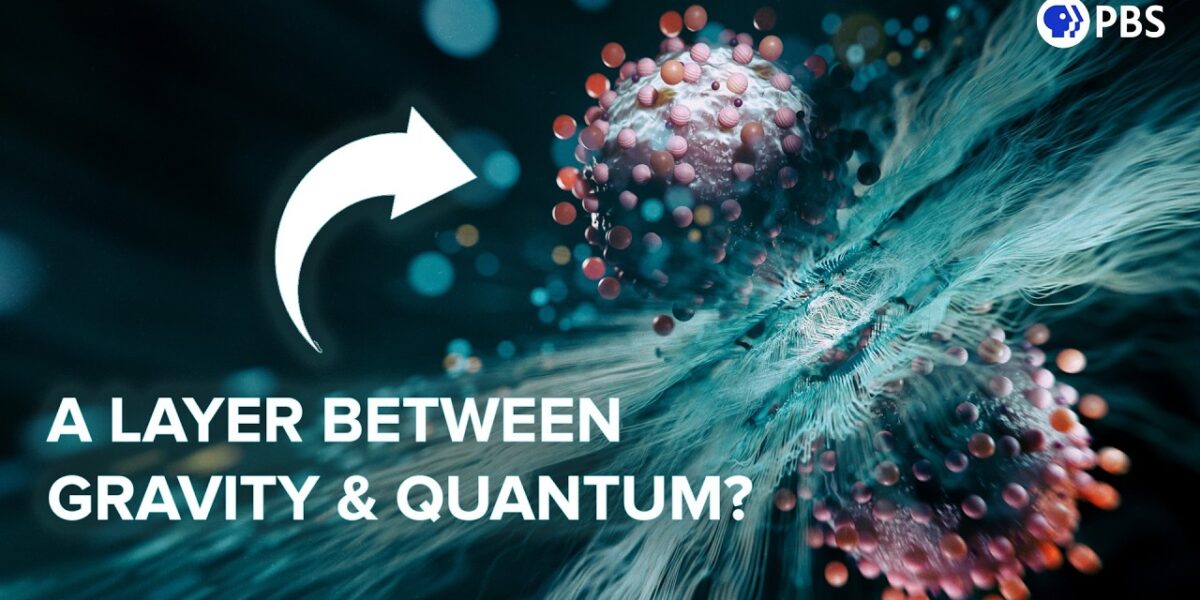
Bridging the Quantum Divide in the Lab
The universe operates under two seemingly disparate sets of rules: the predictable, large-scale laws of classical physics and the bizarre, probabilistic nature of quantum mechanics. For decades, scientists have grappled with the profound question of where these two realms meet and, more enigmatically, how gravity – the architect of the cosmos – fits into the quantum picture. While directly probing the quantum nature of gravity might require a particle collider the size of our solar system, a new wave of ingenious experiments is aiming to bring the quantum and classical worlds together in a terrestrial laboratory, potentially revealing the quantum fabric of spacetime itself.
The Semiclassical Realm: Where Worlds Collide
Classical physics, which governs everything from falling apples to orbiting planets, works exceptionally well for objects larger than about a micrometer. Below this scale, down to atoms and subatomic particles, quantum mechanics reigns supreme, with phenomena like superposition (being in multiple states at once) and entanglement (spooky action at a distance). The region in between, known as the mesoscopic scale, is where things get interesting. Objects in this realm, while largely behaving classically, can exhibit quantum effects under specific conditions, offering a unique bridge between the two universes.
Physicists are exploring this mesoscopic frontier through two primary strategies: either by looking for deviations from our classical understanding of gravity at small scales, or by attempting to observe true quantum effects in systems that are as large as possible. The ultimate goal is to make gravity quantum, or at least understand how it interacts with the quantum world.
Revisiting Cavendish: Gravity’s Tiny Tug
The challenge of measuring gravity’s subtle influence on small objects harks back to Henry Cavendish’s groundbreaking experiment in 1798. Using a torsion pendulum – a delicate device featuring a rod suspended by a thin wire – Cavendish measured the minuscule gravitational attraction between two sets of lead spheres. His ingenious setup allowed him to determine the gravitational constant, G, with remarkable precision, enabling him to effectively ‘weigh the Earth’ by calculating its mass from the gravitational acceleration at its surface. Cavendish’s measurement was so accurate that modern values are only about 1% better.
Modern experiments are now refining the Cavendish experiment using much smaller masses, some weighing less than 100 milligrams. These experiments aim to detect if gravity’s behavior changes as we approach quantum scales. Theoretical frameworks like string theory suggest gravity might behave differently at very short distances, perhaps due to extra spatial dimensions. Other ideas, like the hypothetical ‘chameleon field,’ propose that gravity’s strength could vary with distance.
However, scaling down the Cavendish experiment presents immense challenges. Gravity is extraordinarily weak; the gravitational attraction between two electrons, for instance, is a staggering 42 orders of magnitude weaker than the electromagnetic repulsion between them. Even with neutral masses, other forces like electrostatic interactions, the Casimir force, and van der Waals forces become dominant at close proximity. To overcome these hurdles, researchers employ sophisticated techniques:
- High Vacuum and Neutrality: Experiments are conducted in a vacuum to minimize air resistance and interference. Masses are carefully discharged to eliminate electrostatic effects.
- Shielding: Faraday shields prevent electromagnetic interactions between the masses.
- Noise Reduction: Experiments are often performed during quiet hours (e.g., late at night) to minimize seismic and acoustic vibrations. Nearby massive objects, including people, are carefully managed.
- Signal Amplification: Instead of directly measuring the static displacement of the pendulum, modern experiments oscillate the source mass. This creates a varying gravitational field that subtly perturbs the test mass’s oscillation, allowing for the detection of incredibly faint gravitational accelerations – up to 100 billion times smaller than Earth’s surface gravity.
While recent experiments using tiny gold spheres have confirmed the known value of the gravitational constant within experimental uncertainty, they have not yet revealed any deviations that would indicate quantum gravitational effects. These gold balls, though small, are still macroscopic. Scientists believe that with further refinements, experiments could eventually probe masses approaching the Planck mass (nearly 10,000 times smaller than current experiments) or even smaller, potentially reaching quantum scales through methods like levitating nanoparticles or cryogenic suspension.
Making Quantum Big: Entanglement in Macroscopic Systems
The second approach involves observing quantum phenomena, like entanglement, in increasingly large systems. Quantum entanglement, where particles become intrinsically linked regardless of distance, is a hallmark of the quantum world. The challenge is that entanglement is fragile and easily destroyed by environmental interactions, a process called decoherence, which is believed to be key to the quantum-to-classical transition.
The field of optomechanics offers a promising avenue. Here, the interaction between light and mechanical objects is exploited. In an optomechanical cavity, such as light bouncing between two mirrors, the mirrors can be suspended to oscillate. Photons transfer momentum to the mirrors, causing them to move, which in turn affects the light’s frequency. This feedback loop can lead to a state where the mirrors’ oscillations become quantumly entangled with the light field, and even with each other.
Early experiments in 2010 and 2011 demonstrated entanglement between light fields and tiny membranes, and then between two such microscopic mirrors. The next frontier is achieving this with truly macroscopic objects.
The Laser Interferometer Gravitational-Wave Observatory (LIGO), designed to detect ripples in spacetime, presents a unique opportunity. Its massive 40-kilogram mirrors, separated by 4 kilometers, are already sophisticated optomechanical systems. While LIGO’s primary goal is to detect gravitational waves, its advanced noise-cancellation systems (for seismic vibrations and spurious gravitational signals) could, in principle, be repurposed to search for signs of entanglement between its macroscopic mirrors. The primary hurdle is a type of noise called non-Markovian noise, which has a memory and can be mistaken for entanglement signals. Researchers are developing better models to distinguish these effects, and ongoing analysis of LIGO data might eventually reveal the ‘quantum whisper’ of entanglement between these colossal mirrors.
The Holy Grail: Gravitationally Mediated Entanglement
The ultimate ambition is to unify these two approaches: to detect entanglement that is *mediated by gravity itself*. If gravity can cause two systems to become entangled, it would be direct evidence that gravity possesses quantum properties. Proposals range from experiments using nano-diamonds in superposition states that nudge each other gravitationally, to oscillating pendula in a Cavendish-like setup that develop non-classical correlations over time solely due to their gravitational interaction.
While these ideas are still in their early stages, from theoretical concepts to active planning, the technological hurdles, though significant, are considered solvable. This progress suggests that within our reach, perhaps on a lab bench rather than in a solar-system-sized collider, we may soon be able to probe the fundamental boundary between the quantum and classical worlds and perhaps even witness gravity behaving as a quantum force.
Source: At What Point Does Spacetime Become Quantum? (YouTube)

Related Articles
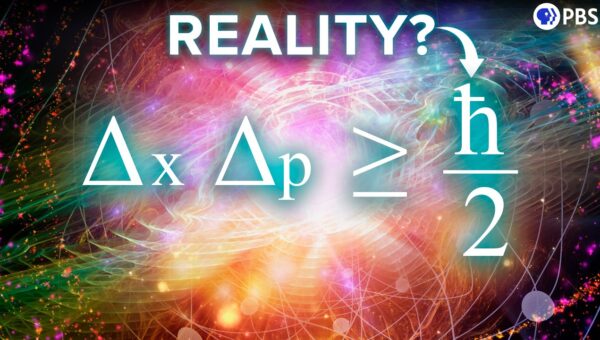
Heisenberg’s 1925 Quantum Leap Still Puzzles
In 1925, Werner Heisenberg's groundbreaking work laid the foundation for quantum mechanics, a theory that revolutionized physics but whose fundamental implications remain a profound mystery 100 years later. This exploration delves into the birth of this strange new physics.

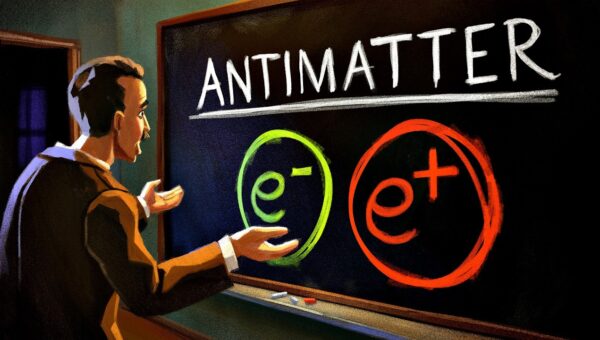
Dirac’s Equation: The Accidental Discovery of Antimatter
In 1928, Paul Dirac's relativistic electron equation unexpectedly predicted the existence of antimatter. Initially met with skepticism, the discovery of the positron in 1932 confirmed this groundbreaking concept, revolutionizing our understanding of the universe.

Quantum Entanglement Defies Speed of Light Limit
Einstein's critique of quantum mechanics led to the EPR paradox, suggesting faster-than-light correlations. Bell's theorem and subsequent experiments confirmed this apparent non-locality, challenging our understanding of reality.