BRICS Pay Challenges Dollar Dominance
A new blockchain-backed financial system, BRICS Pay, has launched, challenging the U.S. dollar's global dominance by enabling direct cross-border settlements between nations. The system bypasses SWIFT and is gaining traction, especially in energy trade, potentially impacting U.S. debt financing.

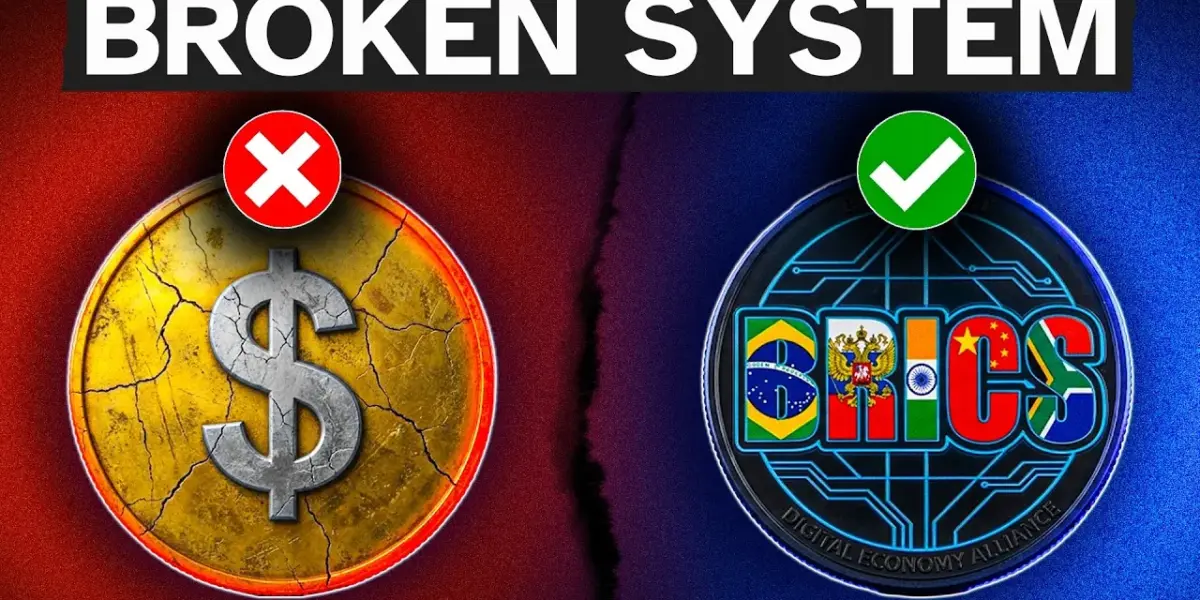
BRICS Pay Challenges Dollar Dominance with New Financial System
A new financial system backed by blockchain technology has officially gone live, aiming to bypass traditional banking networks and reduce reliance on the U.S. dollar. This development comes as geopolitical tensions, particularly in the Middle East, push nations to seek alternatives to dollar-based trade. The system, known as BRICS Pay, could significantly alter the global monetary order.
SWIFT’s Role and Its Weaknesses
For years, the U.S. dollar has been the world’s primary reserve currency, largely due to the dominance of the Society for Worldwide Interbank Financial Telecommunication (SWIFT). SWIFT is a messaging system connecting over 11,500 financial institutions globally, facilitating trillions of dollars in transactions daily. However, SWIFT itself doesn’t handle funds; it relays instructions between banks. The U.S. Treasury effectively controls SWIFT, using it as a tool for foreign policy. This was seen when Iranian banks were disconnected in 2012 and, more significantly, when approximately $300 billion in Russian central bank reserves were frozen in 2022. These actions demonstrated that dollar assets held within the SWIFT system carry risk, as they can be frozen by executive order. The U.S. Treasury’s Office of Foreign Asset Control (OFAC) further enforces this by threatening secondary sanctions on any foreign bank that deals with sanctioned entities.
Middle East Crisis Fuels Alternative Systems
The ongoing conflict in the Middle East has intensified the urgency for non-Western nations to find alternatives to the dollar. The Strait of Hormuz, a critical chokepoint for global oil trade, has become a testing ground for sanctions evasion. Following military operations in late February 2026, daily transit volumes in the Strait dropped dramatically. Astonishingly, 46% of the remaining transits involved vessels linked to U.S., EU, or UK sanctions. This coordinated operation, managed by entities like the Islamic Revolutionary Guard Corps, involves vetting ships and charging tolls. These fees are reportedly being settled in Chinese yuan or USDT stablecoins on the Tron blockchain, explicitly rejecting U.S. dollars. This means a significant portion of global oil traffic is already circumventing traditional banking systems. Tactics like disabling transponders and conducting ship-to-ship transfers are used to obscure cargo origins. This has led to sharp increases in oil prices, with Brent crude surging nearly 8% to $19 per barrel and Dubai crude peaking at $166 per barrel. The situation forced the U.S. administration to issue a general license authorizing temporary waivers for sanctioned Russian and Iranian crude oil at sea, a move aimed at stabilizing global energy prices.
BRICS Pay: A New Multicurrency System
The BRICS alliance (Brazil, Russia, India, China, South Africa) has introduced BRICS Pay, a multicurrency cross-border settlement system powered by blockchain technology. Contrary to some assumptions, BRICS Pay is not a new single fiat currency. Instead, it acts as a universal adapter, allowing existing national payment systems to communicate directly. It connects systems like Brazil’s PIX, India’s UPI, China’s CIPS, and Russia’s SPFS. By offering a decentralized messaging system, BRICS Pay eliminates the need to route transactions through SWIFT. This blockchain-based ledger provides the same messaging capabilities as traditional systems but operates on a distributed network outside any single jurisdiction’s control. Crucially, transactions settle directly between local currencies, bypassing the need for U.S. dollar conversion. The Embridge multi-central bank digital currency platform, part of this initiative, has already processed over $55 billion in cross-border transactions, with 95.3% denominated in digital Chinese yuan. China has established an electronic yuan international operation center in Shanghai to boost cross-border yuan usage with Middle Eastern partners.
Central Bank Digital Currencies and Gold Backing
The Reserve Bank of India has proposed interlinking central bank digital currencies (CBDCs) across all BRICS nations. This would use bilateral foreign exchange swap agreements to manage trade imbalances instantly, without relying on Western correspondent banks. This creates a settlement layer outside the reach of U.S. Treasury sanctions. Furthermore, BRICS piloted a gold-backed settlement instrument called the ‘Unit’ in late 2025. Composed of 40% physical gold and 60% BRICS currencies, it is designed as a non-dollar reserve asset for inter-BRICS trade, insulating members from Western monetary policy.
Geopolitical Implications and Shifting Reserves
The expansion of the BRICS alliance to include nations like Saudi Arabia, the UAE, Iran, and Egypt gives the bloc control over critical energy chokepoints such as the Strait of Hormuz and the Suez Canal. This strategic positioning means BRICS now influences major energy producers and consumers. When oil producers and refiners operate on the same digital payment rail, the traditional petrodollar cycle is disrupted. For example, over 99% of bilateral trade between Russia and China was settled in rubles and yuan by late 2025. As more of China’s immense energy imports are settled through BRICS Pay or Embridge, the structural demand for U.S. dollars diminishes.
Challenges and the Future of the Dollar
Traditional finance analysts point to challenges for the new system. A significant amount of global debt is still denominated in USD, meaning nations may still need dollars during financial crises. The Chinese yuan also faces limitations due to capital controls, restricting its ability to provide the massive liquidity required for global reserve management. The yuan currently accounts for only 1.93% of global reserves. However, BRICS Pay aims to create an escape route for future trade, not necessarily to drain the existing dollar debt market. Every barrel of oil settled outside the dollar represents a reduction in demand for U.S. Treasuries.
U.S. Fiscal Concerns and Reserve Rotation
The shift away from the petrodollar system poses a fiscal challenge for the United States. The recycling of foreign profits into U.S. government debt historically helped finance U.S. deficits and kept interest rates low. As global trade migrates to BRICS Pay, foreign demand for U.S. Treasuries is falling. China, for instance, reduced its Treasury holdings by 10% in the year leading up to early 2026, to approximately $694 billion. This forces the U.S. Treasury to find new buyers for its increasing debt issuance, contributing to elevated 30-year Treasury yields around 4.19%. High federal borrowing is reportedly crowding out private investment and raising long-term rates across the economy. With U.S. gross federal debt exceeding $38.6 trillion (about 122% of GDP), net interest payments are projected to surpass $1 trillion annually, becoming the second-largest federal expenditure, exceeding the national defense budget. Approximately 33% of federal debt matures within the next year, making the government sensitive to refinancing costs. Raising interest rates to fight inflation risks increasing the national debt’s interest burden, while lowering them could trigger domestic inflation. This leaves the legacy financial system in a difficult position.
Central Banks Shift to Gold
Central banks worldwide are recognizing these vulnerabilities and rotating reserves out of fiat currency. In early 2026, the total value of gold held by foreign official institutions surpassed U.S. Treasury holdings for the first time since 1996. Central banks bought 863 tons of gold in the previous year, pushing its price to $4,694 per ounce. 95% of central banks expect their gold reserves to increase. This accumulation of gold is seen as acquiring collateral, not speculative investment, as institutions anticipate the unsustainability of U.S. fiscal policy. The U.S. dollar’s share of global reserves has fallen to about 56.9%, according to the IMF. The concept of de-dollarization is no longer theoretical but is now embedded in functional infrastructure processing billions in international trade. BRICS Pay offers the technological solution that many developing nations have sought since the weaponization of SWIFT. As global energy trade shifts to this new system, the U.S. may face a crisis in funding its deficits, as the artificial demand that has supported American economic dominance for 50 years evaporates.
Source: BRICS Just Changed Global Money. Is Your Crypto at Risk? (YouTube)

Related Articles


Satoshi’s Secret: Bitcoin Trading Habits Revealed
A 2020 live stream interaction with Adam Back, a potential Satoshi Nakamoto, revealed he actively trades Bitcoin. This suggests continued engagement and has implications for the mystery surrounding Satoshi's vast early holdings.


Bitcoin’s Creator Revealed? The Satoshi Nakamoto Mystery
A new investigation by the New York Times names Adam Back as the likely creator of Bitcoin, Satoshi Nakamoto. While compelling evidence exists, the potential unmasking raises concerns about centralization and the safety of the individual involved. The long-standing mystery of Satoshi's identity continues to fascinate the tech world.


Markets Waver as Geopolitical Tensions Resurface
Geopolitical tensions surrounding the Strait of Hormuz are casting a shadow over recent market rallies, prompting caution among traders and analysts. Despite some upward price movement, a lack of trading volume and ongoing supply chain concerns suggest that the market may not be out of the woods yet.