BRICS Faces Internal Conflict After Iran-UAE Tensions
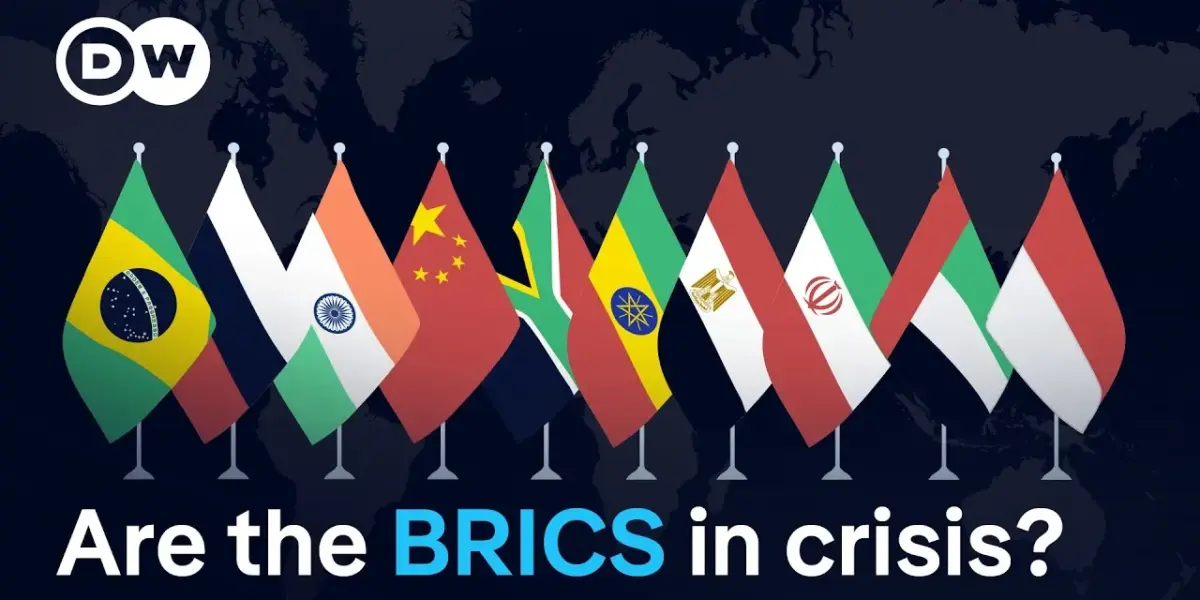
BRICS, a group of 10 emerging nations, is grappling with internal conflict following the recent expansion that included Iran and the UAE. The escalation of tensions between these two members challenges the group's consensus-based decision-making. BRICS is currently relying on quiet diplomacy and an 'agree to disagree' approach to manage the crisis and avoid a split.

BRICS Navigates Internal Strife Amidst Iran-UAE Conflict
The international group BRICS, which includes major emerging economies, is facing a significant challenge as two of its key members, Iran and the United Arab Emirates (UAE), are in conflict. This situation puts pressure on the group’s ability to function smoothly, especially after its recent expansion to include these nations. BRICS, representing nearly half the world’s population, has historically managed internal disagreements, but the current tension between Iran and the UAE presents a new kind of crisis.
Expansion Creates New Challenges
BRICS recently welcomed Iran and the UAE, aiming to strengthen its influence on the global stage. However, this expansion has coincided with escalating tensions between the two new members. The conflict between Iran and the UAE, which has seen Iran attack countries hosting U.S. military bases, including the UAE, puts BRICS in a difficult position. “It’s very difficult for the group to make expansion work and be productive if two of its members are in conflict,” explained Mika Papa, who leads the BRICS unit at the MIT Center for International Studies.
BRICS’ Strategy: Ambiguity and “Agree to Disagree”
To manage this internal strife and avoid a major split, BRICS is adopting a strategy of ambiguity and encouraging members to “agree to disagree.” Instead of issuing strong joint statements, the group is relying on quiet diplomacy and mediation efforts. “What we have seen in June when Israel attacked Iran, BRICS had a joint statement that that was against international law. But now it’s a much different situation because we are looking at internal um internal breakdown,” Papa noted. The current chair of BRICS is engaging in shuttle diplomacy, talking to individual parties rather than making public pronouncements that would require consensus from all members, which is currently impossible between Iran and the UAE.
Operational Structure and Diverse Mechanisms
BRICS operates through an annual summit where leaders issue a declaration outlining the group’s direction. Between summits, a rotating chair country organizes numerous meetings throughout the year. The group boasts over 180 different mechanisms and working groups that cover a wide array of issues. These range from trade, fashion, and media to political security, sustainable development, and counterterrorism. BRICS also develops strategic plans and frameworks, such as one for AI governance. The collaboration extends beyond governments, involving businesses, civil society, and think tanks from member nations.
Lessons from Past Disputes
BRICS has faced similar challenges before, notably the border dispute between India and China in 2020. In that instance, the necessity for both countries to attend the BRICS summit helped to mitigate the negative impacts of their conflict. This situation is often compared to how warring nations still participate in the United Nations General Assembly, focusing on areas of agreement despite ongoing disputes. This approach creates “islands of disagreement and islands of agreement,” allowing the group to function by compartmentalizing conflicts.
China’s Influence and Group Consensus
While China is a powerful member and has informally played a significant role, it has not always been able to impose its agenda. For example, China pushed for BRICS expansion for years before it happened and has advocated for a free trade agreement since 2011, which has yet to materialize. This demonstrates that even powerful members must gain buy-in from others to advance priorities. BRICS is not a security alliance, which helps to insulate it from certain geopolitical conflicts, much like the World Health Organization isn’t expected to intervene in military disputes.
Future Outlook: Conflict Resolution and Resilience
The current internal conflict poses a significant test for BRICS. The group’s core principle of consensus-based decision-making is being challenged. To remain resilient, BRICS needs to continue cooperation across various issues. Experts suggest that developing a formal conflict resolution mechanism could be beneficial, not just for the Iran-UAE situation but also for potential future disputes among members like Egypt and Ethiopia. While there hasn’t been much appetite for such a mechanism before, the current crisis might spur discussions about building institutional knowledge and professional mediation services within BRICS, possibly utilizing the existing ‘sherpas’ who facilitate inner-group meetings.
Source: How come BRICS isn’t falling apart? | DW News (YouTube)

Related Articles

Arab Allies Push Trump for Iran Invasion, Demand Payments
Several Arab nations are reportedly pressuring President Trump to launch a ground invasion of Iran, threatening their alliances if U.S. forces withdraw without decisive action. This comes as Iran asserts control over the Strait of Hormuz and retaliates against regional targets, while the U.S. appears to be shifting its strategy away from reopening the vital waterway.


Middle East Conflict Fuels Oil Surge, Market Jitters
Markets showed little movement despite escalating Middle East tensions and the deployment of U.S. troops. Crude oil prices surged past $100 a barrel, driven by concerns over the Strait of Hormuz. The conflict has also intensified in Lebanon, causing a significant humanitarian crisis.

Russia Threatens Europe with Factory Strikes
Russian state media is issuing direct threats to strike factories in Europe that produce weapons for Ukraine. Propagandists are advocating for attacks on these "decision-making centers," aiming to disrupt Western military aid. The rhetoric also includes commentary on European politics and alleged election interference.