Breeze to Fire: A New Path to Early Retirement
The Breeze to Fire strategy offers a novel approach to early retirement, blending investment income with continued earnings. This flexible model aims to help individuals transition away from their day jobs sooner by partially funding retirement through investments while maintaining supplementary income.

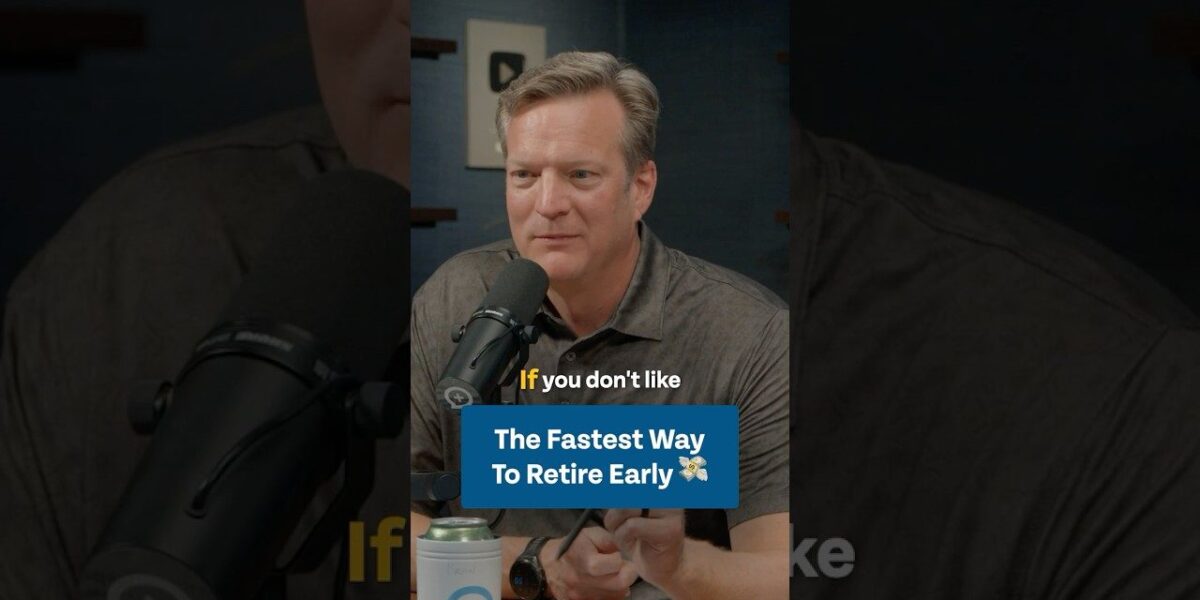
Breeze to Fire: A New Path to Early Retirement Emerges
The allure of escaping the daily grind is a powerful motivator for many, fueling a growing interest in alternative retirement strategies. Among these, a concept dubbed “Breeze to Fire” is gaining traction, offering a nuanced approach to achieving financial independence and leaving traditional employment behind. Unlike more aggressive early retirement models, Breeze to Fire integrates continued income generation with investment reliance, providing a potentially more attainable pathway for those seeking to transition out of their day jobs.
Understanding the Breeze to Fire Philosophy
The core idea behind Breeze to Fire, much like its predecessors such as FIRE (Financial Independence, Retire Early) and Coast FIRE, is to achieve a state where one’s investments can sustain a significant portion of living expenses. However, Breeze to Fire distinguishes itself by acknowledging the desire, and often the necessity, to continue earning an income even after transitioning away from a traditional full-time role. This approach is particularly appealing to individuals who may not have accumulated the vast sums required for a complete, investment-only retirement but still wish to reduce their reliance on their current employment.
The fundamental principle is to leverage investments to cover a portion of retirement expenses while simultaneously generating supplementary income to bridge the remaining gap. This dual strategy aims to reduce the pressure associated with traditional FIRE, which often demands exceptionally high savings rates and years of intense accumulation.
The motivation for exploring such strategies often stems from dissatisfaction with current employment. The daily struggle of waking up to an alarm clock and heading to a job that doesn’t fulfill or excite can be a powerful catalyst for change. Breeze to Fire offers a vision of hope – a way to gradually shift towards a life with more autonomy and less obligation to a conventional career path.
The Mechanics of Breeze to Fire
Implementing a Breeze to Fire strategy involves a two-pronged approach:
- Investment Accumulation: Like any FIRE-related strategy, building a substantial investment portfolio is crucial. This involves consistent saving and investing over time, allowing capital to grow through compounding. The target amount will depend on individual spending needs and the desired level of income replacement from investments.
- Income Generation in Transition: The defining characteristic of Breeze to Fire is the commitment to maintaining some form of income. This could involve part-time work, freelancing, consulting, starting a small business, or pursuing passion projects that generate revenue. The income earned is intended to offset expenses that the investment portfolio does not cover.
This contrasts with the traditional FIRE model, where the goal is to have investments cover 100% of living expenses, allowing for complete retirement from work. Coast FIRE, on the other hand, focuses on accumulating enough to cover future retirement expenses with projected market growth, meaning one could stop saving but still retire at a traditional age. Breeze to Fire occupies a middle ground, enabling a move away from a full-time job sooner by supplementing investment income with earned income.
Market Impact and Investor Considerations
The rise of strategies like Breeze to Fire reflects broader shifts in the labor market and evolving attitudes towards work and retirement. As the cost of living continues to be a concern and the traditional pension system has largely faded, individuals are seeking more personalized and flexible approaches to financial security.
What Investors Should Know:
- Flexibility is Key: Breeze to Fire is not a one-size-fits-all plan. Its success hinges on an individual’s ability to adapt their lifestyle, manage expenses, and generate reliable supplementary income.
- Risk Management: Relying on both investments and ongoing income introduces a different risk profile compared to pure FIRE. Investors must consider the volatility of the market and the potential instability of freelance or part-time income streams. Diversification across asset classes and income sources is paramount.
- Long-Term Planning: While the goal is to leave a day job, the strategy requires sustained effort. The income generated in the transitional phase needs to be sufficient to cover expenses not met by investments, and this balance must be maintained over the long term.
- Psychological Shift: Transitioning from a traditional career to a hybrid model of investing and earning requires a significant psychological adjustment. It demands self-discipline, motivation, and a willingness to embrace uncertainty.
Sectoral and Asset Context
The viability of a Breeze to Fire strategy is influenced by economic conditions and the performance of various asset classes. A robust stock market, for instance, can accelerate investment growth, making it easier to reach the capital needed to reduce reliance on active income. Conversely, periods of market downturn could necessitate a greater reliance on earned income to cover expenses.
Sectors that offer flexible work arrangements or high earning potential for freelance and contract work are particularly relevant. Technology, creative industries, and specialized consulting roles often provide such opportunities. For the investment component, traditional diversified portfolios including equities and bonds remain central, with the specific allocation depending on an individual’s risk tolerance and time horizon.
Long-Term Implications for Investors
The Breeze to Fire concept signifies a potential evolution in the pursuit of financial independence. It acknowledges that for many, a complete cessation of work is not only financially daunting but also perhaps not entirely desirable. The ability to curate one’s working life, reducing hours or shifting to more meaningful pursuits while still drawing on investment income, offers a compelling vision for the future of retirement. This approach could lead to a more engaged and fulfilling post-traditional-employment phase of life, characterized by a blend of financial security and personal fulfillment.
Source: Want to Quit Your Job? Watch This First (YouTube)

Related Articles


30-Somethings Overlook Key Tax Strategy
Financial experts highlight the critical importance for individuals in their 30s to strategically manage three distinct tax "buckets": tax-free, tax-deferred, and after-tax accounts. Overlooking this strategy can lead to missed opportunities for significant long-term tax savings.

Unlock ‘Free Money’: The Employer Match Advantage
Discover the power of employer retirement plan matches, a critical step often referred to as 'free money.' Learn how this benefit, combined with tax-advantaged accounts like Roth IRAs and HSAs, can significantly accelerate your wealth accumulation.


AI Disruption: Boom or Bust for Markets?
A new analysis presents two starkly different futures for the economy driven by AI: a potential 40% market crash and widespread job losses, or an era of unprecedented abundance. The debate highlights the profound uncertainty surrounding AI's ultimate economic impact.