Brazil’s Tech Market: High Tariffs, Creative Builds
Brazil's extreme import tariffs force PC builders into creative workarounds. Explore two builds showcasing how enthusiasts navigate high costs with white-label parts, salvaged components, and unique sourcing strategies. A tale of resilience and ingenuity.

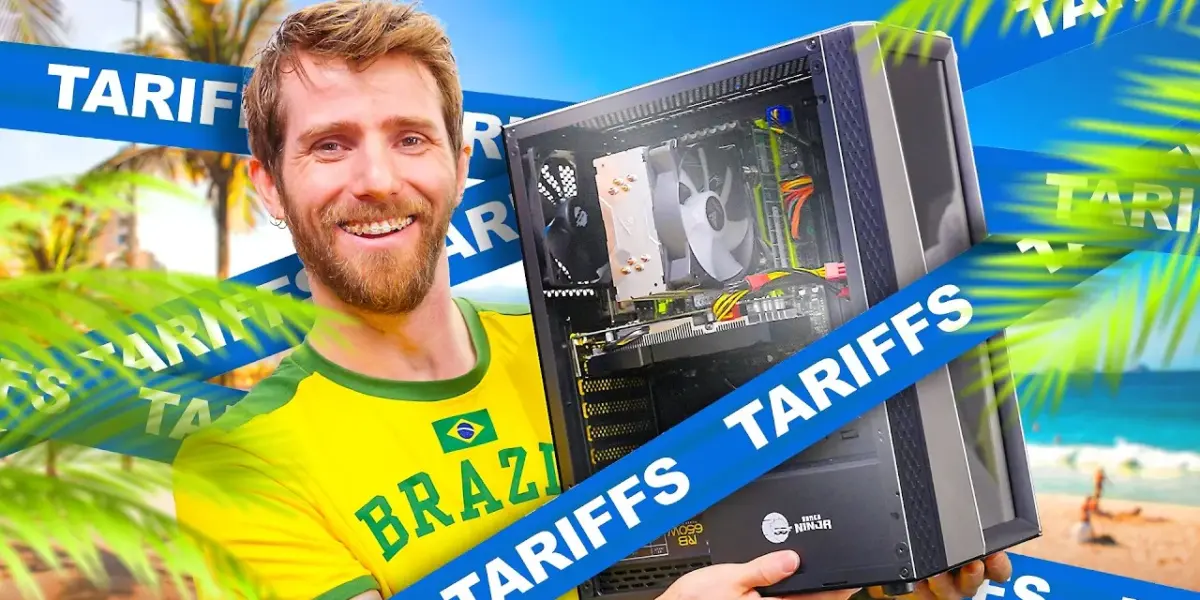
Brazil’s Tech Market: High Tariffs, Creative Builds
In a world where tariffs and sales taxes significantly impact consumer electronics prices, Brazil stands out. For decades, the South American nation has grappled with exceptionally high import duties, forcing consumers and builders to adopt innovative, and sometimes unconventional, approaches to acquiring technology. This article delves into the unique landscape of the Brazilian PC market, exploring how enthusiasts navigate extreme taxation to build functional and even gaming-capable machines.
The core challenge in Brazil is the prohibitive cost of imported electronics. With taxes reaching staggering levels, purchasing components directly from international online retailers like AliExpress or Newegg often becomes financially unfeasible. This situation has fostered a local market where creativity and workarounds are not just preferred, but essential. We’ll examine two distinct PC builds assembled within Brazil, showcasing the compromises and ingenuity required to get powerful hardware into users’ hands.
The “Sauce” of Brazilian Builds: Navigating Local Sourcing
Our exploration begins with two builds put together by local Brazilian tech enthusiasts, Davyy and Roberto. The first, a gaming PC built to Brazilian standards, represents a more aspirational, albeit still budget-conscious, build. The second is one of the cheapest possible builds, highlighting the extreme end of cost-saving measures.
A recurring theme in these builds is the prevalence of white-label brands and locally assembled components. Brands like Superframe, which often rebrand motherboards from established manufacturers like ASRock, are common. These companies play a crucial role in navigating Brazil’s complex tax laws. By performing final assembly within Brazil, often leveraging tax exemptions for local manufacturing (like in the ZFM region), they can offer components at prices that are more palatable, though still significantly higher than international equivalents. This strategy typically limits the availability of high-end components, as even without tariffs, the cost would be prohibitive for the average consumer.
Component Choices: Affordability Meets Necessity
CPU & Motherboard: The AM4 Legacy Continues
In the gaming build, we see a Ryzen CPU with AMD’s 3D V-Cache technology, a variant seemingly exclusive to Latin America. This specific SKU allows manufacturers to offer a competitive product that is harder to price-compare in more affluent markets, potentially deterring gray market resellers. The continued popularity of the AM4 platform and DDR4 memory in Latin America is striking. Affordability remains the key driver, leading companies like ASUS to ramp up production of AM4 motherboards to meet demand.
For the budget build, a starkly different approach is taken. The motherboard utilizes salvaged chipsets from retired server motherboards, with BIOS modifications to enable modern features like M.2 SSD support. This salvaged motherboard, paired with a 12-core Xeon processor and 16GB of ECC DDR4 RAM, cost an astonishing $56. However, this budget approach is immediately challenged by Brazil’s updated import policy: a 93% tax on any AliExpress order exceeding $50. This policy effectively forces consumers to either order parts piecemeal, pay multiple shipping fees, or rely on friends traveling abroad to bring components back.
RAM: Speed vs. Savings
Both builds utilize DDR4 RAM, but with significant differences. The gaming build opts for faster 3200 MT/s RAM, while the budget build uses slower 2133 MT/s server memory. For those on a tighter budget, even a $11 (approx. R$50) difference for faster RAM can be substantial, highlighting the impact of small price variations on purchasing decisions in Brazil. The prevalence of Buy Now, Pay Later (BNPL) schemes, even for everyday purchases like lunch, underscores the economic realities and consumer habits shaped by the local financial landscape.
Storage: A Universal Standard
Both builds opted for the Kingston NV2 SSD, a brand recognized in Brazil. This indicates a move towards more standardized, reliable components where possible, even within the constraints of the market.
Case & Cooling: “Sauce” on Display
The contrast in case and cooling solutions is dramatic. The gaming build features a Superframe case with tempered glass, an RGB AIO cooler, for the equivalent of $85 and $55 respectively. This build exudes a premium aesthetic, described as having “sauce” or “mo” – a Brazilian slang for style and flair.
In stark contrast, the budget build sports the Gamer Ninja Eraser case for $29.70. This case, along with a Gambia CPU cooler, cost less than just the AIO cooler in the other build. The budget case includes a novel LED switch and a doodle board for personalization, demonstrating that even budget options can incorporate unique features.
Power Supply Units: A Critical Concern
A significant point of concern arose with the power supply units. Neither the BRX 650W (budget build) nor the Dux Pulse 800W (gaming build) were familiar brands. Independent lab testing revealed the BRX unit to be severely underperforming, unable to sustain its rated wattage and exhibiting poor brownout protection. The Dux Pulse, while more expensive and not a top performer, proved more reliable and capable of meeting its specifications. This highlights the risks associated with lesser-known PSU brands, especially in markets where sourcing premium components is challenging.
Graphics Cards: Balancing Performance and Price
The gaming build features an NVIDIA RTX 3060. While an RTX 4050 might offer newer features, the 3060 was chosen for its better performance-per-dollar in this context. The article notes that the performance uplift from previous generations isn’t as dramatic as it once was, making older-generation cards still viable. A critical point is raised about the 3060’s eight PCIe lanes, which, when paired with older motherboards, can lead to performance bottlenecks compared to cards with more lanes, even if those lanes are slower.
The budget build is equipped with a Radeon RX 580 from 2017. This veteran card, particularly the 8GB VRAM version, remains capable of running popular esports titles like League of Legends and Valorant, albeit with compromises. The prevalence of these cards is partly attributed to their popularity among cryptocurrency miners, raising questions about their long-term reliability, though they are still considered functional for many gaming needs.
Monitors: A Tale of Two Displays
The display situation further emphasizes the disparity. The gaming build boasts a 1440p, 180Hz IPS monitor for $130, offering a fluid and visually appealing experience. It includes multiple HDMI and DisplayPort inputs.
Conversely, the budget build uses a 75Hz monitor with only VGA and HDMI inputs, and a glossy finish that looks dated next to its counterpart. The limited input options and lower refresh rate underscore the compromises made to achieve the lowest possible price point.
Performance and Verdict: Tenacity in the Face of Adversity
In gaming tests, the disparity in performance was evident. The gaming build, with its RTX 3060, delivered a significantly smoother and more detailed experience, even in demanding titles like Cyberpunk 2077, with features like ray tracing enabled. The budget build, hampered by the RX 580, lower resolution, and details, struggled considerably, with input lag and mouse tracking issues impacting gameplay.
However, when tested with esports titles, the budget build became more playable, achieving acceptable frame rates. The key takeaway is that both PCs, despite their vastly different price points and component choices, delivered a playable experience within their respective budget constraints. The gaming build performed two to four times better but also cost three times as much.
The article commends the ingenuity and resilience of Brazilian PC builders who navigate a complex and expensive market. While the recommended components might not be ideal for North American consumers, the builds serve as a testament to the lengths people will go to pursue their technological interests. The author speculates that similar market conditions could arise in the US if current policy trends continue.
Specs & Key Features
Gaming PC Build (Brazilian Standards)
- Motherboard: Superframe B450M (ASRock rebrand)
- CPU: Ryzen CPU with 3D V-Cache (Latin America exclusive SKU)
- RAM: DDR4 3200 MT/s
- Storage: Kingston NV2 SSD
- Case: Superframe with tempered glass
- CPU Cooler: 360mm RGB AIO
- Graphics Card: NVIDIA RTX 3060
- Power Supply: Dux Pulse 800W
- Monitor: 1440p, 180Hz IPS
Budget PC Build (AliExpress Sourced)
- Motherboard: Salvaged server chipset with BIOS mods
- CPU: 12-core Xeon
- RAM: 16GB ECC DDR4 2133 MT/s
- Storage: Kingston NV2 SSD
- Case: Gamer Ninja Eraser
- CPU Cooler: Gambia Borious heatsink
- Graphics Card: Radeon RX 580 (8GB VRAM)
- Power Supply: BRX 650W (underperforming)
- Monitor: 75Hz, VGA/HDMI inputs
Note: Pricing for the budget build components (motherboard, CPU, RAM) was approximately $56 before updated import taxes. The gaming build components were significantly more expensive, with the CPU alone costing over $300.
Source: The All Brazil PC (YouTube)

Related Articles


China Fights Back: Tariffs Loom Ahead of Trump Visit
China is retaliating against US trade investigations that could lead to higher tariffs. This escalating trade tension occurs just before a planned visit by President Trump. The dispute involves accusations of unfair practices and impacts global supply chains.


EU Backs US Trade Deal, But Keeps Defense Ready
The European Parliament has approved a new trade deal with the United States, a move that aims to prevent further tariff disputes. While the deal sets a 15% tariff on most goods, EU lawmakers have included backup plans in case the agreement falters, signaling a cautious approach to future trade relations.


Wars and Tariffs Fuel Inflation, Americans Pay the Price
Rising prices and a swelling national debt are squeezing American families. The video suggests that policies like Trump-era tariffs and recent wars are major contributors to these economic pressures, impacting everything from gas prices to the cost of living. This situation could have significant political consequences.