Brain Chip Restores Voice, Frees Man From ALS Prison
A Neuralink brain implant has dramatically improved the life of Brad Smith, who lost his ability to speak due to ALS. He can now control computers with his thoughts and communicate using an AI-generated version of his own voice, regaining independence and connection with his family.

Brain Chip Restores Voice, Frees Man From ALS Prison
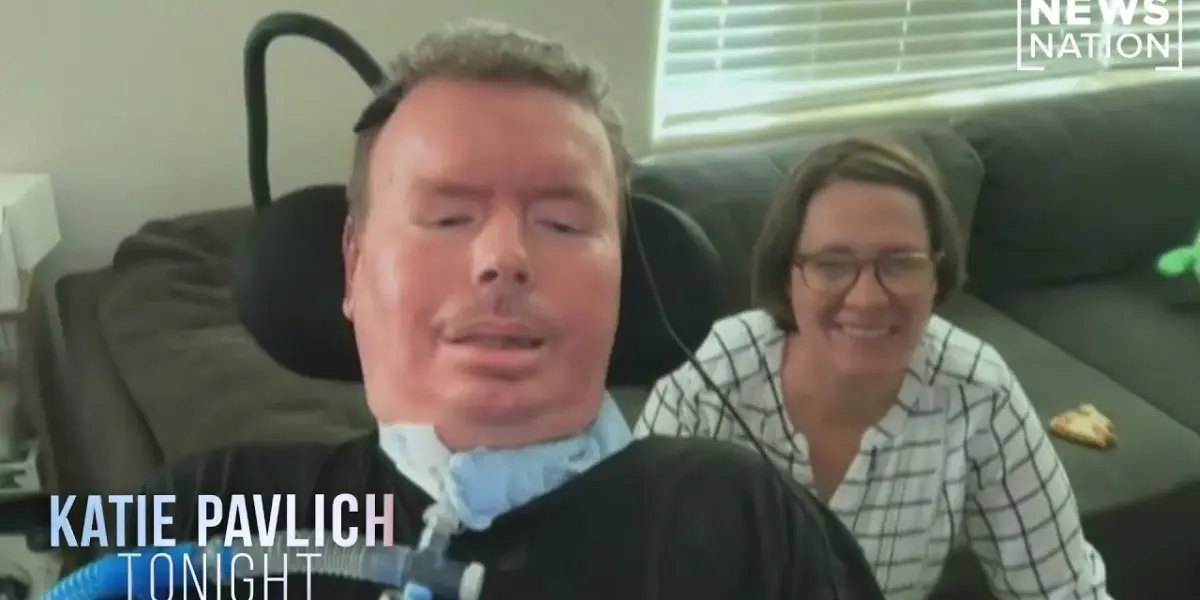
A groundbreaking brain implant is giving people with severe paralysis a new way to communicate and interact with the world. Brad Smith, diagnosed with ALS at age 37, lost his ability to speak entirely. But a new Neuralink implant has dramatically changed his life, allowing him to control computers and even speak with his own AI-generated voice.
Amyotrophic Lateral Sclerosis, or ALS, is a disease that attacks nerve cells in the brain and spinal cord. These cells control voluntary muscle movement. As ALS progresses, it weakens muscles, making it harder to move, speak, swallow, and breathe. Brad, now 45, was left completely paralyzed and unable to speak.
Before the implant, Brad relied on eye-tracking technology to control a computer. He described this system as slow, tiring, and unreliable. He was dependent on his family and caregivers for everything. Simple tasks like playing with his children or sending a quick message were impossible. His world had shrunk, even though his mind remained sharp.
A New Way to Connect
Brad became one of the first people in the world to receive a Neuralink implant. The implant, about the size of five stacked quarters, was placed in his brain’s motor cortex, the area controlling movement. Tiny threads were guided into his brain by a robot, avoiding blood vessels to minimize bleeding. The implant allows him to control a computer cursor directly with his thoughts.
He found that by imagining movements with his tongue, he could move the cursor. The Neuralink system was trained to recognize this thought as a command. He also learned to imagine clenching his jaw to perform clicks. This new method felt natural and became much faster and more reliable than eye-tracking.
The changes have been profound. Within weeks, Brad’s typing speed improved greatly. He can now create videos, play video games like Mario Kart with his kids, and go on trips. He feels he has regained a huge part of his independence and quality of life. He describes the improvement as life-changing, giving him hope and the ability to contribute again.
Bringing His Voice Back
One of the most emotional breakthroughs has been the return of his voice. Using recordings of his speech from before ALS took his voice, an AI program created a clone of his voice. Now, when Brad types what he wants to say, the AI speaks it aloud in his own voice. This is a huge emotional win for him and his family, allowing him to sound like himself again rather than using a robotic voice.
Brad refers to himself as a cyborg because he is now connected to technology through his brain. He sees a very exciting future for brain-computer interfaces. Neuralink is working on faster typing and voice capabilities. Longer-term goals include restoring hand dexterity and even vision directly from thought. The company’s focus is on providing better tools for people like Brad, not necessarily curing ALS itself.
Family Impact
Brad’s wife, Tiffany, shared how the implant has transformed their daily life. Before, Brad was mostly an observer, often frustrated by slow responses. Now, he can quickly join conversations, share movie quotes, play games, and help with projects in real-time. He can be more present with his children.
The ability to communicate outside was a major improvement. The old eye-tracking system struggled in bright light, limiting their activities. Now, they can go to parks, baseball games, and other outdoor events. Being able to support the children physically more has been the biggest change for Tiffany.
Hearing Brad’s own voice again has been deeply meaningful for Tiffany. She had grown used to his communication device’s robotic voice. She noted that Brad’s mother, who is no longer alive, didn’t get to see and hear him communicate so freely. The ability for him to speak in his own voice again would have been wonderful for her.
Brad’s story highlights the incredible potential of brain-computer interfaces to restore function and improve the lives of individuals facing devastating neurological conditions. It offers a glimpse into a future where technology can bridge the gap left by disease, allowing people to reconnect with their loved ones and the world around them.
Source: How Neuralink brain chip transformed life of ALS sufferer | Katie Pavlich Tonight (YouTube)

Related Articles

Mind Control Tech Frees Man From ALS Paralysis
A groundbreaking brain implant from Neuralink has enabled Brad Smith, who lost his ability to speak due to ALS, to communicate and control computers using only his thoughts. The technology allows him to type, play games, and even have his AI-cloned voice speak for him, significantly improving his quality of life and independence.


Trump’s Iran Attacks Trigger Global Helium Shortage
Former President Donald Trump's military actions against Iran have led to a critical global shortage of helium, a vital resource for MRIs and semiconductors. The halt in supply from Qatar has far-reaching economic and health implications for the U.S.


Iran Launches Cyberattack on US Medical Firm Amid Escalating Tensions
Iran has launched a significant cyberattack against a U.S. medical tech company in Michigan, signaling retaliation amid escalating tensions and ongoing U.S. military operations. The attack highlights the growing threat of cyber warfare in international conflicts.