Bondi’s Epstein Cover-Up: Justice Delayed Fuels Democracy’s Peril
New revelations from the Epstein files suggest Pam Bondi and the DOJ may have violated the Epstein Files Transparency Act by redacting accusations against Donald Trump. The complex legal landscape and historical patterns of insufficient accountability raise concerns for the future of democratic institutions.

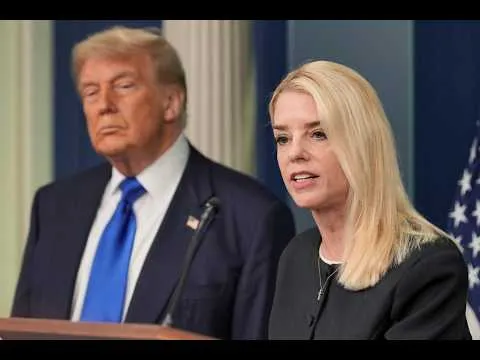
Epstein Files Transparency Act Ignored, Accusations Suppressed
The recent release of documents from the Jeffrey Epstein files has brought to light explosive allegations, including accusations against Donald Trump made by a woman who was a minor at the time. This revelation raises significant questions about the integrity of the document release process, particularly concerning Pam Bondi, who was in charge of overseeing the Epstein Files Transparency Act. The act explicitly states that no documents should be redacted based on embarrassment, reputational harm, or political sensitivity. However, the presence of redacted accusations against Trump, a prominent political figure, suggests a clear violation of this law, seemingly intended to protect him.
DOJ’s Widespread Non-Compliance and Legal Hurdles
The Department of Justice (DOJ) appears to have systematically violated the Epstein Files Transparency Act. Beyond missing numerous deadlines, the DOJ failed to disclose required files and neglected to provide explanations for any redactions, a mandate of the law. This widespread non-compliance makes a straightforward argument for full adherence to the act untenable. The path to legal accountability for individuals like Pam Bondi, however, is fraught with complexity. Prosecutors would need to prove not only that she knew of the suppressed files but also that she intentionally acted to conceal them. This would necessitate a full investigation, potentially including grand jury proceedings and extensive witness testimony, a process described as legally unwieldy.
Absence of Penalties and Potential Criminal Statutes
Adding another layer of difficulty to accountability, the Epstein Files Transparency Act itself lacks any penalty for violations. While this hinders direct prosecution under the act, potential criminal liability could still exist. If a federal law is violated—even one without explicit penalties—with the intent to help someone avoid criminal responsibility, charges such as accessory after the fact could apply. Conspiracy charges, like conspiracy to cover up or defraud the United States, are also theoretical possibilities. However, building a solid case for these charges is presented as an immense challenge.
The Role of Whistleblowers and Congressional Action
The discussion turns to alternative avenues for accountability, particularly the role of individuals with inside knowledge. The hope is that former federal prosecutors or DOJ employees, privy to the contents of the Epstein and Maxwell files, would come forward. Individuals like former lead prosecutor on the Ghislaine Maxwell case, which involved potentially implicating files, are seen as crucial. While these individuals cannot disclose grand jury-protected information, they could testify about what they know was suppressed. Congressional action is already underway, with subpoenas being issued to figures like Howard Lutnick and Pam Bondi. It is urged that Congress also subpoena individuals like former prosecutor Moren Comey, who is now in private practice and could testify without violating grand jury secrecy, provided she doesn’t compromise it.
Subpoenas as a Shield for Testimony
A significant concern for potential whistleblowers is the risk of legal repercussions from a DOJ willing to retaliate. However, a congressional subpoena offers a form of legal protection. Once compelled to testify, individuals are legally obligated to do so, unless they can invoke legitimate privileges like self-incrimination or attorney-client privilege. A subpoena transforms a voluntary disclosure into a legal mandate, protecting the individual from accusations of acting solely out of public square pronouncements. This could be the catalyst for individuals like Moren Comey to share their knowledge.
The Precedent of Non-Accountability and the “Scorched Earth” Imperative
The conversation highlights a concerning historical pattern of insufficient accountability for high-level misconduct, dating back to Richard Nixon. The failure to hold past administrations accountable, including actions taken or not taken during the Trump administration regarding classified documents and election interference, is seen as a direct precursor to current and future threats to democracy. The argument is made that without a “scorched earth accountability mission” following the fall of administrations that engage in widespread abuses, the republic itself is at risk. This mission must be aggressive, fair, apolitical, and evidence-based, aiming to deter future transgressions.
Statute of Limitations and Ongoing Conspiracies
Regarding legal timelines, most federal crimes have a five-year statute of limitations, though some are longer or have none. The clock typically starts when a crime is completed. However, for conspiracies, which are often seen in the context of alleged misconduct within the Trump administration, the statute of limitations is more complex. A conspiracy is an ongoing crime, and the clock does not begin to run until the last co-conspirator commits the last act in furtherance of that conspiracy. This suggests that many potential crimes related to the suppression of information and other alleged abuses may still be prosecutable, even if significant time has passed, provided they are part of an ongoing conspiracy.
The Threat of Corrupt Pardons
A significant post-presidency challenge could involve corrupt pardons issued by a president to associates. The legal precedent for challenging such pardons is largely untested. If a president were to issue pardons to individuals involved in criminal conspiracies, it would create a new legal battleground. This potential scenario underscores the need for a comprehensive accountability mission that includes challenging any corruptly delivered pardons in court, further emphasizing the “scorched earth” approach necessary to preserve democratic institutions.
Why This Matters
The unfolding events surrounding the Epstein files and the alleged suppression of information by officials like Pam Bondi are not merely legal technicalities. They represent a critical juncture for American democracy. The deliberate redaction of documents that could expose wrongdoing, particularly when involving prominent political figures, erodes public trust and undermines the rule of law. The lack of clear penalties for violations of transparency acts, coupled with the immense difficulty in prosecuting high-level officials, creates a dangerous precedent. The historical pattern of avoiding full accountability, as discussed in the context of Watergate and subsequent administrations, suggests a systemic weakness that emboldens future transgressors. The call for a “scorched earth accountability mission” reflects a deep concern that without robust and aggressive pursuit of justice, the very foundations of the republic are at risk. The potential for ongoing conspiracies and corrupt pardons further complicates the landscape, highlighting the urgent need for vigilance and a commitment to upholding legal and constitutional principles, regardless of political sensitivity.
Implications, Trends, and Future Outlook
The implications of these revelations are far-reaching. They point to a trend of using governmental power to shield political allies from scrutiny, a practice that, if unchecked, can lead to a significant erosion of democratic norms. The legal community is grappling with how to hold powerful individuals accountable when existing laws are either circumvented or lack sufficient enforcement mechanisms. The future outlook hinges on the willingness of legislative bodies, such as Congress, to use their oversight powers effectively and on the DOJ’s commitment to impartial justice, even when politically inconvenient. The concept of “scorched earth accountability” suggests a paradigm shift is needed, moving beyond incremental justice to a more forceful approach that acts as a genuine deterrent.
Historical Context and Background
The discussion draws parallels to historical moments where accountability for executive and governmental misconduct was either pursued or sidestepped. The Watergate scandal is a key reference point, illustrating the consequences of failing to hold a president accountable. The subsequent administrations, including the Trump era, are examined for their own perceived failures in upholding legal standards and ensuring transparency. The Epstein case itself, with its deep connections to powerful individuals across various sectors, has long been a focal point for discussions about wealth, influence, and potential abuses of power. The Epstein Files Transparency Act was intended to bring light to these complex dealings, but its perceived failure to be fully implemented raises concerns about the broader challenges in achieving justice when powerful interests are at play.
Source: Pam Bondi faces NEW CONSEQUENCES amid Epstein coverup (YouTube)

Related Articles

DOJ Lawyers Face Contempt as Judges Scrutinize Immigration Practices
Federal judges are increasingly threatening contempt against DOJ lawyers amid allegations of politicized immigration judging and unlawful detentions. A Minnesota case highlights "Orwellian" tactics, where a man was detained for six weeks despite charges being dropped, only after a judge intervened.

Snyder: Democracy Demands Citizen Action, Not Passive Hope
Historian Timothy Snyder asserts that democracy's survival depends on active citizen participation, not passive hope. He analyzes the fraying 'veneer of invincibility' surrounding Donald Trump and stresses the vital role of grassroots action and a vigilant press in bolstering democratic institutions.

Bondi Faces Epstein Fallout Amidst Trump’s Cover-Up Shield
Congressman Dan Goldman discusses the complex situation surrounding Pam Bondi's potential involvement in the Epstein cover-up. He argues that unlike other officials, Bondi's deep knowledge of 'Epstein secrets' and potential leverage over Donald Trump makes her firing unlikely, highlighting concerns about a broader accountability gap in the current political climate.