Boebert’s Hearing Meltdown: A Political Spectacle Unfolds
Representative Lauren Boebert's confrontation during a hearing involving Secretary Hillary Clinton escalated into a public spectacle. The incident, fueled by accusations of procedural impropriety and the release of photos, led to Boebert's departure and subsequent apology, highlighting the performative nature of modern politics.

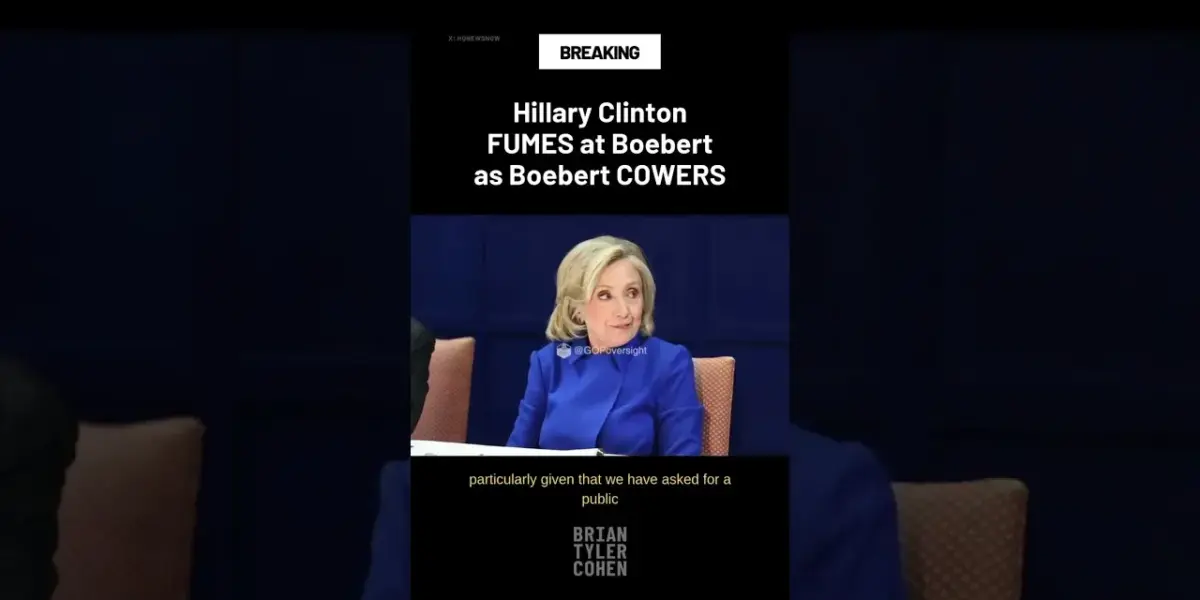
Boebert’s Hearing Meltdown: A Political Spectacle Unfolds
The recent hearing involving Secretary Hillary Clinton took an unexpected and dramatic turn, highlighted by Representative Lauren Boebert’s abrupt departure and subsequent public statements. What began as a seemingly standard congressional inquiry quickly devolved into a public relations battle, fueled by accusations of procedural impropriety and the strategic release of visual media. This event offers a window into the performative aspects of modern political discourse and the challenges of maintaining decorum in high-stakes legislative proceedings.
The Genesis of the Conflict
The transcript reveals a critical juncture during a fundraiser for Nita Loey, where an interruption occurred. Representative Boebert, present at the event, seemingly initiated the disruption by questioning the permissibility of photographs being taken of Secretary Clinton as she testified. Boebert’s central concern appeared to be the consistency of these actions with the rules, especially in light of a request for a public hearing.
The core of Boebert’s argument revolved around the perceived violation of procedural norms. She questioned how photos could be released from within the hearing room, particularly when the expectation was for a public, transparent process. This line of questioning suggests a belief that such actions undermined the integrity of the proceedings and potentially prejudiced the public perception of the testimony before it could be fully presented and debated.
Clinton’s Reaction and Boebert’s Departure
The transcript captures a moment of palpable frustration from Secretary Clinton, who declared, “I’m done with this. If you guys are doing that, I am done.” This strong reaction indicates that the situation had reached a breaking point for her. She further characterized the behavior as “typical” and stated her willingness to be held in contempt, signaling a defiant stance against what she perceived as deliberate obstruction or harassment.
Following this exchange, the situation escalated. Boebert’s response, as indicated by the transcript, led to a request to take the session off the record. This suggests a breakdown in communication and a desire to move away from the public scrutiny of the hearing room. The phrase “I would like to take a break at this moment. I’d like to haveation for now. Go off the record. Go off the record” marks a definitive end to the public proceedings as they were intended.
The Fallout and Public Perception
The immediate aftermath saw reports of Boebert apologizing. While the specific details of this apology are not fully elaborated in the provided transcript, the fact that it occurred suggests an acknowledgment, however implicit, that her actions or the resulting chaos were problematic. The implication is that the spectacle generated by the exchange may have been detrimental to her political standing or the broader objectives of the hearing.
The narrative that emerged frames this event as a clash between a determined questioner and a seasoned politician facing scrutiny. The release of photos, whether intentional or not, became a focal point, weaponized by Boebert to question the legitimacy of the process. Clinton’s reaction, while perhaps defensive, can also be viewed as a response to what she perceived as a politically motivated disruption designed to derail her testimony.
Why This Matters
This incident is emblematic of a broader trend in contemporary politics: the increasing fusion of legislative proceedings with public relations strategies. Hearings are no longer solely venues for fact-finding and oversight; they have become stages for political theater, where every action, statement, and even photograph can be leveraged for political gain. Representative Boebert’s approach, while condemned by some as disruptive, can also be seen through the lens of a political tactic aimed at capturing attention and framing the narrative.
The reliance on optics and immediate reactions over substantive debate can degrade the quality of public discourse. When political figures prioritize viral moments or public condemnation over methodical deliberation, the very function of governance is called into question. The ability to conduct a fair and impartial hearing, free from partisan theatrics, becomes increasingly difficult.
Historical Context and Future Outlook
Congressional hearings have a long history of being contentious. Figures from McCarthy’s investigations to the Watergate hearings have demonstrated that these forums can become battlegrounds of ideology and power. However, the current media environment, with its 24/7 news cycle and the pervasive influence of social media, amplifies these conflicts. The ability to instantly disseminate images and soundbites means that the performative aspect of politics is now paramount.
The future outlook for congressional hearings remains uncertain. If the trend of prioritizing spectacle over substance continues, we may see a further erosion of public trust in legislative institutions. The challenge for lawmakers and the public alike will be to discern genuine oversight from political posturing. The incident involving Boebert and Clinton serves as a stark reminder of the delicate balance between vigorous debate and disruptive tactics, and the ongoing struggle to maintain the integrity of democratic processes in the digital age.
Implications and Trends
The immediate implication of this event is the increased politicization of what should be neutral investigative processes. The focus shifted from the substance of Secretary Clinton’s testimony to the procedural squabbles and the alleged impropriety of photograph releases. This allows political actors to sidestep difficult questions by creating distractions.
Furthermore, the incident highlights the power of social media and the media ecosystem in shaping public perception. The release of photos, regardless of their origin or intent, can quickly become a dominant narrative, overshadowing the intended purpose of the hearing. This puts immense pressure on public figures to manage their public image even in the midst of critical legislative work.
The trend towards more confrontational and less deliberative political engagement is likely to persist. As politicians increasingly find success by appealing to partisan bases through strong rhetoric and dramatic actions, the middle ground for consensus-building and reasoned debate shrinks. This event, therefore, is not an isolated incident but a symptom of a larger phenomenon shaping American politics.
Source: OMG: Boebert APOLOGIZES as Hillary YELLS at her (YouTube)

Related Articles

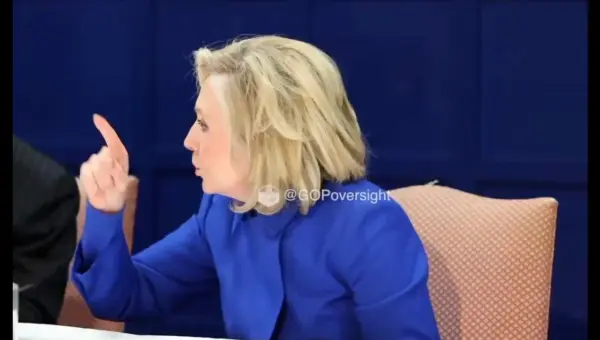
Boebert’s Epstein Deposition Stunt Undermines Real Justice
Representative Lauren Boebert's actions during Hillary Clinton's private deposition have ignited controversy, with critics arguing she prioritized partisan spectacle over justice. The analysis explores how this political theater may undermine the pursuit of truth in the Epstein scandal and harm victims.

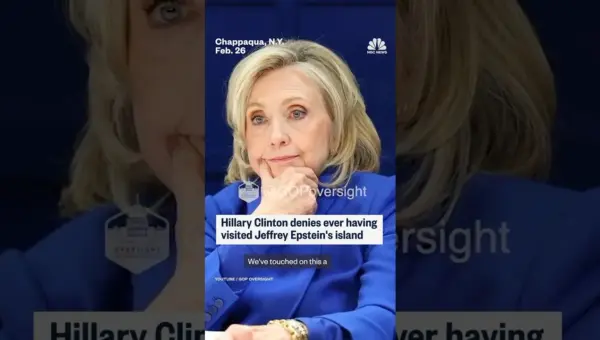
Clinton Denies Epstein Island Visit, Demands Evidence
Hillary Clinton has forcefully denied ever visiting Jeffrey Epstein's private island, expressing frustration with the repeated questioning and demanding any accusers present concrete evidence. Her firm denial comes amid ongoing public scrutiny of Epstein's associates and activities.

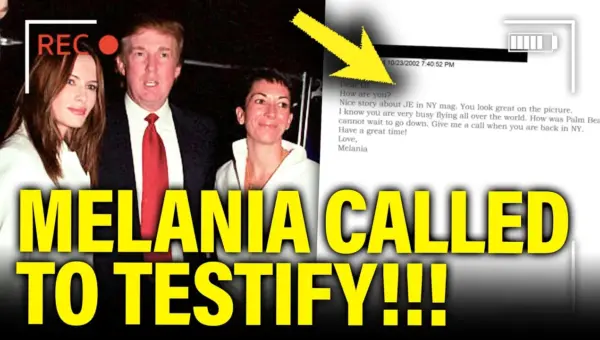
Epstein Files Backfire: Melania Trump Subpoenaed Amidst GOP Missteps
Republicans' attempt to use the Epstein files to target political opponents has seemingly backfired, drawing calls for Melania Trump to testify. Critics argue the focus on Hillary Clinton ignores more direct ties within the Trump orbit, raising questions about transparency and political motivation.