Boebert’s Epstein Deposition Stunt Undermines Real Justice
Representative Lauren Boebert's actions during Hillary Clinton's private deposition have ignited controversy, with critics arguing she prioritized partisan spectacle over justice. The analysis explores how this political theater may undermine the pursuit of truth in the Epstein scandal and harm victims.


Boebert’s Epstein Deposition Stunt Undermines Real Justice
The recent private deposition of Hillary Clinton regarding the Jeffrey Epstein scandal has become a focal point, not for the potential revelations it might hold, but for the political theater it has devolved into. At the center of this controversy is Representative Lauren Boebert, whose actions during the deposition have drawn sharp criticism for prioritizing partisan spectacle over substantive inquiry, potentially undermining the pursuit of justice for victims.
A Deposition Becomes a Spectacle
The core of the issue lies in Boebert’s decision to leak photos from a private deposition, a move that immediately halted the proceedings. Video footage captured a moment of apparent admonishment from Hillary Clinton towards Boebert, prompting an immediate, albeit brief, capitulation from the congresswoman. This interaction, contrasted with Boebert’s public persona, has been framed as revealing a stark difference between her online bravado and her behavior when directly confronted.
The deposition itself was initially requested to be public by Hillary Clinton, a demand that was eventually acceded to by Republicans who claimed a public hearing would be a “circus.” Yet, it was Boebert who, in the supposed sanctity of a private setting, initiated the very spectacle she claimed to eschew. She shared images with journalist Benny Johnson, accompanied by captions that sensationalized Clinton’s appearance and framed the deposition as a moment of accountability for her alleged involvement with Epstein. This action not only violated the agreed-upon privacy of the deposition but also arguably prejudiced the inquiry by turning it into a media event before any substantive information could be elicited.
Partisanship Over Truth
The author argues that this maneuver was not about uncovering facts but about creating a political narrative. The timing of these actions, coinciding with directives from Donald Trump to focus on political adversaries, suggests a strategy to leverage the Epstein case for partisan gain. The narrative pushed by Republicans, including Boebert, is that the case is a “Democrat problem,” a framing that the author contends distracts from potential Republican involvement and the broader implications of the scandal.
Furthermore, the deposition’s focus, according to the analysis, shifted from the real trafficking ring and potential co-conspirators, some of whom are allegedly implicated in the Epstein files, to a manufactured controversy. Specifically, Boebert’s line of questioning, which veered into the “Pizzagate” conspiracy theory, is highlighted as a prime example of this diversion. Clinton’s response underscored the absurdity of such inquiries, noting that Pizzagate was a “totally made up” conspiracy that led to real-world harm, including an armed individual targeting a pizzeria.
“Republicans are in a deposition to ask questions about a very real sex trafficking ring. In that deposition, they spend their time asking about a fake trafficking conspiracy theory about the basement of a pizza place with no basement. Again, the real trafficking ring is right in front of us.”
Undermining Victims and True Accountability
The author contends that by turning the deposition into a partisan circus, Boebert and others are not only exploiting the horrific crimes of Epstein but are also actively undermining the victims. The focus on a sensationalized, politically charged narrative distracts from the serious work of identifying and prosecuting all individuals involved in the trafficking ring. The implication is that this approach serves to protect certain powerful figures, including potentially Donald Trump, rather than bringing genuine closure and justice to those who suffered.
The analysis draws parallels to a broader pattern of alleged cover-ups and obfuscation surrounding the Epstein case. This includes the delayed release of files, the alleged redaction of co-conspirators’ names while victims’ information is exposed, and the controversial transfer of Ghislaine Maxwell to a lower-security prison. These events, coupled with the political maneuvering around Clinton’s deposition, paint a picture of an administration prioritizing damage control and political advantage over transparency and accountability.
A Legacy of Spectacle
Hillary Clinton herself articulated this motive, suggesting that the Republicans sought to “pull us into this to divert attention from President Trump.” Her perspective aligns with the author’s view that the focus on her, despite not being directly implicated in the released files, is a deliberate distraction tactic. The author laments the bipartisan consensus that once existed around seeking truth in the Epstein case, now seemingly fractured by partisan ambitions.
The piece concludes with a poignant message from survivors of Epstein’s abuse, who have spoken out against the government’s handling of the case, citing the re-victimization of victims through the mishandling of information and the continued protection of powerful individuals. Their call for transparency and courage stands in stark contrast to the political gamesmanship displayed during the deposition.
Why This Matters
The events surrounding Hillary Clinton’s deposition highlight a critical issue in contemporary politics: the tendency for significant investigations to be co-opted by partisan agendas. When the pursuit of truth is supplanted by the desire for political theatre and the scoring of points against opponents, the integrity of the justice system is compromised. The author’s analysis suggests that this approach not only fails to serve the public interest but actively harms victims by prolonging their suffering and obscuring the full scope of the crimes committed.
Implications and Future Outlook
The continued politicization of sensitive investigations like the Epstein case risks eroding public trust in governmental institutions and the media. If every inquiry is viewed through a partisan lens, genuine accountability becomes increasingly elusive. The author implies that this trend, if unchecked, could lead to a future where the most serious crimes are shielded by political expediency, leaving victims without recourse and perpetrators unpunished. The reliance on social media for disseminating information, as seen with Boebert’s leaks, further complicates matters, allowing for rapid spread of narratives that may not be grounded in fact.
Historical Context
The Jeffrey Epstein scandal itself is a complex web of alleged criminal activity, powerful connections, and repeated failures of oversight. The pattern of delayed investigations, redacted information, and accusations of cover-ups has been a recurring theme since Epstein’s initial arrest. The current events can be seen as a continuation of this historical pattern, where the pursuit of justice is frequently entangled with political considerations, particularly in an election cycle.
Source: WATCH: Lauren Boebert SCARED as Hillary Clinton ADMONISHES her (YouTube)

Related Articles

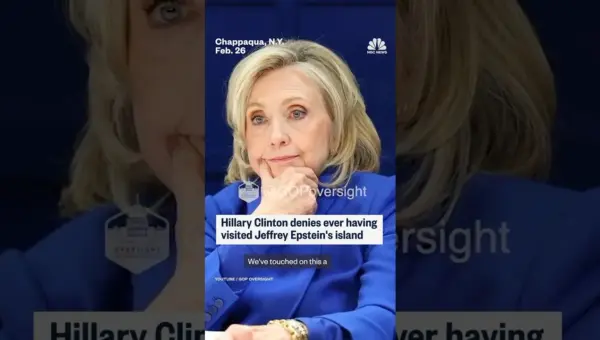
Clinton Denies Epstein Island Visit, Demands Evidence
Hillary Clinton has forcefully denied ever visiting Jeffrey Epstein's private island, expressing frustration with the repeated questioning and demanding any accusers present concrete evidence. Her firm denial comes amid ongoing public scrutiny of Epstein's associates and activities.

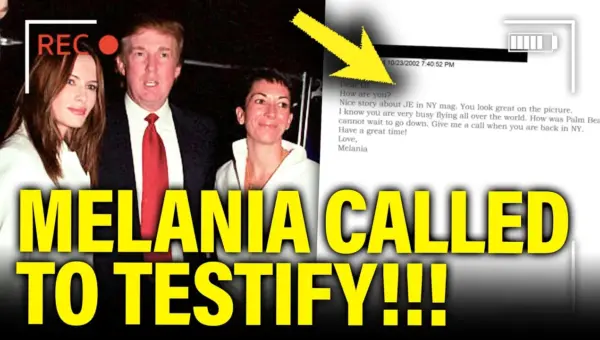
Epstein Files Backfire: Melania Trump Subpoenaed Amidst GOP Missteps
Republicans' attempt to use the Epstein files to target political opponents has seemingly backfired, drawing calls for Melania Trump to testify. Critics argue the focus on Hillary Clinton ignores more direct ties within the Trump orbit, raising questions about transparency and political motivation.

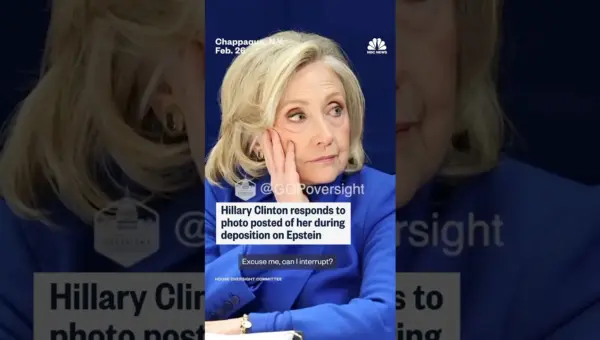
Clinton Deposition Disrupted by Photo Leak, Lawyer Vows to Continue
Hillary Clinton's deposition in the Jeffrey Epstein case was halted after her legal team discovered photos of her testifying were taken and leaked. Attorney David Kendall threatened to end the proceedings, calling the actions 'typical behavior' and demanding accountability.