Boebert Rejects Trump’s $200B Iran War Funding Ask
Representative Lauren Boebert has publicly stated she will not vote for former President Trump's proposed $200 billion funding request for the ongoing war in Iran. This opposition highlights growing dissent within the Republican party regarding the war's cost and priorities. The funding request faces public disapproval and scrutiny over potential cuts to domestic programs.


Boebert Rejects Trump’s $200B Iran War Funding Ask
Washington D.C. – As a costly conflict in Iran enters its fourth week with no clear end in sight, former President Donald Trump’s administration is preparing a significant funding request to Congress. The Pentagon plans to ask for an additional $200 billion to finance the ongoing military operations. This massive sum has drawn immediate criticism and faces growing opposition, even from within the Republican party.
Public Discontent and Financial Strain
A recent Reuters Ipsos poll reveals widespread public disapproval of the war. Nearly 60% of adults surveyed expressed disapproval, while only 37% approved. The financial impact is also keenly felt by Americans. The same poll found that 55% of Americans believe the war has directly contributed to rising gas prices, causing a noticeable financial strain on households nationwide.
Controversial Additions to Funding Package
Adding to the controversy, Republican leaders are attempting to attach $15 billion in farm aid to the war funding package. Furthermore, some Republicans have suggested cutting subsidies for the Affordable Care Act (ACA) to help offset the enormous $200 billion price tag. This proposal has been met with strong condemnation.
“I cannot think of a bigger political gift to the Democratic Party in a midterm here than for the Republicans to propose additional cuts to health care or social services to fund this war,” stated Congressman Jamie Raskin, a Democrat from Maryland and ranking member of the House Judiciary Committee. He described such a move as a “vivid demonstration of what their whole regime is about.”
Raskin Criticizes War Spending and Priorities
Congressman Raskin questioned the administration’s request, noting that the $200 billion might not even cover the war’s expenses through the end of the year. He highlighted the daily cost of the conflict, estimating it at between $1 and $2 billion per day. Raskin also criticized the broader agenda, contrasting the war spending with Trump’s past promises to lower inflation and “drain the swamp.” He pointed out that Americans are now paying significantly more for gasoline, and that the current administration has, in his view, been the most corrupt in history.
Republican Opposition Emerges
Despite the push from leadership, support for the $200 billion appropriation appears shaky. Several Republicans have indicated their reluctance to approve the funding without further scrutiny. Senator John Cornyn of Texas stated, “I can assure you that we’re not going to vote to give $200 billion or $2 billion or $200… until we have hearings on money.” He emphasized the need for thorough discussion and investigation before committing such vast resources.
Boebert Takes a Firm Stance
The most direct rejection came from Representative Lauren Boebert of Colorado. She explicitly stated her opposition to the war funding. “I will not vote for a war supplemental. No. I am a no. I’ve already told leadership I am a no on any war,” Boebert declared. She expressed frustration with the continuous spending on foreign conflicts, stating, “I am so tired of spending money elsewhere. I am tired of the industrial war complex getting all of our hard-earned tax dollars.” Boebert highlighted the struggles of her constituents, adding, “I have folks in Colorado who can’t afford to live. We need America First policies right now and I’m not doing that.”
Shifting Republican Dynamics
Boebert’s stance reflects a growing sentiment among some hard-line MAGA Republicans who feel disillusioned by Trump’s approach to foreign policy and military engagement. Historically, a core promise of the movement was to avoid costly overseas wars and focus on domestic issues. This internal party friction suggests that the $200 billion request may face significant hurdles in Congress.
Strategic Maneuvering and Future Outlook
Analysts suggest that the inclusion of farm aid might be a strategic move to garner votes from rural representatives who are skeptical of military spending. This tactic, often referred to as adding “pork” to legislation, aims to secure enough support for the bill. However, with vocal opposition from figures like Boebert and the stated need for hearings from others, the path forward for the $200 billion war funding remains uncertain. The coming weeks will be crucial in determining whether this significant financial request will pass Congress or if dissent within the Republican party will ultimately block the funding.
Source: ‘I’m not doing that’: Lauren Boebert bucks Trump’s $200B Iran war ask (YouTube)

Related Articles


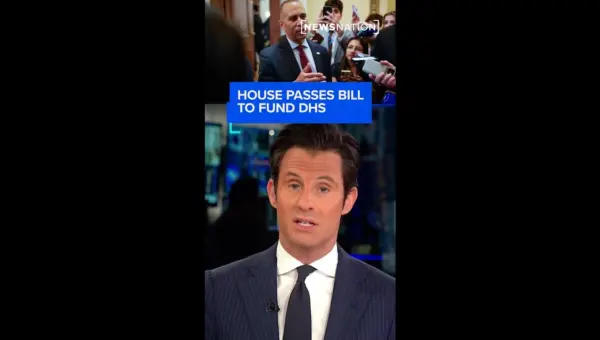
House Funds DHS Short-Term, Senate Stalemate Looms
The House has passed a short-term bill to fund the Department of Homeland Security, but the Senate is expected to reject it. This temporary measure highlights ongoing political divisions and the challenges in reaching long-term budget agreements in the U.S. Congress.


Supreme Court Cases Threaten Rights, But Congress Holds a Fix
The Supreme Court's recent hearings on mail-in ballots and asylum suggest rulings that could restrict voting access and limit refugee claims. However, these decisions are based on statutes, giving Congress the power to enact fixes if Democrats regain power, potentially safeguarding these rights.

Congress Stalemate Threatens Border Security Funding
The U.S. House passed a temporary funding bill for the Department of Homeland Security, but Senate Democrats are expected to block it. This recurring stalemate highlights deep divisions over border policy and funding, potentially impacting national security and international perceptions of U.S. stability.