Blue Origin’s New Glenn Launches Mars Mission on Second Flight
Blue Origin's New Glenn rocket successfully launched its second mission, carrying NASA's Escapade spacecraft to Mars. The mission marks a critical step for the heavy-lift rocket and interplanetary exploration.

Blue Origin’s New Glenn Launches Mars Mission on Second Flight
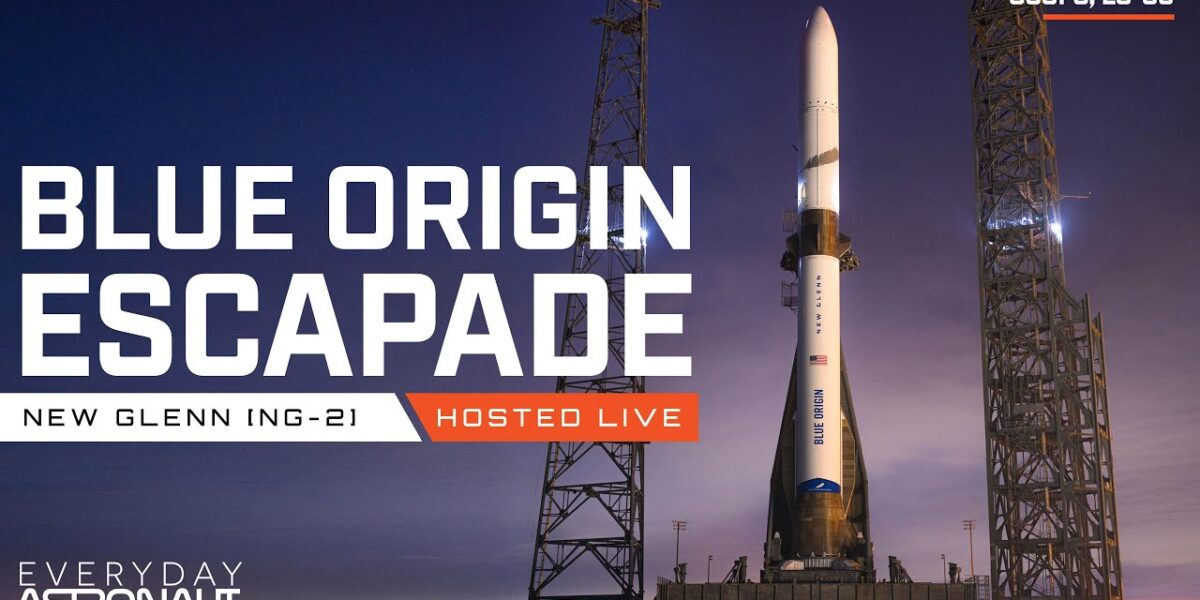
In a significant milestone for both Blue Origin and interplanetary exploration, the company’s heavy-lift rocket, New Glenn, has successfully launched its second mission. This historic flight carried NASA’s Escapade spacecraft, a pair of twin satellites destined for Mars, marking a crucial step in understanding the Red Planet’s dynamic atmosphere.
A New Era for New Glenn
The launch, which took place from Launch Complex 36 at Cape Canaveral Space Force Station, represents a pivotal moment for Blue Origin’s orbital-class rocket. Following its inaugural flight in January, this second outing aimed not only to deliver its valuable payload to the correct trajectory but also to achieve a critical objective: the successful landing of the New Glenn booster. This ambitious goal underscores the company’s commitment to reusability and operational efficiency.
New Glenn stands as a testament to modern rocketry, towering approximately 320 feet (nearly 100 meters) tall – a structure even taller than the Statue of Liberty. Its immense size is designed to accommodate large and complex payloads, making it a formidable competitor in the heavy-lift launch market. The rocket’s first stage is powered by seven BE-4 engines, each generating a colossal 550,000 pounds of thrust. Combined, these engines produce an astonishing 3.85 million pounds of thrust at liftoff, providing the raw power needed to propel massive payloads into space.
The Escapade Mission: Unlocking Martian Secrets
The primary payload for this mission, NASA’s Escapade (Escape and Plasma Acceleration and Dynamics Explorer), is a pioneering endeavor. This dual-spacecraft mission will send two identical satellites to orbit Mars. Their scientific objective is to study how the planet’s space environment and atmosphere change over time, particularly in response to solar wind activity. Understanding Mars’s magnetosphere and its interaction with the solar wind is key to unraveling why the planet lost most of its atmosphere and water billions of years ago.
The Escapade mission is notable for its cost-effectiveness, reportedly costing less than $100 million in total for NASA. This was made possible through a combination of factors: the use of Rocket Lab’s Photon spacecraft bus, which provides a capable and relatively affordable platform, and a favorable launch contract with Blue Origin for the second New Glenn flight. This approach highlights a growing trend in space exploration, leveraging commercial launch capabilities and standardized spacecraft components to make ambitious interplanetary missions more accessible.
A Legacy of Exploration
The launch site, Launch Complex 36, carries a rich history of space exploration. For decades, it was the launchpad for numerous Atlas and Titan rockets, including missions that sent probes like Mariner, Pioneer, and Surveyor to explore the inner planets, Jupiter, Saturn, and the Moon. By launching an interplanetary mission from this historic location, Blue Origin and NASA are not only forging new paths but also building upon a legacy of scientific discovery that began generations ago.
Looking Ahead: Reusability and Future Missions
The successful deployment of the Escapade spacecraft is only part of the mission’s success criteria. The recovery and landing of the New Glenn booster are crucial for Blue Origin’s long-term strategy of developing a reusable launch system. This capability is essential for reducing launch costs and increasing flight cadence, enabling more frequent access to space for scientific, commercial, and exploration purposes.
Beyond Escapade, New Glenn is poised to play a significant role in future space endeavors. Its heavy-lift capabilities make it suitable for launching large components for space stations, complex scientific instruments, and potentially even elements for lunar and Martian missions, including NASA’s Artemis program. The rocket’s advanced design, including its efficient upper stage and large payload fairing, offers significant advantages for high-energy trajectories, such as those required for lunar and deep space missions.
The success of this second New Glenn launch, particularly with a critical NASA interplanetary payload, signals a promising future for Blue Origin and for space exploration as a whole. It demonstrates the growing maturity of the commercial space industry in undertaking complex and scientifically vital missions, pushing the boundaries of what is possible and bringing humanity closer to understanding our solar system and beyond.
Source: [SCRUBBED] Watch Blue Origin Launch New Glenn to Mars! (YouTube)

Related Articles
NASA’s Asteroid Mission: From Mars Dream to Lunar Gateway
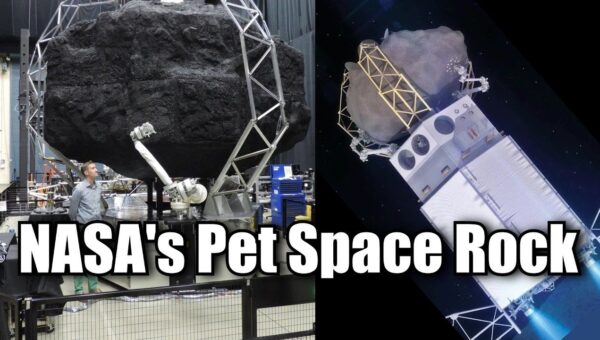
NASA's ambitious Asteroid Redirect Mission (ARM), designed as a stepping stone to Mars, aimed to capture a small asteroid boulder and tow it to lunar orbit for astronaut testing. Though cancelled, its advanced propulsion and robotic technologies live on in NASA's Lunar Gateway and future deep space exploration plans.
NASA’s Evolving SLS Rocket Hints at New Upper Stage
NASA's Artemis program may be adopting a new upper stage for its Space Launch System (SLS) rocket, potentially utilizing the commercially available Centaur V. An updated infographic reveals design changes and hints at evolving mission strategies, including advanced lunar lander operations.


SpaceX Starship V3 Nears First Flight Amidst Major Artemis Shakeup
SpaceX eyes March for Starship V3's maiden flight as new testing reveals design improvements. Meanwhile, NASA's Artemis program faces delays and strategic shifts, with Artemis III repurposed as a LEO test mission.