Blue Origin’s New Glenn Booster Achieves Milestone Re-entry
Blue Origin's New Glenn rocket successfully executed a critical re-entry burn during a recent test, demonstrating key capabilities for its reusable booster. This milestone brings the super heavy-lift launch vehicle closer to its operational debut.

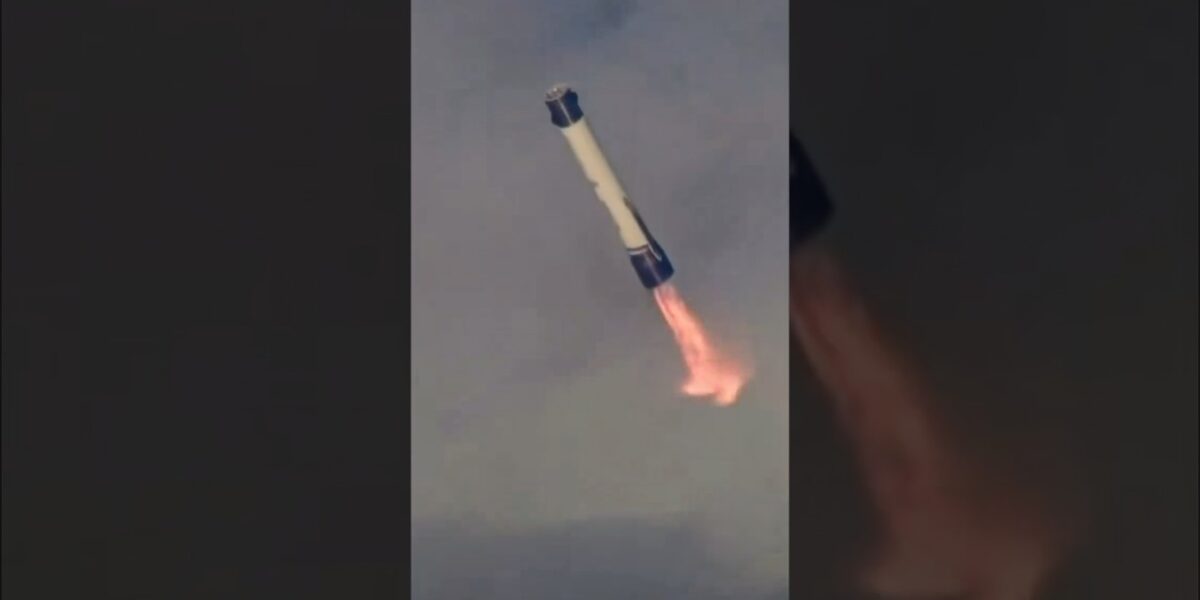
New Glenn Booster Demonstrates Key Re-entry Capabilities
Blue Origin’s ambitious New Glenn rocket has taken a significant step forward, successfully completing a critical re-entry burn during a recent test. This maneuver, a crucial part of any rocket’s ability to return and land, marks a vital milestone for the development of the heavy-lift launch vehicle designed to carry large payloads and future astronauts to orbit and beyond.
The Challenge of Re-entry
Re-entry into Earth’s atmosphere is one of the most challenging phases of a rocket’s flight. As a booster descends from the vacuum of space, it encounters progressively denser air. This friction generates immense heat, capable of destroying unprotected structures. To survive, rockets employ sophisticated systems, including heat shields and precisely timed engine burns, to control their descent, decelerate, and manage thermal loads.
For reusable rockets like Blue Origin’s New Glenn, mastering re-entry is paramount. The goal is not just to survive the fiery plunge but to do so in a controlled manner that allows the booster to land safely and be refurbished for future missions. This reusability is a cornerstone of Blue Origin’s vision to lower the cost of space access and increase the frequency of launches.
New Glenn’s Re-entry Burn
During the recent test, the New Glenn booster executed its re-entry burn, a critical maneuver designed to slow the vehicle down as it plunged back towards Earth. The transcript indicates a successful ignition of the booster’s engines, a process that requires precise timing and robust engineering. The mention of “GS1” likely refers to a specific test flight or stage of the New Glenn development program, with “NG1” possibly referencing an earlier or different test configuration.
The success of this re-entry burn, described as going “further than we made it on NG1,” signifies a tangible improvement in the rocket’s performance and control systems. The data streams monitored, such as “body rates on GS1” and “good data from GS1,” suggest that engineers were closely observing the rocket’s orientation, velocity, and the performance of its engines and control surfaces throughout the re-entry phase.
The phrase “Heat up here” is a stark reminder of the extreme conditions the booster endures. Temperatures during re-entry can soar to thousands of degrees Fahrenheit, necessitating advanced materials and cooling systems. The successful navigation through this thermal environment is a testament to the rigorous design and testing undertaken by Blue Origin.
The Significance of New Glenn
New Glenn is a super heavy-lift orbital launch vehicle designed by Blue Origin. Standing 98 meters (322 feet) tall, it is intended to be a workhorse for launching commercial satellites, national security missions, and eventually, human spaceflight missions to the Moon and beyond. Its first stage is designed to be reusable, capable of landing vertically on a specialized landing platform at sea, similar to the methods employed by SpaceX’s Falcon 9.
The development of New Glenn is part of a broader trend in the space industry towards reusable rocket technology. This concept, pioneered by organizations like NASA with the Space Shuttle (though not fully reusable in the same economic sense) and more recently by private companies, aims to dramatically reduce the cost of space access. By recovering and refurbishing boosters and other components, launch providers can avoid the immense expense of building entirely new rockets for each mission.
Historical Context and Future Prospects
The pursuit of reusable rocketry has a long history. Early concepts faced significant engineering hurdles. The advent of sophisticated computational fluid dynamics, advanced materials science, and precise engine control has made vertical landing and reusability a reality. Blue Origin, founded by Jeff Bezos, has been developing its rocket technologies for years, with suborbital flights of its New Shepard rocket serving as a proving ground for many of the systems now being integrated into New Glenn.
This successful re-entry burn is a critical data point in the long development cycle of New Glenn. While the rocket is still undergoing testing and validation, each successful test brings it closer to its first orbital launch. The ability to perform a controlled re-entry and potentially land the booster is a fundamental requirement for achieving operational reusability.
What Comes Next?
Following this successful re-entry burn test, the focus will undoubtedly shift to the next phases of New Glenn’s development. This includes further integrated testing of the first stage, followed by tests of the second stage and fairing. The ultimate goal is to conduct the rocket’s first orbital launch, carrying a payload into space.
The successful demonstration of re-entry capabilities is not just a technical achievement; it’s a strategic one. It bolsters confidence in the New Glenn program and its potential to compete in the growing market for heavy-lift launch services. The ability to launch large satellites, conduct complex scientific missions, and support future human exploration endeavors hinges on the reliability and cost-effectiveness of launch vehicles like New Glenn.
For humanity, the continued progress of rockets like New Glenn signifies expanded access to space. This can lead to more advanced Earth observation capabilities for climate monitoring, improved global communication networks, and the potential for ambitious deep-space exploration missions. Each step closer to operational status for New Glenn is a step closer to a future where space is more accessible and our understanding of the universe can continue to grow.
Source: Watch Blue Origin land their massive New Glenn booster! (YouTube)

Related Articles


New Glenn Lands Booster, ESCAPADE Mars Mission Launched
Blue Origin's New Glenn rocket successfully launched the ESCAPADE Mars mission and achieved a historic booster landing. The dual spacecraft mission aims to unravel Mars' atmospheric mysteries, while the booster recovery marks a key step in reusable heavy-lift launch capabilities.


Starship Booster Fails Test, Blue Origin Unveils Monster Rocket
SpaceX's Starship program faced a setback as Booster 18 catastrophically failed during a static fire test. Meanwhile, Blue Origin unveiled plans for a colossal New Glenn 9x4 rocket, building on recent successes with its New Glenn test flight.


SpaceX Starship Launch Approval Skyrockets
SpaceX has received a major boost with approval for 76 Starship launches from Florida's SLC-37, significantly increasing its launch capacity. Meanwhile, development continues at Starbase with upgrades and new hardware, while the ISS reaches full capacity and celebrates 25 years of continuous human presence.