Blogger’s Trip Accidentally Reveals Russian Air Defense Location
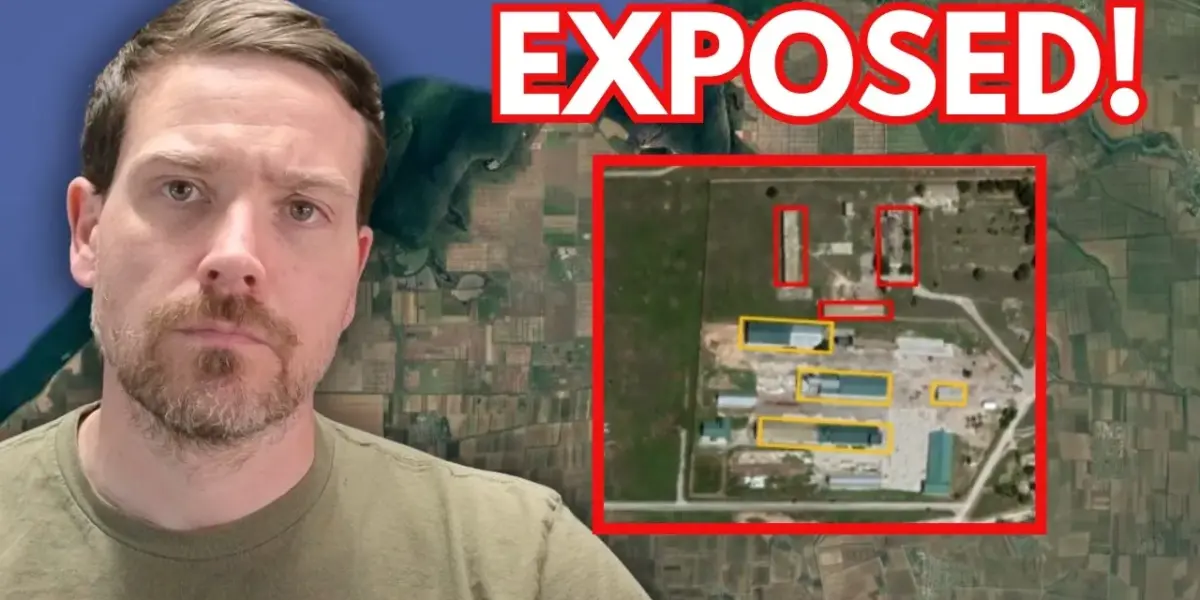
A Russian blogger's social media video, intended to show support for soldiers, inadvertently revealed the location of a Crimea air defense unit. Investigators used the video, satellite imagery, and other public data to pinpoint the site, demonstrating the power of open-source intelligence in modern conflicts.

Blogger’s Trip Accidentally Reveals Russian Air Defense Location
A Russian blogger, aiming to show support for soldiers by documenting his donation trip, inadvertently exposed the location of a crucial air defense unit in Crimea. This incident highlights how open-source intelligence (OSINT) can be used to uncover sensitive military information, even from seemingly harmless social media posts.
How a Simple Video Became a Military Lead
Investigators from the Ukrainian Molar Group, specialists in OSINT, used a video shared by a Russian blogger, a gas station, and publicly available satellite imagery to pinpoint the exact location of the Russian air defense unit. Maxim Heroski, an OSINT specialist at Molfar, explained the process his team followed.
The blogger, a semi-public figure who shares content about supporting the Russian military, wanted his videos to be engaging. In doing so, he unintentionally revealed sensitive details. “If his main activity is sharing something with his audience, he inevitably has to show something,” Heroski noted. “He wants his materials, his videos to look interesting for the people who watch it.” This desire for engaging content led him to share information he likely shouldn’t have.
Finding the Needle in the Digital Haystack
Identifying potentially valuable videos from the vast amount of content online is a key challenge. The Molar Group uses a typical algorithm for this. They monitor Russian social media platforms like VK and Telegram, looking for specific keywords. “Delivered aid to the military and stuff like that” are common search terms. This particular blogger was already on their radar for previous findings.
Prioritization is crucial. While many videos might show troop movements or basic fortifications, identifying the location of an air defense unit is of higher strategic importance. “When he directly says that he visits an air defense unit, that’s quite relevant,” Heroski stated. The remote location of the unit also made it easier to identify compared to a building in a large city.
Piecing Together the Puzzle
The investigation was like assembling a puzzle, with each piece of information adding to the bigger picture. The video started with a distinctive landmark: a roundabout with a gas station and a tank monument. This served as an anchor point. “There are not so many places that just look just like that,” Heroski explained.
By using Google Maps, the team determined the blogger’s general direction of travel – towards the northwestern part of Crimea. They followed his video, noting other distinctive features like a farm, to create a series of checkpoints. This helped them trace his route closer to the air defense unit’s suspected location.
However, the video didn’t lead directly to the final destination. The team had to do manual work, using their knowledge that the area was in northwestern Crimea and that air defense units would logically be positioned to counter potential drone or missile attacks from that direction. The low population density in this rural area, with mostly fields and a few villages, made the search more manageable. Heroski mentioned that narrowing down the exact location took about 30 minutes, a surprisingly short time for such a task.
Confirming a Military Facility
To confirm their suspicions that the buildings were indeed a military facility and not just a farm, the team employed several methods. They examined historical satellite imagery on Google Earth Pro to look for construction or increased activity over time. They also searched for geotagged social media content from the area.
Another technique involved using advertising technology. By checking for unique device IDs in the suspected area, they could track where those devices had been previously. If a device ID was previously seen at other known Russian military bases, it strongly suggested the current location was also military-related. “Such software was initially intended for marketing use, but now we can see that it’s quite applicable in military and other types of open source intelligence investigations,” Heroski said.
Furthermore, the blogger’s video showed that the area was restricted, meaning ordinary citizens wouldn’t be able to enter. This served as further proof that it was a military-related location.
The Irony of Open Source Intelligence
There’s a significant irony in the blogger’s actions. While he intended to support the Russian military and share his efforts, his desire to create engaging content for his audience led to the unintentional disclosure of sensitive information. “He probably thinks that, okay, I can show this little bit of something, but who’s going to investigate that?” Heroski commented on the blogger’s likely underestimation of the risks.
Molar’s Role and Future Implications
Molar is an independent, private organization. They gather and analyze information, presenting their findings with as much evidence as possible. This information can then be made available to military entities like Ukraine, who then verify and act upon it according to their own procedures. “Given all the evidence that we can actually see here, the probability of some sort of coincidence or some mistake is basically non-existent,” Heroski stated regarding the certainty of their findings.
The video used in this investigation was from 2023, and Molar made it public recently, once the military value had decreased and it was safe to share. Heroski noted that strikes in Crimea have been intense, suggesting that if this location was a worthy target, Ukrainian forces would have had the opportunity to act.
This case illustrates that even as military operational security (OPSEC) improves, simple mistakes by individuals can still lead to significant intelligence leaks. It demonstrates the power of combined skills in OSINT, where seemingly insignificant details can be used to track down critical locations.
Why This Matters
This incident underscores the evolving nature of modern warfare, where information is a critical asset. Open-source intelligence, once a niche field, is now a vital component of military and intelligence gathering. The accessibility of social media and publicly available data means that individuals, even with good intentions, can inadvertently compromise sensitive locations. For military forces, understanding and utilizing OSINT is no longer optional but essential for maintaining an advantage and protecting their operations.
Historical Context
The use of open-source information for intelligence purposes is not new. Historically, intelligence agencies have relied on publicly available information, such as newspapers, maps, and radio broadcasts. However, the digital age has amplified this exponentially. The internet, social media, and satellite imagery provide an unprecedented volume and detail of information. This case is a modern example of how these digital tools are being used in real-time conflicts, transforming traditional espionage into a more accessible and dynamic field.
Trends and Future Outlook
The trend shows an increasing reliance on OSINT by various actors, from independent researchers to national intelligence agencies. AI tools are emerging to help process vast amounts of data, though human analysis remains critical for interpretation and verification. We can expect more sophisticated methods of data collection and analysis, making it harder for sensitive information to remain hidden. Conversely, there’s a growing need for individuals and organizations to be more aware of their digital footprint and the potential consequences of sharing information online, especially in conflict zones.
The blogger, identified as Sergey, is still active, and Molar continues to monitor such sources. “He’s been such a great assistant for us,” Heroski remarked humorously, highlighting the ongoing need for vigilance and the continuous flow of information, both intentional and unintentional.
Source: Russian Air Defense Unit EXPOSED (YouTube)

Related Articles

Kremlin Saw Trump as Key Asset, Analysis Reveals
Analysis suggests Moscow viewed Donald Trump as a key "asset" rather than a recruited agent. This perspective allegedly shaped Russian efforts to influence U.S. policy, particularly concerning the 2016 election and ongoing geopolitical conflicts. The piece details alleged Russian engagement with Trump since the 1970s and explores the implications of these connections on international relations.


Tech Giants Face Jury Verdicts on Youth Harm
Tech giants YouTube and Meta have been found liable by a California jury for creating addictive platforms that harm young users. This landmark verdict, alongside a significant New Mexico ruling against Meta for failing to protect children, challenges the long-held legal protections like Section 230. Experts believe these cases signal a new era of accountability, focusing on platform design rather than just user content.

Russia Escalates Attacks Amid Global Political Shifts
Russia is escalating attacks on Ukraine's energy infrastructure amid complex global political shifts. Meanwhile, Ukraine's drone capabilities are advancing, strengthening its alliance with NATO. International political alignments and potential election interference are also key concerns.