Black Holes: 10 Years of Cosmic Mysteries Unraveled
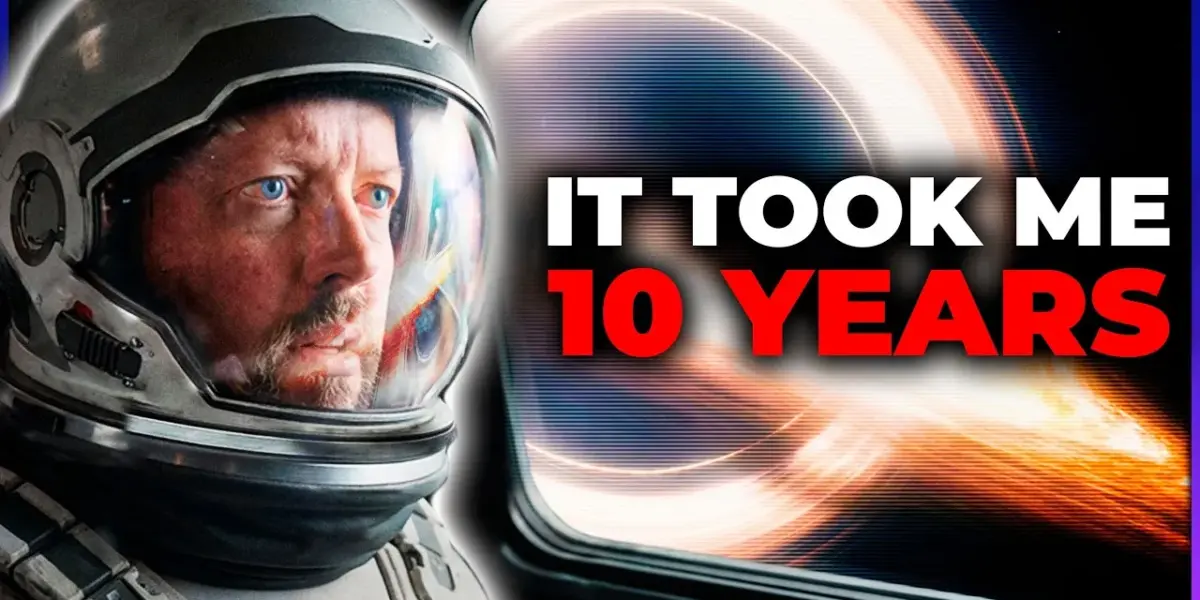
For ten years, questions about black holes have dominated public curiosity. A new 10-hour compilation reveals fascinating insights into their formation, behavior, and cosmic role, from stellar remnants to galactic centers.

Black Holes: 10 Years of Cosmic Mysteries Unraveled
For a decade, the enigmatic nature of black holes has captivated the minds of space enthusiasts and scientists alike. A recent compilation of questions spanning ten years has revealed that inquiries about these cosmic behemoths are by far the most frequently asked. This extensive Q&A session, distilled into a monumental 10-hour supercut featuring over 300 individual questions, delves into the most pressing and curious aspects of black holes, offering a comprehensive exploration for both seasoned stargazers and curious newcomers.
The Spectrum of Black Holes: From Stellar Remnants to Galactic Hearts
The fundamental question of how small a natural black hole can be leads us to differentiate between two primary categories: stellar-mass black holes and supermassive black holes. Stellar-mass black holes are the remnants of massive stars, typically between 6 to 12 times the mass of our Sun, that have exploded in a supernova and collapsed under their own gravity. Supermassive black holes, on the other hand, are found at the centers of most galaxies, including our own Milky Way, and are thought to have formed shortly after the Big Bang. Currently, no known natural process can create a black hole with a mass smaller than these stellar remnants. However, the possibility of primordial black holes, formed in the extreme density of the early universe shortly after the Big Bang, remains an intriguing area of research. These hypothetical objects could have masses as small as an asteroid or Earth, but direct evidence for their existence is still lacking.
Escaping the Unescapable: The Speed of Light and Beyond
The very definition of a black hole is an object from which nothing, not even light, can escape. This is because the escape velocity at the event horizon—the boundary beyond which escape is impossible—exceeds the speed of light. Gamma rays, while highly energetic, are still a form of electromagnetic radiation and follow the curvature of spacetime. If they encounter a black hole, they will be drawn in, just like any other form of light or matter. The idea of escaping a black hole relies on exceeding the speed of light, a feat currently considered impossible according to our understanding of physics. The escape velocity of a black hole is directly proportional to its mass; a more massive black hole has a higher escape velocity, making escape even more unattainable.
Galactic Architects: Multiple Black Holes and Quasars
The question of whether a galaxy can host more than one supermassive black hole is met with a nuanced answer. While most galaxies appear to have a single supermassive black hole at their core, galactic collisions can lead to complex scenarios. When galaxies merge, their central black holes can interact, with one sometimes being stripped from its host galaxy and coexisting with the other. This can result in binary systems of supermassive black holes, whose interactions emit gravitational waves detectable by instruments like LIGO and Virgo. The existence of intermediate-mass black holes, bridging the gap between stellar and supermassive types, remains a significant mystery, with searches in globular star clusters proving challenging.
Quasars, often discussed in conjunction with black holes, are essentially supermassive black holes that are actively “feeding” on surrounding matter. As material falls into the black hole at an extremely high rate, it forms a superheated accretion disk, generating intense radiation and powerful jets. A quasar and a quiescent supermassive black hole are the same entity, simply observed in different phases of activity. They can interact, orbit each other, or even merge to form an even larger black hole.
The Irreversible Transformation: From Star to Black Hole and Back?
Once matter collapses to form a black hole, there is no known mechanism to reverse the process and revert it back into a star. Black holes are destined for an incredibly slow demise through Hawking radiation, a theoretical process where they gradually lose mass and energy over unfathomable timescales, eventually evaporating. This evaporation causes the black hole to become hotter as it shrinks, culminating in a final burst of energy. The concept of speeding up Hawking radiation is linked to temperature differentials; a black hole would evaporate faster if placed in an environment colder than itself, but given the current temperatures of stellar and supermassive black holes relative to the universe, this effect is negligible and requires an impractically large “freezer.”
The Roche Limit: Tearing Stars Apart
The Roche limit is the critical distance at which a celestial body’s gravitational pull becomes strong enough to overcome the internal gravitational forces holding another celestial body together. When a star ventures within the Roche limit of a black hole, it is torn apart. This spectacular event creates a disc of stellar material that then spirals into the black hole, a phenomenon that astronomers can observe. The exact location of the Roche limit depends on the masses and densities of both the black hole and the star involved.
The Mystery of Formation: Primordial Black Holes and Supermassive Stars
The formation of the very first supermassive black holes remains one of cosmology’s most profound puzzles. While stellar-mass black holes form from the collapse of individual massive stars, the origins of their supermassive counterparts are less clear. Stars significantly more massive than about 65 times the mass of the Sun cannot form black holes; they explode without a remnant. Theories suggest that the earliest supermassive black holes might have formed from the direct collapse of massive clouds of primordial gas in the nascent universe or through other mechanisms not involving the death throes of single stars. There appears to be no upper limit to how massive a black hole can become; they can theoretically consume all matter and energy in the universe without falling apart.
Our Cosmic Neighborhood: Orbiting the Galactic Center
Our solar system is indeed in orbit around the center of the Milky Way galaxy, a journey that takes approximately 225 million years to complete. At the heart of this galactic dance lies Sagittarius A*, the supermassive black hole at the Milky Way’s core. However, it’s important to note that we are not directly orbiting the black hole itself, but rather the combined center of mass of the galaxy, including its vast halo of dark matter. The black hole resides at this gravitational nexus.
Expansion and Warping: Separate Cosmic Threads
The expansion of the universe, a large-scale stretching of spacetime, operates independently of the localized warping of spacetime caused by massive objects like black holes. A black hole embedded within the expanding universe will move with its host galaxy, but it does not impede or alter the overall expansion rate of the cosmos. These two phenomena, cosmic expansion and gravitational warping, are distinct and do not influence each other’s fundamental processes.
The Event Horizon Telescope: Peering into the Abyss
The groundbreaking Event Horizon Telescope (EHT) project represents a global collaboration of radio telescopes aimed at capturing the first direct images of a black hole’s event horizon. By linking observatories across the world, the EHT creates a virtual telescope with unprecedented resolution. Its initial targets include the supermassive black hole at the center of our own Milky Way and potentially other extragalactic black holes. While the resulting images may not resemble Hollywood depictions, they promise to provide invaluable scientific data about the extreme environments immediately surrounding these cosmic enigmas.
Antimatter and Black Holes: A Missing Link?
While antimatter can be consumed by black holes, increasing their mass, it is unlikely that all antimatter in the universe has simply fallen into black holes. The observed correlation between supermassive black hole mass and galactic mass suggests they formed in tandem with galaxies, not as a repository for all primordial antimatter. The interactions of antimatter would have produced detectable radiation, which has not been observed on the scale required to account for its disappearance into black holes.
Time Dilation and Future Travel: A One-Way Ticket
The phenomenon of time dilation, famously depicted in the movie *Interstellar*, is a real consequence of general relativity. Spending time in a strong gravitational field, such as near a black hole, causes time to pass more slowly for the observer relative to those in weaker fields. This means one could theoretically travel into the future by spending time near a black hole. However, this is a strictly one-way journey; there is no known way to return to one’s original point in time.
Habitable Zones and Quasars: Extreme Environments
While quasars generate immense amounts of radiation from their accretion disks, creating an environment where liquid water could theoretically exist at a certain distance, it is highly unlikely to be a habitable zone in the conventional sense. The intense radiation, including gamma rays, and the transient nature of the material in the accretion disk make it an extremely hostile place for life as we know it.
Rotation and Stability: The Unyielding Black Hole
A black hole’s rotation does not affect its fundamental existence. While black holes do rotate, and relativity imposes limits on their spin rate to prevent them from tearing themselves apart, a sudden cessation of rotation would not cause them to disintegrate. They would continue to function as black holes, their gravitational influence undiminished.
Life in Active Galaxies: A Cosmic Catalyst?
Life could potentially exist in galaxies with active galactic nuclei (AGN), including those hosting quasars. In fact, some theories suggest that the jets and outflows from actively feeding supermassive black holes might play a crucial role in triggering star formation within galaxies. This implies that quasars, far from being solely destructive, could be integral to the cosmic cycle of creation.
The Illusion of Blackness: Why Black Holes Appear Dark
Black holes are not inherently black; rather, they appear so because they absorb all electromagnetic radiation that falls within their event horizon. Since no light or radiation can escape, they present as dark voids against the backdrop of space. Any radiation observed near a black hole originates from the surrounding environment, such as an accretion disk, or from processes like Hawking radiation, which is incredibly faint.
Detecting the Invisible: Black Holes Without Accretion Disks
Without an actively feeding accretion disk, a black hole becomes virtually invisible. Its presence can only be inferred through its gravitational influence on nearby objects, such as stars in binary systems. Many black holes may exist undetected, far from any matter to consume and not actively emitting radiation.
Hawking Radiation: A Faint Whisper from the Void
While black holes are theorized to emit Hawking radiation, this process is exceedingly weak and has not been directly observed. This radiation consists of particles, such as photons, emitted as the black hole loses mass. The energy for this emission comes from the black hole’s own mass, according to Einstein’s famous equation E=mc². The minuscule amount of mass lost through Hawking radiation means that black holes, especially supermassive ones, will exist for vastly longer than the current age of the universe.
Accretion Disk Orientations: A Universe of Randomness
There is no preferred direction of rotation for accretion disks around black holes. Observations reveal disks oriented in every possible direction, reflecting the random nature of cosmic formation and interactions. This randomness is a key indicator of the universe’s general uniformity and lack of a cosmic bias.
Virtual Particles and Mass Gain: A Delicate Balance
The concept of virtual particle pairs forming at the event horizon and one particle falling in while the other escapes is a simplified analogy for Hawking radiation. While it might seem that the infalling particle adds mass, the escaping particle carries away energy derived from the black hole’s mass. Thus, the net effect is a decrease in the black hole’s mass, not an increase, counteracting any potential mass gain from the virtual particle.
The Fate of a Black Hole Without Food
Most black holes exist in environments with little surrounding matter and are therefore not actively feeding. They persist, exerting their gravitational influence, but remain largely invisible. It is only when material falls into them that accretion disks form, leading to observable phenomena. The potential for an undetected black hole to approach our solar system underscores the importance of understanding these enigmatic objects.
Energy, Mass, and Spacetime: An Interconnected Fabric
Energy and mass are interchangeable, as described by E=mc². Therefore, concentrated energy, just like concentrated mass, can warp spacetime. If enough energy were compressed into a small region, it would behave gravitationally like matter, bending space and influencing the orbits of objects around it. This fundamental principle highlights the interconnectedness of mass, energy, and the very fabric of the universe.
Understanding Black Hole Rotation: Flattened Horizons
While we cannot directly observe the interior of a black hole due to the event horizon, its rotation can be inferred. As a black hole spins, its event horizon flattens, analogous to how the Earth or Jupiter are flattened at the poles due to rotation. Astronomers can measure this flattening to determine the black hole’s spin rate. The theoretical concept of a “naked singularity,” where the event horizon flattens completely, revealing the singularity, is prevented by the laws of physics, as black holes cannot rotate fast enough to reach this state.
Source: 10 Years of Black Hole Questions in 10 Hours (YouTube)

Related Articles
Cosmic Cradle: Unraveling the Universe’s First Moments
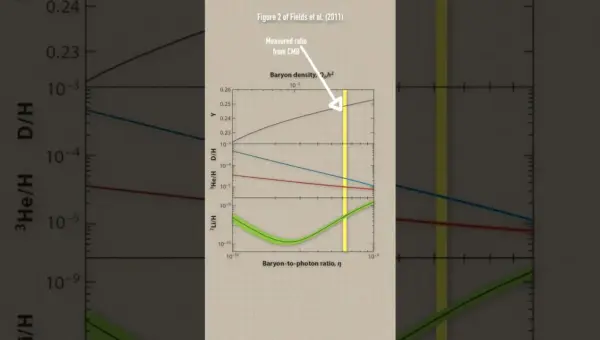
Scientists have precisely mapped the first three minutes of the universe's existence, revealing how nuclear reactions forged the lightest elements. This Big Bang Nucleosynthesis provides crucial evidence for the Big Bang theory and the origin of the universe's fundamental building blocks.

Webb Telescope Unveils Hidden Water Worlds in Distant Galaxy
The James Webb Space Telescope has detected significant amounts of water vapor in a galaxy located 12.5 billion light-years away. This discovery provides crucial insights into the conditions of the early universe and the prevalence of water, a key ingredient for life.


Cosmic Lithium Mystery Puzzles Big Bang Theory
The Big Bang theory, our leading model for the universe's origin, faces a persistent challenge: a significant deficit of lithium. Observations consistently show less lithium than predicted, prompting scientists to explore new physics or stellar destruction mechanisms.