Bitcoin’s Identity Crisis: A ‘Digital Gold’ Tumbles as Institutional Embrace Becomes a Trap
Bitcoin, once lauded as 'digital gold,' is facing a severe downturn, with its price plummeting after achieving mainstream institutional adoption. The very integration with Wall Street that was meant to stabilize it has instead exposed its vulnerabilities, transforming it into a volatile asset correlated with traditional markets, while core narratives like inflation hedging and decoupling unravel amidst exchange freezes and a pivot by miners towards AI.

Bitcoin’s Identity Crisis: A ‘Digital Gold’ Tumbles as Institutional Embrace Becomes a Trap
In a dramatic reversal of fortunes, Bitcoin, once hailed as the ultimate ‘digital gold’ and a bastion of financial independence, is grappling with a profound identity crisis. After a triumphant surge in December 2024 that saw the cryptocurrency breach the $100,000 mark, forcing even long-standing skeptics to recant their doubts, the narrative of a new, stable era for crypto, unburdened by regulatory shackles and bolstered by Wall Street’s embrace, has unraveled. Fast forward to early 2026, and the digital asset is behaving less like a safe-haven commodity and more like a volatile tech stock on a particularly bad day, shedding significant value and exposing deep fissures within its ecosystem.
The euphoria of institutional adoption, once the industry’s ultimate goal, now appears to be a double-edged sword. The very mechanisms designed to bring stability – exchange-traded funds (ETFs) and mainstream financial integration – have instead tethered Bitcoin to the whims of traditional markets, undermining its foundational promise of decoupling. As prices plunge, exchanges freeze, and miners pivot to AI, the cryptocurrency market is confronting the harsh reality that its hard-won victory might have inadvertently killed the very magic that made Bitcoin special.
The Unraveling of the ‘Digital Gold’ Narrative
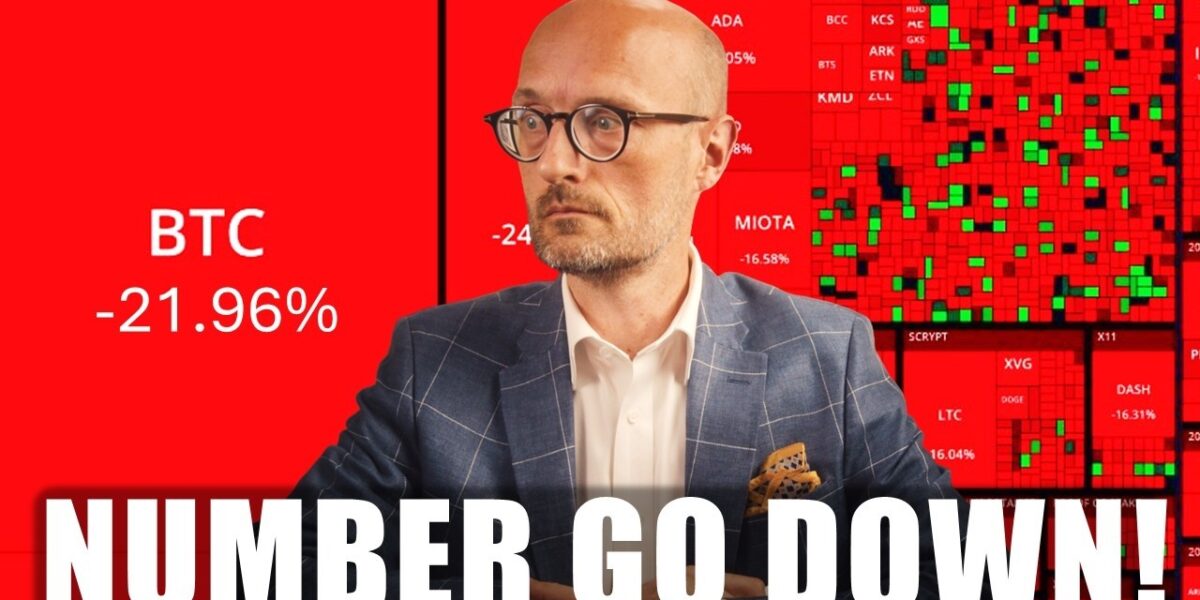
The year 2024 closed with crypto enthusiasts taking a victory lap. Bitcoin’s ascent past $100,000 was lauded as the moment crypto had finally broken free. The entry of Wall Street, facilitated by a suite of convenient ETFs, was expected to usher in an era of institutional-grade liquidity, smoothing out volatility and solidifying Bitcoin’s status as ‘digital gold’ within the global financial system. However, this proclaimed new era of stability proved fleeting. In early 2026, Bitcoin finds itself down approximately 23% year-to-date and has shed about 45% of its value since its October 2025 peak. A stark 13% plunge on February 5th marked its largest single-day drop since the collapse of FTX in 2022, underscoring the severity of the current downturn.
This performance stands in stark contrast to other traditional safe-haven assets. While actual gold and silver have hit record highs this year, and stock markets have trended upwards despite increased geopolitical risks and persistent inflation, Bitcoin has languished. The asset, which proponents claimed would rally during geopolitical shocks and act as an inflation hedge, has failed to deliver on these promises, raising critical questions about its core utility and long-term viability.
Bitcoin’s Valuation Conundrum: Priced, Not Valued
A key challenge for Bitcoin lies in its elusive valuation. As Aswath Damodaran, a finance professor at NYU, points out, Bitcoin can be priced, but it cannot be valued in the conventional sense of assets or commodities. Traditional assets are valued based on their cash flows and the risk associated with them, while commodities derive their value from utilitarian supply and demand. Bitcoin, however, fits best into the category of currencies and collectibles, whose price is almost entirely a function of scarcity and desirability.
While Bitcoin famously has a hard cap of 21 million units, its scarcity is undermined by the broader crypto industry’s prolific replication. With over 10,000 active tokens on the market, the uniqueness of any single digital collectible is constantly diluted by a sea of similar alternatives. The argument that Bitcoin’s primary strength is simply being the ‘first one’ becomes a precarious foundation for a trillion-dollar valuation when faced with such pervasive competition and a lack of inherent utility beyond speculation.
Victory’s Bitter Taste: Mainstream Adoption’s Downside
In a profound irony, the crypto industry has finally achieved many of its long-held aspirations. The dream of a Bitcoin-friendly political landscape, a cooperative Securities and Exchange Commission (SEC), and Wall Street ETFs that would open the floodgates for retail investors had largely been realized by early 2025. Yet, this victory has proven to be a trap.
As noted by The Economist, every major rally in recent years was fueled by the anticipation of these very milestones. Now that the ‘forbidden fruit’ is readily available in every brokerage account, the compelling narrative that once drove prices – the underdog story of a revolutionary technology fighting against the establishment – has dissipated. The image of a decentralized, anti-establishment asset is difficult to maintain when the president’s family is hosting crypto conferences in gilded ballrooms and political figures are launching their own meme coins. The asset is no longer ‘underground’; it is firmly entrenched in the very system it sought to disrupt.
The UK Experience: A Cautionary Tale of Top-Ticking
The UK provides a poignant parallel to this phenomenon. After years of official skepticism, the British government moved to integrate crypto into the mainstream. In October 2025, it announced that retail investors would be allowed to hold crypto exchange-traded notes (ETNs) in their tax-advantaged retirement accounts. In hindsight, this decision coincided almost perfectly with Bitcoin’s all-time high, a classic example of ‘top-ticking’ – a market peak occurring just as broader adoption is formalized.
Adding to the irony, Quasi Quartang, the former UK Chancellor notorious for his brief and tumultuous tenure, announced in November 2025 that he had been ‘orange-pilled’ (converted to Bitcoin belief) and taken a non-executive director role at a UK-based Bitcoin treasury company, essentially arriving at the party just as everyone else was leaving. This widespread embrace by traditional institutions and political figures, often at market highs, appears to have served as a signal for savvy investors to exit. According to data from the Financial Conduct Authority (FCA), the number of Britons owning crypto has fallen from 7 million to around 5 million over the past two years, reinforcing the lesson that when sophisticated financial institutions ‘democratize’ a cool new asset class, it often means they’re looking for someone to ‘hold the bag’.
A Search for Utility: The Unfulfilled Promise
Despite its nearly two-decade existence, Bitcoin and the broader crypto industry have struggled to find a compelling real-world use case beyond speculative trading and, in some unfortunate instances, illicit activities. As Bloomberg journalist Zeke Fox frequently observes, Bitcoin, launched in January 2009, is now over 17 years old. To put this into perspective, by the time the public internet reached 17 years of age, society had the iPhone, Wikipedia was a universal resource, email was ubiquitous, and Amazon had already revolutionized retail, pushing traditional bookstores out of business years prior.
In contrast, after a similar lifespan, crypto’s primary applications largely remain confined to gambling or, more disturbingly, facilitating scams such as ‘pig butchering’ operations run out of forced labor camps. This fundamental lack of broad, tangible utility beyond financial speculation continues to be a significant barrier to its widespread acceptance and long-term stability, contributing to the current exodus of institutional and retail interest.
Wall Street’s Retreat: The Institutional Exodus
The initial surge of Wall Street interest was not driven by an ideological desire to ‘fix the money’ or embrace decentralization. Instead, it was primarily motivated by the opportunity to sell financial products at a markup and exploit arbitrage strategies, such as the basis trade. Hedge funds would buy spot Bitcoin and simultaneously sell futures contracts, pocketing the price difference – effectively manufacturing a high-yield savings account for themselves, capitalizing on retail traders’ demand for leverage. For much of 2025, this ‘crypto yield’ was significantly higher than anything available in traditional finance.
However, as the spread compressed and the arbitrage opportunities diminished, Wall Street’s interest waned, and these institutions moved on to the next profitable trade. The fingerprint of this retreat is evident in the Coinbase Premium, a metric that tracks the price difference between Bitcoin traded on Coinbase (favored by large professional American investors) and Binance. For months, this premium has been deeply negative, indicating significant selling pressure originating primarily from the United States. This suggests a general loss of interest from the very market that was supposed to be crypto’s new, stable home.
Collateral Damage: The Wider Crypto Ecosystem
Bitcoin’s downturn has not occurred in isolation; it has dragged the entire digital asset ecosystem down with it. Most other cryptocurrencies, from Ether to once-coveted Bored Ape NFTs, which commanded hundreds of thousands of dollars, are essentially high-beta bets on Bitcoin’s price. When the ‘king of digital gold’ falters, its digital subjects tend to follow suit.
The Strategy Saga: Alchemy Meets Reality
Among the hardest hit are digital asset treasury companies, publicly traded businesses that pivoted from their original operations (like enterprise software or mobile chips) to become massive leveraged bets on crypto. The most famous example is Strategy, formerly MicroStrategy, chaired by Michael Saylor, once dubbed the ‘Bitcoin Alchemist’ by Forbes. His ‘infinite money glitch’ involved issuing new shares, buying more Bitcoin, and watching the company’s value theoretically increase as long as its stock traded at a premium to its Bitcoin holdings. This created a virtuous circle of hype, unhinged tweets, and orange-tinted memes.
However, alchemy only works as long as the audience believes in the magic. With Bitcoin sliding, that premium has evaporated, forcing Strategy to confront financial gravity. For the fourth quarter of 2025, the company reported a staggering $12.6 billion loss, driven by the requirement to mark its Bitcoin holdings to market. Strategy now operates two distinct businesses: the Bitcoin alchemist, who recently acquired another 2,486 Bitcoin, and a more traditional, and expensive, corporate entity. To keep the game going, the company has issued billions in preferred stock with names like ‘Stretch,’ ‘Strike,’ and ‘Strife,’ carrying high-yield dividends, with ‘Stretch’ shares currently paying approximately 11.25%.
In a telling move, Strategy recently announced a $2.25 billion cash reserve raised from selling equity, but instead of buying more Bitcoin, this money is being held in a bank account to cover preferred share dividends for the next two and a half years. As Bloomberg’s Matt Levine aptly noted, ‘Selling stock to buy Bitcoin is a great story. Selling stock to pay interest on old loans is considerably less fun.’ When Michael Saylor, who once compared dollars to melting ice cubes, starts hoarding them to pay lenders, the ‘infinite money glitch’ begins to resemble a standard corporate refinancing scheme.
Cracks in the Plumbing: Exchange Freezes and Corporate Woes
Beyond the high-profile struggles of public companies, more ominous developments are unfolding in the institutional market’s underlying infrastructure.
Gemini’s Downward Spiral
Gemini Space Station Incorporated, the crypto exchange founded by the Winklevoss twins, has experienced a precipitous decline since its IPO in September 2025. After briefly spiking to around $46 a share, its stock has cratered by over 80%, recently hitting record lows near $6. This collapse has been accompanied by a wholesale flight from its C-suite, with the chief operating officer, chief financial officer, and chief legal officer all departing simultaneously. The company is also laying off a quarter of its staff and exiting key markets like the UK and Australia, directing UK customers to open accounts with eToro for transfers. Despite claiming America is ‘where it’s at for Gemini,’ this contradicts the observed selling pressure predominantly from the US market. Their new ‘grand strategy’ to pivot to prediction markets, betting on elections and weather, is a curious direction for a once-prominent crypto exchange.
BlockFills: A Silent Institutional Freeze
While retail exchange failures like FTX grab headlines, cracks in the professional market often emerge in silence. Earlier in February 2026, BlockFills, a major Chicago-based institutional prime broker, confirmed it had suspended all client deposits and withdrawals. Customers can still trade, but they cannot access their funds. BlockFills, a liquidity provider and lender to approximately 2,000 institutional clients including hedge funds, family offices, and mining companies, facilitated over $61 billion in trading volume last year and is backed by sophisticated names like CME Ventures and Susquehanna Private Equity Investments.
The company cited ‘recent market and financial conditions’ as the reason for the ‘temporary measure to protect clients and the firm.’ The timing is critical: the announcement followed violent market moves in early February that saw Bitcoin plunge nearly 25% in a single week, briefly touching the $60,000 mark. For an institutional lender, such rapid price action is the ultimate stress test. If the value of collateral (Bitcoin) falls faster than borrowers can top up their accounts, a liquidity mismatch can occur, leaving the lender with assets on paper but insufficient cash to meet withdrawal requests. Historically, temporary suspensions in this industry have often been precursors to restructuring or a search for new capital, as seen with firms like Genesis and BlockFi a few years prior. This development signals a worrying potential clog in the institutional plumbing of the crypto market.
The Miners’ Dilemma: From Blockchain Guardians to AI Hosts
The health of the Bitcoin network relies heavily on its miners, who act as transaction processors and security guards. They verify transactions and secure the network against hackers, earning rewards through transaction fees and newly minted bitcoins (block subsidies). However, being a blockchain bodyguard has become increasingly expensive and unprofitable.
Since the beginning of 2026, the ‘hash price’ – the daily dollar revenue a miner earns from their computing power – has been at record lows. For many operators, the cost of electricity now exceeds the value of Bitcoin and fees collected. As Ben Jordan, an expert on mining operations, explains, the system’s difficulty adjustment, designed to ensure miner profitability, is rigid, occurring only every 2,016 blocks (roughly every two weeks). If Bitcoin’s price crashes or electricity costs spike mid-window, the difficulty remains high, forcing data centers to either absorb massive losses or halt operations while overhead costs accumulate. The system, originally designed for hobbyists, struggles to adapt to the realities of massive industrial data centers that operate on inflexible bulk electricity contracts.
This challenge is exacerbated by external factors, such as the winter storms in Texas in early 2026, which forced miners to shut down to prevent local blackouts. Faced with shrinking margins, some of the biggest names in the industry are now pivoting from crypto mining to AI data center development. Why spend millions on electricity to solve arbitrary math problems for a volatile token when the same power can be rented to an AI company for a more predictable, high-margin fee? Wall Street analysts, including Morgan Stanley, are already cheering this shift, valuing miners as infrastructure REITs due to their existing grid connections and facilities – assets highly coveted by big tech for AI development.
However, this pivot carries significant geopolitical implications. If American miners, who currently account for about 37.5% of the world’s hash rate, abandon Bitcoin for AI, the network’s power could shift to countries like Russia and China, traditionally not US allies. For political figures who aspire to make America the ‘crypto capital of the world,’ watching the network move to Moscow and Beijing while American rigs train large language models would be an awkward outcome.
China’s Unwavering Stance: A Wall Against Digital Assets
While the US grapples with defining crypto as a commodity or security, China continues to reinforce its unequivocal ban. In February 2026, the People’s Bank of China (PBoC) and seven other agencies issued a notice doubling down on their comprehensive prohibition. This latest directive specifically targets ‘real-world asset tokenization’ – the concept of transforming physical assets like buildings or lithium mines into digital tokens for sale to international investors – explicitly labeling it illegal financial activity. Furthermore, they banned the unauthorized offshore issuance of any stablecoins pegged to the Chinese yuan.
The Chinese government remains fiercely protective of its monetary sovereignty, viewing ‘Shadow Yuan’ tokens circulating on global exchanges as a direct threat to its control. While much of the world debates the democratization of digital assets, China is actively constructing a robust digital wall around its financial system, underscoring the enduring sentiment that ‘it wouldn’t be a bear market if China wasn’t banning crypto.’
The New Frontier: Prediction Markets and the Gambling Instinct
Despite the institutional retreat and market downturn, the more enthusiastic, speculative end of the market hasn’t vanished; it has simply relocated. The new ‘big thing’ drawing significant attention is prediction markets. Platforms like PolyMarket and Kalshi have witnessed a massive surge in volume as traders shift from guessing memecoin prices to betting on real-world events, ranging from Federal Reserve rate cuts to highly unconventional predictions like the return of Jesus Christ before 2027, complete with derivative markets for betting on the odds themselves.
These platforms logged a staggering $6.3 billion in trading volume tied to the Super Bowl alone, nearly four times the volume of all legal US sportsbooks combined for the same event, and achieved this without a single Super Bowl advertisement. Their booming success is partly due to a clever legal loophole: by branding themselves as financial derivatives regulated at the federal level by the CFTC, they can operate in many US states where traditional sports betting remains banned. This allows users to gamble on events like football games by simply calling their bet a ‘swap contract,’ highlighting a persistent human inclination for speculative engagement.
The Juggalo Theory, Financial Nihilism, and the End of the ‘Number Go Up’ Magic
Zeke Fox’s ‘Juggalo theory of crypto resilience’ offers a compelling insight into the crypto subculture. On the surface, Bitcoin enthusiasts, with their distinct slang, ‘laser eyes,’ and shared sense of being misunderstood, resemble fans of the band Insane Clown Posse. However, Fox draws a crucial distinction: Juggalos are more honest. Their fandom is personal and doesn’t require recruiting others to validate their choices. In crypto, the subculture functions as a financial pyramid. Lacking underlying fundamentals like earnings, dividends, or tangible businesses, the only way for early believers to achieve wealth is to convince new entrants to join, transforming the community into a ‘global sales force.’ The moment this recruitment engine falters, the ‘number go up’ magic trick ceases.
This aligns perfectly with Dimitri Kafenus’s concept of ‘financial nihilism.’ For a younger generation that perceives the traditional financial system as rigged and fundamental aspirations like homeownership as increasingly out of reach, treating the world as a casino isn’t merely a choice; it’s a perceived survival strategy. In this worldview, Bitcoin isn’t a hedge or digital gold, but rather a highly leveraged means to ‘YOLO’ into a home deposit. However, as the market shifts, the casino itself is evolving. Betting on the Super Bowl with friends offers a more social and engaging experience than recruiting strangers into a digital subculture that demands constant new ‘donations’ to sustain itself. Once the ideological dream of crypto dies, what remains is pure gambling, and the established gambling industry often offers a more refined and entertaining product than the blockchain.
The Irony of Integration: Decoupling’s Demise
The great irony of the last two years, as Aswath Damodaran points out, is that by achieving its long-sought goals – ETFs, institutional respect, and political endorsement – crypto enthusiasts might have inadvertently destroyed the very attribute that made Bitcoin unique. Damodaran uses real estate as a cautionary tale. For decades, physical real estate was an uncorrelated asset, its value driven by local demand, rents, and scarcity, largely independent of broader stock market movements. However, with the financialization of the sector through Real Estate Investment Trusts (REITs) and mortgage-backed securities, real estate transformed into a liquid, tradable ticker symbol. The moment it became easy to trade, it began to behave exactly like everything else, becoming highly correlated with the stock market and sensitive to financial flows and market sentiment.
The same fate now appears to be befalling Bitcoin. For years, the dream was ‘decoupling’ – the idea that Bitcoin would stand tall while the rest of the world burned. But now that it is deeply integrated into Wall Street’s plumbing through ETFs, futures, and options, that dream may be dead. The moment a hedge fund can sell Bitcoin as easily as Apple stock to cover a margin call, Bitcoin becomes systemically linked, affected by the same interest rate shifts, risk appetite swings, and liquidity drains as any traditional asset. Looking ahead, even if this crypto winter eventually ends and Bitcoin finds a new stable level, the fundamental question remains: Will it ever be an independent asset again? Or has it simply become a high-beta, non-dividend-paying tech stock that we’ve collectively agreed to call ‘digital gold’?
If Bitcoin is no longer a viable currency, nor a particularly effective inflation hedge, and is now tethered to the very financial system it was designed to replace, then what exactly is it? It is, ultimately, a collectible. And as with any collectible, its price is entirely dependent on the mood and willingness of the next person in line. Right now, that person is increasingly looking at their S&P 500 returns, exploring engaging gambling apps on their phone, and starting to wonder if crypto was merely a very expensive ticket to a party that ended years ago.
Source: Bitcoin Is Crashing and Exchanges Freezing Up (YouTube)

Related Articles


Private Credit Woes Echo 2008, Bitcoin’s Untested Waters
The private credit market is facing its worst crash since 2008, with signs of stress mirroring the lead-up to the 2008 financial crisis. This has raised concerns about broader economic stability and its potential impact on Bitcoin, which has never experienced a true credit crisis.


Geopolitical Turmoil Triggers Bitcoin Sell-Off
Geopolitical tensions and technical indicators point to a subdued short-term outlook for Bitcoin, with veteran trader Jason Pazino discussing potential downside risks and the impact of a long-term economic cycle.


Memecoin Season Stalled Amidst Broader Market Downturn
Despite a significant downturn in Bitcoin and altcoins, certain memecoins are showing resilience. This article explores the reasons behind this divergence, highlighting the importance of understanding market rotation and on-chain data over mainstream news.