Bitcoin Price Holds Strong Amidst Geopolitical Tension
Arthur Hayes discusses Bitcoin's resilience amidst geopolitical tensions and the AI-driven job market disruption. He re-evaluates Bitcoin's role, highlights gold's rise due to central bank diversification, and predicts potential economic crises fueled by AI-induced unemployment.


Bitcoin Price Shrugs Off Geopolitical Storm, Gold Surges as Central Banks Diversify
In a turbulent geopolitical climate marked by the Israel-Iran conflict and growing concerns over the AI revolution’s impact on the job market, Bitcoin has demonstrated remarkable resilience, maintaining its price around $73,000. Meanwhile, gold has seen a significant surge, driven by central banks seeking refuge from the U.S. dollar.
The Shifting Narrative of Bitcoin: From Digital Money to Fiat Liquidity Alarm
Arthur Hayes, a prominent figure in the cryptocurrency space, recently shared his evolving perspective on Bitcoin’s role in the market. Hayes, who entered the crypto scene in 2015 with the promise of decentralized, government-proof digital money, acknowledges that Bitcoin’s initial use case as a medium of exchange faltered due to scalability issues and high transaction costs. The narrative then shifted to Bitcoin as a store of value, owing to its limited supply of 21 million coins. However, Hayes controversially argues that in the current cycle, Bitcoin has not acted as a traditional store of value, prompting questions about its fundamental purpose.
Hayes refutes the idea that Bitcoin has failed as a store of value, asserting that when viewed from its inception in 2009-2010 to the present, it has significantly outperformed the debasement of fiat currencies, particularly the U.S. dollar and Chinese yuan. He also claims it has outperformed gold and traditional stock markets over its entire lifecycle. The perceived underperformance, Hayes suggests, often stems from investors entering the market at peak prices and expecting immediate, substantial returns, rather than considering Bitcoin’s long-term historical performance against inflationary pressures.
Hayes’s current thesis positions Bitcoin as a “global fiat liquidity fire alarm.” He believes that the increasing creation of fiat currency by governments globally is the primary driver for Bitcoin’s value. In essence, as more fiat money is printed, diminishing its purchasing power, Bitcoin’s price is expected to rise in response. Hayes’s outlook is tied to the pace of fiat money creation, suggesting a direct correlation between the two.
Gold’s Resurgence: A Hedge Against Dollar Hegemony
The recent surge in gold prices is attributed to a strategic shift by central banks and sovereign governments. Following the freezing of Russian assets after the 2022 Ukraine conflict and the U.S. Federal Reserve’s response to the 2008 financial crisis by printing money, nations are increasingly wary of holding U.S. dollars. Hayes explains that countries fear their dollar reserves could be seized or devalued based on political whims. Consequently, they are diversifying their reserves into gold, a historically stable asset perceived as a true store of value, independent of any single government’s monetary policy.
This trend is expected to continue, with gold likely to appreciate further over the next couple of years. The ongoing geopolitical tensions, particularly the conflict involving Iran, further underscore the need for countries to hold assets that cannot be easily confiscated or sanctioned. Gold, held physically and protected by a nation’s own military, offers a level of security that dollar-denominated assets no longer provide for many sovereign entities.
The AI Revolution and its Economic Ripple Effects
Hayes also delved into the profound implications of the Artificial Intelligence (AI) revolution, particularly its potential to disrupt the labor market. He predicts that AI could lead to significant job displacement, with an estimated 10-20% of knowledge workers losing their jobs in the next three to six months. This displacement, he argues, could trigger a banking crisis similar to the 2008 subprime mortgage crisis, but driven by a different leverage point: the inability of a large segment of the highly indebted, white-collar workforce to service their loans after job loss.
The consequence of widespread job losses among knowledge workers, who typically have higher spending power and significant credit obligations (mortgages, car loans, student debt), could lead to a sharp increase in unemployment. While this might initially dampen inflation as consumer spending decreases, Hayes points out that simultaneous demand for resources like minerals and energy for AI infrastructure could create pockets of inflation for essential goods. He differentiates between inflation in necessities (food, minerals, energy) and deflation in discretionary items (fast food, non-essential retail), suggesting that individual inflation rates will vary significantly.
The market’s reaction to AI-driven efficiency gains, as seen with companies like Block (formerly Square) cutting staff and seeing stock price increases, indicates a potential for increased corporate profits. However, this efficiency comes at the cost of job security for many. Hayes raises concerns about the societal repercussions, predicting potential unrest from a large, educated, and now unemployed populace, which could lead to demands for wealth redistribution mechanisms like Universal Basic Income (UBI).
AI Agents and the Future of Blockchain
Hayes believes that the future economy will be increasingly driven by AI agents, rather than humans. These AI agents, performing billions of microtransactions daily, will require a robust and efficient infrastructure to operate. He posits that blockchain-based cryptocurrencies could serve as the underlying rails for these AI agents to transact in a trustless and rapid manner. While he is unsure which specific cryptocurrency will dominate, he is confident that some form of blockchain technology will be integral to this emerging AI-driven economy.
Geopolitical Tensions and the Fed’s Response
The escalating conflict involving Iran and its potential impact on global markets is another critical factor. Hayes draws parallels to past geopolitical events, such as the 1990 Gulf War and the post-9/11 conflicts, where the Federal Reserve responded to wartime pressures by accelerating monetary easing and printing money to finance military operations and stabilize markets. He suggests that if the current conflict prolongs, it could force the Fed to intervene, potentially by cutting interest rates or engaging in quantitative easing, to manage the economic fallout, particularly rising oil prices and stock market volatility.
The duration of the conflict is key. A short, contained conflict might have minimal impact, but a prolonged war that disrupts energy supplies and global trade routes could significantly destabilize the economy, creating the conditions for the Fed to inject liquidity. Hayes emphasizes that the market’s reaction, particularly to high oil prices and declining stock markets, could pressure policymakers to act, especially in an election year.
Ultimately, Hayes’s analysis highlights a complex interplay between geopolitical instability, technological disruption from AI, and the evolving role of traditional assets like gold and digital assets like Bitcoin. While the future economic landscape remains uncertain, the need for robust financial systems and hedges against inflation and geopolitical risk appears to be a constant theme.
Source: Arthur Hayes: Israel-Iran War Could End in ** Days [It’s All Calculated] (YouTube)

Related Articles


Iran Under Siege: Fighter Jet Downed Amidst Barrage
An Iranian fighter jet was shot down by an Israeli F-35 amidst a relentless bombing campaign targeting Iran's military infrastructure. Footage reveals widespread destruction, while Iran continues to launch ballistic missiles, indicating a brutal and escalating conflict.

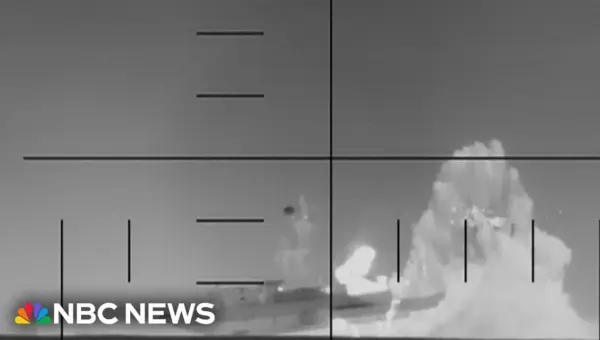
US Torpedoes Iranian Ship in Historic Indian Ocean Strike
The U.S. military has struck an Iranian ship in the Indian Ocean with a torpedo, marking a historic first since World War II. As the conflict escalates, Pentagon officials claim near control of Iranian airspace, while thousands of Americans remain stranded and the human cost mounts.

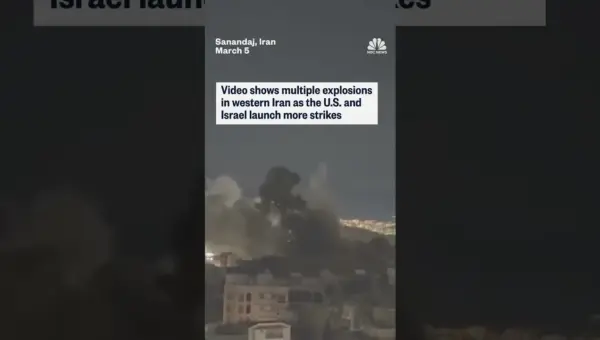
Iran Rocked by Blasts Amid Escalating U.S.-Israeli Strikes
Multiple explosions have been reported across Iran amid intensifying U.S. and Israeli strikes, signaling a significant escalation in regional geopolitical tensions. The exact nature and targets of the strikes remain unclear, but they occur against a backdrop of heightened instability in the Middle East.