Birthright Citizenship Faces New Scrutiny Over Intent
A Supreme Court case is challenging the long-held practice of birthright citizenship in the U.S. Expert Simon Henson discusses the 14th Amendment's original intent versus modern interpretations, including concerns about national security and civic loyalty. The outcome could significantly alter how citizenship is granted.

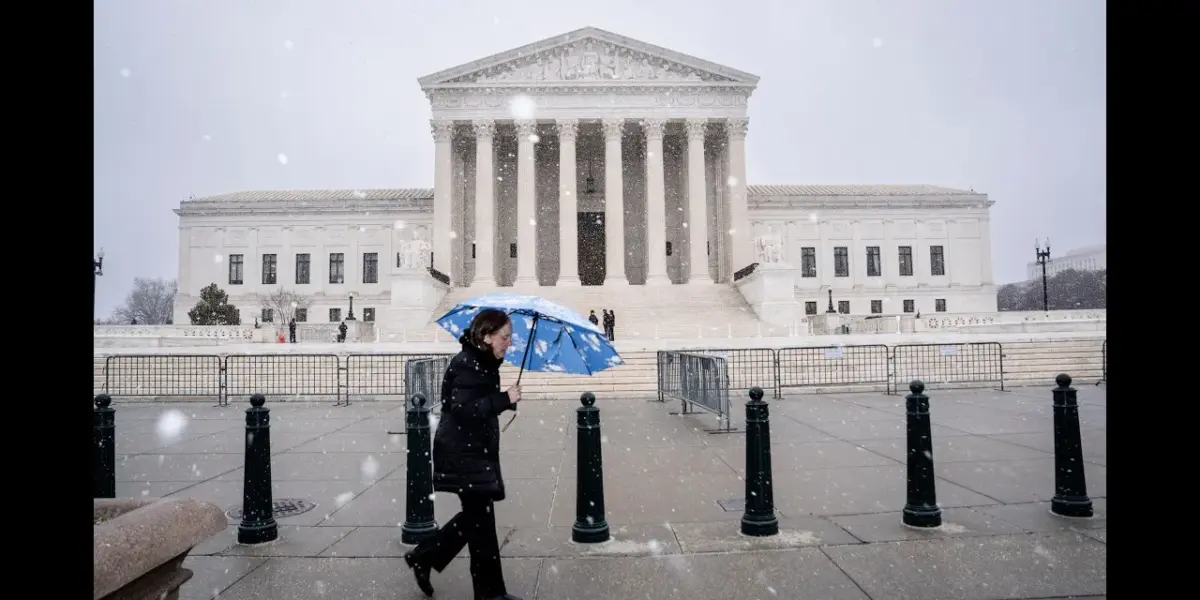
Birthright Citizenship Faces New Scrutiny Over Intent
The United States has long offered citizenship to nearly anyone born within its borders. This idea, known as birthright citizenship, is a cornerstone of American identity. However, a recent Supreme Court case is questioning the very foundation of this practice. The core issue is whether children born to parents who are in the country illegally should automatically be granted U.S. citizenship.
Simon Henson, an expert from the Heritage Foundation, shared his views on this complex topic. He noted that while President Trump has called the U.S. “stupid enough” to allow birthright citizenship, the reality is a bit more nuanced. Indeed, very few countries grant citizenship simply based on being born there. The U.S. has interpreted the 14th Amendment to mean that all individuals born in America are citizens. This interpretation is now being closely examined.
The 14th Amendment’s Original Purpose
Henson pointed out that the 14th Amendment was created after the Civil War. Its main goal was to ensure that formerly enslaved people gained full rights as citizens. It was a way to correct a great wrong and prevent discrimination against Black Americans. However, the world was very different back then. There was no fast jet travel or advanced reproductive technologies like IVF. The people who wrote the amendment could not have imagined the modern scenarios now being discussed.
Because of these changes, Henson believes it is a good time to reconsider how birthright citizenship is applied. He mentioned that some extreme cases involve people who are not U.S. citizens but have children born in the U.S. These children then gain all the rights of American citizens. This can include voting and working for the government. Henson highlighted examples like Chinese nationals coming to the U.S. on tourist visas to have children. These children become citizens even if their parents have no ties to the country and may not even speak English.
Concerns About Modern Interpretations
President Trump has been vocal about this issue, calling it a way for wealthy foreigners to gain U.S. citizenship for their children. Henson explained that there are two main situations. One involves people crossing the border illegally to have children. The other involves people who come legally, often on package tours from countries like Russia, Nigeria, and China. They have children, do some shopping, and then leave, with their children becoming U.S. citizens.
A more unusual situation involves individuals using reproductive technology. Henson described a hypothetical case where two elderly men in China use an egg and sperm from international markets. They then pay a woman in America, who might not be a citizen herself, to carry the child. The child is born in the U.S. and becomes an American citizen, despite having no connection to the parents or the country itself.
While Henson believes the numbers for these specific scenarios are likely in the thousands rather than millions, he expects them to grow. This is because reproductive technology is becoming more accessible, and current laws lack strong controls. The concern is that these loopholes could be exploited.
National Security and Loyalty
The implications for national security are also a major concern. Henson suggested that adversaries of the United States could potentially use this system to create a ‘fifth column.’ This means having citizens of other countries also hold U.S. citizenship. He argued that it is much harder for Americans to infiltrate countries like China or Iran for espionage. However, it could be easier for individuals from those countries to penetrate the U.S. if they can gain citizenship through birthright. This creates a significant vulnerability, as even a small number of foreign agents hidden among millions of citizens could pose a threat.
Henson, a naturalized citizen himself, also touched on the importance of civic duty and national loyalty. He shared his own experience of learning the Pledge of Allegiance and American history in school. He believes that becoming an American should involve a conscious choice and an acceptance of the country’s values. He suggested that there should be higher standards for becoming a citizen, including language proficiency and knowledge of American history. For him, citizenship is not just about economic opportunity but about embracing the nation’s identity and future.
The Court’s Potential Decision
When discussing the prospects for the Supreme Court’s decision, Henson was cautious. He does not think the court is likely to end birthright citizenship entirely. He believes the court may choose to be conservative or delay making a definitive ruling, similar to how they handled the DACA program. However, he acknowledges that the legal arguments against unrestricted birthright citizenship are strong.
A significant change could occur if the court upheld an executive order that granted citizenship only to those born in the U.S. with at least one U.S. citizen or legal permanent resident parent. Henson feels this would be a positive step for the country. He also stressed that any changes would likely be forward-looking, meaning they would not affect individuals who are already citizens.
The ongoing debate highlights a fundamental question about who belongs to the American nation and what it means to be a citizen in the 21st century. As technology and global mobility continue to evolve, the interpretation and application of laws like the 14th Amendment will likely remain a subject of intense discussion and legal challenge.
Source: Birthright Citizenship Interpretations Have Changed Since Inception of 14th Amendment: Expert (YouTube)

Related Articles

Judges Block Trump’s Orders, Undermining His Authority
Federal judges have blocked several key Trump administration initiatives, including efforts to defund public media and end birthright citizenship. These rulings, some from Trump appointees, highlight the judiciary's role as a check on executive power and question the administration's legal strategies.

Border Vetting Loopholes Expose Security Gaps
A former Border Patrol chief reveals that the vetting process for individuals entering the U.S. may not be as thorough as claimed. Biometric data collection and intelligence reviews were standard, but instances of delayed identification and rapid releases raise security concerns. This highlights the tension between border security needs and processing demands.


Australia’s UAP Blind Spot Exposed
An April Fools' Day joke by Australian Senator Ralph Babet unintentionally exposed a significant lack of awareness among Australian politicians regarding global UAP research. Despite historical warnings, many leaders remain uninformed about advancements in non-human technology and potential extraterrestrial intelligence, risking strategic disadvantage.