Billionaire Paulson Bets on Public Land Mine for Gold and Antimony
Billionaire John Paulson's Perpetua Resources is set to reopen the historic Stibnite mine in Idaho, a venture backed by $80 million in federal funding. While promoted for its role in securing domestic antimony for national security, the project is primarily driven by substantial gold reserves, drawing criticism from environmentalists and the Nez Perce Tribe over potential ecological damage and land rights.


Public Land Lease Sparks Debate Over Billionaire’s Mine Venture
A controversial project to reopen a historic mine in Idaho, backed by billionaire investor John Paulson, is drawing both federal support and fierce opposition. Perpetua Resources, formerly Midas Gold, has secured significant federal funding and permits to develop the Stibnite mine, a site historically crucial for American munitions production. The company touts the mine as vital for national security and self-sufficiency in critical minerals, particularly antimony, while critics question the environmental impact and the primary financial motivations.
Antimony’s Strategic Importance and Funding Push
The Stibnite mine is central to a federal effort to bolster domestic supply chains for critical minerals. Antimony, a key component in munitions, has become a focal point for national security concerns, especially after China began restricting its supply to the U.S. in 2021, cutting it off entirely by 2024. This geopolitical shift prompted the U.S. government to seek alternative domestic sources. Recognizing this, Perpetua Resources received $80 million in federal funding as part of an initiative to achieve self-sufficiency in critical minerals.
The company’s narrative positions the mine as a solution to this national security crisis. “Today is truly a significant milestone in securing our nation’s supply chains and strengthening America’s national security,” a company representative stated at the mine’s kickoff ceremony. “For too long, we’ve relied on foreign sources for critical materials essential to our national defense.” Antimony sulfide, the mineral to be mined, is essential for producing munitions, with antimony used in over 300 types of ordnance. Without it, lead bullets would be too soft, and artillery systems could malfunction.
Gold as the Primary Revenue Driver
Despite the focus on antimony for national defense, financial disclosures and company statements reveal that gold is expected to be the primary revenue generator from the Stibnite site. Geologically, antimony and gold often occur together in ore deposits, and this is the case at Stibnite. While antimony is crucial for military applications, the projected value of the gold reserves is substantial, estimated to approach $19 billion as of January 2026. This prospect has significantly excited investors, including major shareholder John Paulson.
“I am bullish on the outlook for gold. If the price goes up, you get a greater impact if you own a mining company. I couldn’t be more excited about our equity investment in Perpetua.”
John Paulson, a billionaire investor and known supporter of Donald Trump, has a significant stake in Perpetua Resources. His involvement, particularly after a Trump-era executive order aimed at developing domestic mineral supplies, has drawn scrutiny. Lobbying efforts by Paulson’s representatives, including visits to the White House and Defense Department, coincided with the mine receiving its final federal permits in May 2021. Critics argue that the project is essentially privatizing public land for private profit, subsidizing a billionaire’s gold operation under the guise of national security.
Environmental and Indigenous Rights Concerns
The reopening of the Stibnite mine has ignited strong opposition from environmental groups and the Nez Perce Tribe. The Idaho Conservation League, represented by John Robison and Will Tiedemann, is suing federal agencies, citing concerns about the potential for permanent loss of fish spawning habitats and chemical contamination of the watershed. The Yellow Pine pit, an abandoned part of the mine, historically contaminated the East Fork South Fork Salmon River, and conservationists fear a repeat of such environmental damage.
A major concern is the proposed tailings storage facility, which could rise to approximately 480 feet—taller than the Great Pyramid of Giza—and hold a volume equivalent to 29 Great Pyramids. This facility would store vast amounts of waste rock containing toxic metals like arsenic. While Perpetua Resources asserts that state-of-the-art liners will prevent leaching, environmentalists remain skeptical, warning that such contaminants could persist for millennia.
The Nez Perce Tribe, with treaty rights dating back to 1863 to hunt and fish on this land, also opposes the mine. Emmit Taylor Jr., a tribal member, stated, “This landscape right here has been what has taken care of our people for thousands of years. The fish and the roots that are here, the wildlife.” The tribe contends that the mine violates their treaty rights and could endanger critical fish stocks, including Chinook salmon. Historically, gold mining in the region led to the displacement of the Nez Perce people, and they see this new gold-focused project as a continuation of that dispossession.
Questions on Economic Feasibility and Future Outlook
Beyond environmental and tribal concerns, questions linger about the mine’s economic feasibility, particularly regarding the antimony component. Perpetua Resources claims it can supply 100% of U.S. military needs for antimony, which requires a purity of 70.5%. However, the company acknowledges its ore can only be refined to 54.3%, necessitating additional offsite processing. This contrasts with the high-grade antimony supplied during World War II. Experts point out that the ore grade has not significantly improved over the past half-century, raising doubts about the economic viability of processing it to military specifications, especially at a mine primarily driven by gold revenue.
The mining operations are not slated to begin until 2029. By that time, alternative domestic sources of antimony may emerge, potentially diminishing the strategic imperative for the Stibnite mine. This timeline raises further questions about the initial $80 million federal investment and whether the project remains a prudent use of taxpayer funds, given the evolving landscape of mineral sourcing and the persistent environmental and economic challenges.
Market Impact
The Stibnite mine project highlights the complex interplay between national security, critical mineral supply chains, private investment, environmental protection, and indigenous rights. For investors, Perpetua Resources represents a high-risk, high-reward opportunity, heavily influenced by commodity prices (gold and antimony), regulatory approvals, and the company’s ability to navigate significant environmental and social opposition. The substantial federal funding underscores the government’s commitment to diversifying critical mineral sources, but the project’s ultimate success hinges on its economic viability and environmental stewardship. The outcome could set precedents for future resource development on public lands.
What Investors Should Know
- Dual Commodity Focus: While promoted for antimony’s national security role, the mine’s primary revenue is projected from gold.
- Government Backing: $80 million in federal funding demonstrates strategic interest, but doesn’t guarantee success.
- Environmental & Social Risks: Significant opposition from environmental groups and the Nez Perce Tribe poses legal and reputational risks.
- Operational Challenges: Questions remain about the feasibility of refining antimony to military-grade purity and the long-term environmental impact of tailings storage.
- Regulatory Landscape: The project is subject to stringent environmental regulations and ongoing legal challenges.
Source: How One Trump Ally May Make Billions on Public Land (YouTube)

Related Articles

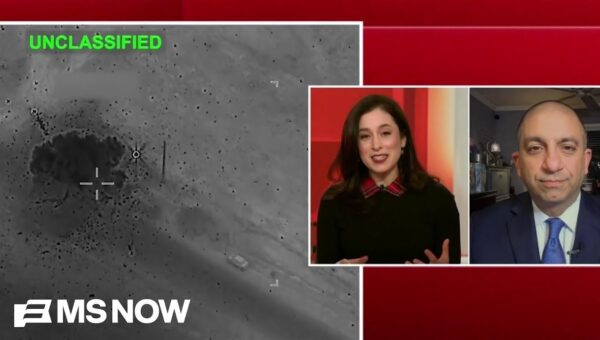
Pentagon AI Use Sparks Controversy: “Woke” Ban vs. Military Need
The U.S. military reportedly used Anthropic's AI for strikes in Iran hours after President Trump banned its government use, citing it as "too woke." This paradox highlights the tension between national security needs and the administration's AI policies, raising concerns about future investment in the U.S. AI sector.

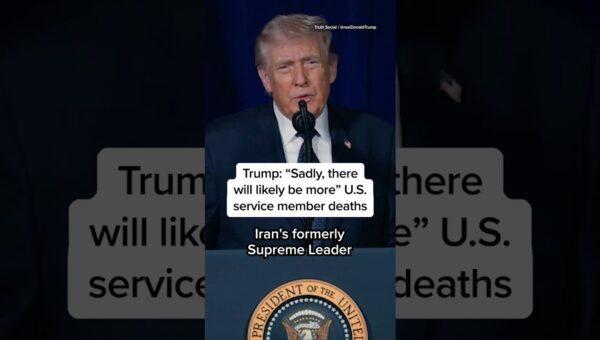
Trump Warns of More US Deaths in Escalating Conflict
Former President Donald Trump issued a somber warning on Truth Social, stating that further U.S. service member deaths are "likely" as geopolitical tensions escalate. He condemned Iran's former supreme leader, Ayatollah Ali Khamenei, and vowed retribution for fallen soldiers.

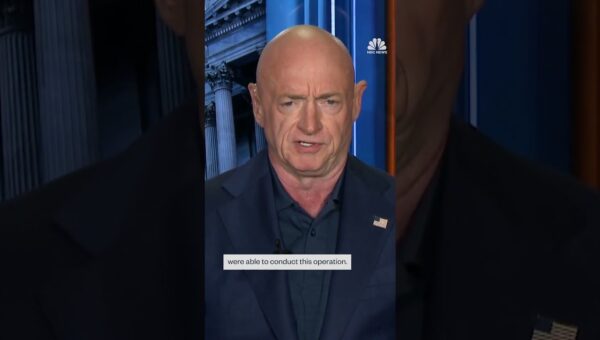
Senator Kelly: Khamenei’s Death is Positive, But Lacks a US Strategy
Senator Mark Kelly welcomed the death of Iranian Supreme Leader Ali Khamenei, calling it a "good thing." However, he sharply criticized the current U.S. administration for lacking a coherent strategy to manage the significant geopolitical shift. Kelly emphasized that "hope is not a strategy" and called for clear objectives and actionable plans to ensure American security.