Billion-Dollar Ultimatum: Canada and Mexico Reject Controversial ‘Board of Peace’ Proposal
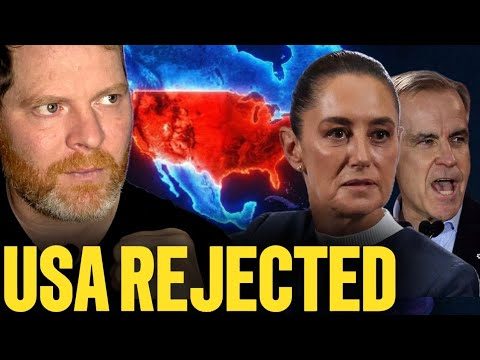
A controversial 'Board of Peace' proposal, demanding a $1 billion fee for permanent membership and reportedly chaired by Donald Trump for life, has been rejected by Canada and Mexico. Critics view the initiative as a 'pay-to-play' scheme that undermines traditional diplomacy and raises concerns about U.S. foreign policy, particularly its implications for North American relations and the reconstruction of Gaza.

Billion-Dollar Ultimatum: Canada and Mexico Reject Controversial ‘Board of Peace’ Proposal
A contentious proposal for a new international body, dubbed the ‘Board of Peace,’ has ignited a diplomatic firestorm, particularly within North America. The initiative, reportedly spearheaded by former President Donald Trump, demands a staggering $1 billion cash contribution for permanent membership, a condition that has been met with outright refusal from key U.S. allies Canada and Mexico. Critics are decrying the plan as an unprecedented ‘pay-to-play’ scheme that threatens to undermine established international diplomacy and further erode U.S. global standing.
The ‘Board of Peace’ Charter: A Country Club Model for Global Governance?
Details of the draft charter, reportedly leaked to media outlets including Bloomberg, France 24, and Times of Israel, reveal an organizational structure that has drawn comparisons to a private club rather than a traditional international body. Unlike the United Nations, which operates on principles of sovereign equality and consensus, the ‘Board of Peace’ proposes a tiered membership system.
According to Article 2.2 of the leaked charter, standard membership would be limited to a three-year term, after which countries would need to reapply. However, a fast track to permanent, ‘golden status’ membership is explicitly outlined: a non-refundable contribution of $1 billion in cash funds within the first year. This substantial financial barrier has been widely interpreted as a ‘cover charge’ for a seat at the table, a stark departure from conventional diplomatic engagement.
Unprecedented Power: The Lifetime Chairman and Financial Control
Perhaps the most controversial aspect of the proposed ‘Board of Peace’ lies in its leadership structure. Article 3.2 of the charter reportedly names Donald Trump as the inaugural chairman, explicitly stating that this role is independent of his representation as President of the United States. This provision suggests a lifetime appointment, contingent only on resignation or incapacitation, with the chairman retaining sole authority to appoint his successor.
This concentration of power, coupled with the chairman’s personal control over the billions of dollars in entry fees, has raised serious alarms. Critics argue that such a structure effectively creates a parallel international organization outside the traditional frameworks of accountability and transparency, transforming diplomacy into a private enterprise. The transcript suggests this model could lead to a ‘neo-monarchy’ or an ‘international cartel,’ with the chairman leveraging his past presidential influence to establish a personal, monetized fiefdom.
Mexico Takes the Moral High Ground: A Public Refusal
The first major diplomatic blow to the ‘Board of Peace’ came from Mexico. President Claudia Sheinbaum, a scientist and a figure of growing international stature, reportedly received an invitation but swiftly rejected it. The refusal was not merely a quiet diplomatic demurral; it was a public declaration rooted in principle.
According to the transcript, the ostensible purpose of the ‘Board of Peace’ was to facilitate the reconstruction of Gaza. However, President Sheinbaum noted a critical omission: Palestine itself was not invited to participate. Mexico, which recognizes Palestine as a state, deemed this exclusion a fundamental flaw, undermining the very premise of a peace-building initiative. President Sheinbaum’s public statement – “Given that we recognize Palestine as a state, it’s important that both states participate. It isn’t set up that way” – underscored Mexico’s commitment to diplomatic fairness and human rights. Mexico offered to send an observer but unequivocally refused to pay the $1 billion fee, effectively ‘calling the bluff’ on the legitimacy of the club.
This stance by Mexico has been viewed as a significant diplomatic moment, with some observers suggesting that Mexico is “lecturing the United States on human rights and diplomatic fairness,” positioning itself as the ‘adult in the room’ in North American relations.
Canada’s Laughter and the ‘Mean Girl Diplomacy’
Canada, another close U.S. ally and neighbor, also reportedly received an invitation, only to respond with a pragmatic rejection. Prime Minister Mark Carney, a former central banker known for his astute understanding of finance, reportedly “laughed” at the $1 billion fee. Canada’s refusal, like Mexico’s, was firm.
The chairman’s response, as described in the transcript, was swift and undiplomatic. Instead of negotiation, an open letter was posted on True Social, withdrawing the invitation to Canada – an act likened to “mean girl diplomacy.” This move, targeting a key military ally and NORAD partner, highlights the transactional and personal nature of the proposed initiative, prioritizing a financial contribution over long-standing strategic alliances.
North American Isolation and Economic Realignments
The dual rejections from Canada and Mexico carry significant implications for North American relations and U.S. geopolitical influence. The transcript warns that the United States is becoming “isolated” within its own continent. Historically, the U.S. has been the dominant economic and political force in North America, with strong trade ties binding the three nations.
However, the current diplomatic friction is reportedly prompting Canada and Mexico to explore alternative trade routes and partnerships, potentially bypassing U.S. territory for goods traveling between Veracruz and Halifax. Such a realignment would represent a substantial shift, challenging the U.S.’s traditional role as the central hub of North American commerce and potentially impacting the U.S. economy, particularly its agricultural sector, which relies heavily on these trade partnerships.
Gaza Reconstruction or Gentrification Project?
The stated aim of the ‘Board of Peace’ – to rebuild Gaza – has also come under intense scrutiny. The transcript alleges that the initiative is less about genuine peace and more about a “gentrification project.” This claim is bolstered by the reported involvement of real estate developers, Jared Kushner and Steve Witkoff, in the reconstruction efforts, rather than traditional humanitarian or development organizations like the Red Cross or the UN.
Critics point to past statements and AI-generated images shared by Trump, depicting a transformed Gaza as a tourist destination or ‘Riviera,’ raising concerns that the plan aims for a “monetization of the rubble” and could lead to the displacement of the Palestinian population. The exclusion of Palestine from a board ostensibly created for its reconstruction further reinforces these concerns, suggesting that the initiative may prioritize commercial interests over the self-determination and well-being of the Palestinian people.
The Decline of U.S. Soft Power and Global Trust
The entire saga surrounding the ‘Board of Peace’ is framed within a broader narrative of the perceived decline of the American ’empire’ and its soft power. For decades, the United States leveraged its diplomatic influence, cultural appeal, and economic strength to project its values and foster alliances. The transcript argues that this period of respect or even fear has given way to a transactional approach, where allies are asked to “pay for people to be around you.”
The rejection by Canada and Mexico, two of the U.S.’s closest partners, is seen as a significant indicator of this shift. It suggests that the trust and legitimacy earned over decades are being eroded, replaced by a perception of the U.S. as a nation “being sold as parts” rather than a cohesive global leader. The list of countries reportedly showing interest – Bahrain, Hungary, Argentina – is characterized as a “table of sycophants and debtors,” implying that the initiative is attracting nations in desperate need of financial assistance rather than those committed to genuine peace and multilateral cooperation.
A New Era of Diplomacy?
As the diplomatic landscape continues to evolve, the ‘Board of Peace’ proposal and its subsequent rejections mark a critical moment. It highlights growing skepticism towards unilateral U.S. initiatives, particularly those perceived as lacking transparency, democratic principles, or genuine humanitarian intent. The coordinated refusal from Canada and Mexico signals a potential rebalancing of power within North America and a broader global reassessment of traditional alliances and diplomatic norms. The future of the ‘Board of Peace’ remains uncertain, but its immediate impact has been to underscore the challenges facing U.S. foreign policy and the shifting dynamics of international relations.
Source: The $1 Billion Ultimatum: Why Canada and Mexico Just Walked Away (YouTube)

Related Articles

Congressman Swalwell Slams Trump’s Iran Strikes, Cites ‘No Plan’
Congressman Eric Swalwell has strongly condemned the recent U.S. military strikes in Iran, deeming them illegal and lacking a clear strategic plan. He joins Democrats in demanding a War Powers vote, asserting that the administration has failed to present evidence of provocation or a post-strike strategy. Swalwell criticizes the move as a distraction from domestic issues and a departure from campaign promises.

Trump Open to Iran Talks After Attacks, Shifts on Regime Change
President Trump has agreed to negotiate with Iran's new leadership following recent U.S. and Israeli attacks, signaling a potential shift from his regime change objective. The move has drawn scrutiny from former officials who question the strategic coherence of U.S. policy.

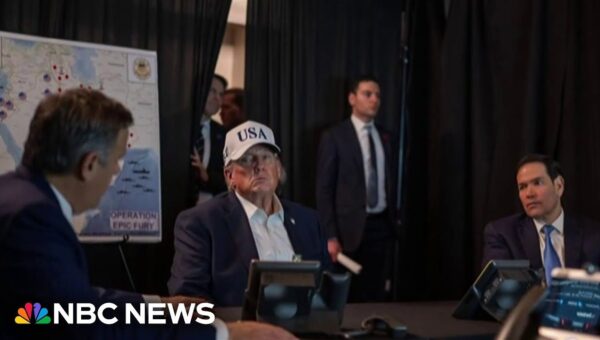
Trump: Iran Strikes Ahead of Schedule, Expects ‘Great Deal for World’
Three U.S. service members have been killed amid escalating conflict with Iran, President Trump confirmed. He stated that strikes are ahead of schedule, with senior Iranian leaders killed, and expressed optimism for a "great deal for the world" despite ongoing talks with Iranian officials.