Billion-Dollar Bridge, Zero Investment: Trump’s 50% Equity Demand Ignites US-Canada Diplomatic Storm
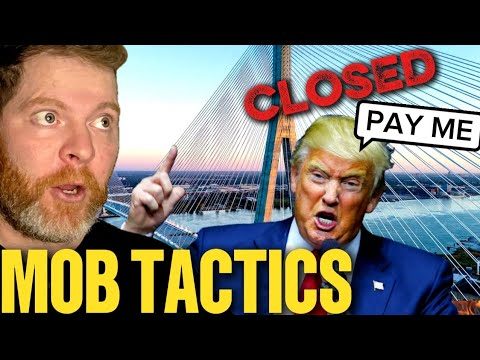
A looming diplomatic crisis threatens the long-standing US-Canada relationship as former President Donald Trump demands a 50% equity stake in the $6.4 billion Gordie Howe International Bridge, despite Canada fully funding its construction. Critics decry the move as "mafia-style tactics" and an "equity grift," warning of severe economic repercussions for border communities and a further erosion of America's global standing. The demand, made just two months before the bridge's grand opening, has sparked outrage and concern over the future of bilateral cooperation.

A Looming Crisis: Trump’s Demand for Gordie Howe Bridge Equity
A significant diplomatic dispute is brewing between the United States and Canada, centered on the newly constructed Gordie Howe International Bridge. Former President Donald Trump has reportedly demanded a 50% equity stake in the $6.4 billion infrastructure project, a move that has been met with widespread condemnation and alarm. This demand comes despite Canada fully funding the bridge’s construction, raising questions about diplomatic norms, economic stability, and the future of one of the world’s most enduring bilateral relationships.
Critics have swiftly denounced Trump’s demand as an act of extortion, likening it to a “mafia-style tactic” and an “equity grift.” With the bridge’s grand opening just two months away, the unexpected claim threatens to destabilize a critical trade artery and strain the deeply intertwined economies of both nations, particularly the border communities it serves.
The Gordie Howe International Bridge: A Vital Link Funded by Canada
The Gordie Howe International Bridge is more than just a structure; it’s a monumental undertaking designed to bolster trade and facilitate the flow of goods and people between Windsor, Ontario, and Detroit, Michigan. As the busiest commercial land border crossing in North America, the existing Ambassador Bridge has long been a bottleneck, necessitating a modern, high-capacity alternative. The Gordie Howe Bridge, named after the legendary hockey player who embodied the spirit of cross-border camaraderie, promises to alleviate congestion, enhance efficiency, and support the robust economic partnership between the two countries.
Crucially, the entire $6.4 billion cost of the bridge’s construction, including the Canadian span, the U.S. span, the U.S. port of entry, and all associated infrastructure, has been borne by Canada. The Canadian government, through the Windsor-Detroit Bridge Authority (WDBA), has managed the project, securing financing, overseeing construction, and absorbing all related costs and logistical challenges. Neither the state of Michigan nor the U.S. federal government contributed financially to the bridge’s development. This fact underscores the unilateral nature of Trump’s demand, as Canada has shouldered the financial burden and associated risks from inception to near completion.
An Unprecedented Demand: “Mafia-Style Tactics” and Diplomatic Outrage
The nature of Trump’s demand has been described by observers as an unprecedented departure from standard diplomatic and trade negotiations. Commentators have characterized it as “lazy demands” and a “stickup,” arguing that it lacks any semblance of business acumen or respectful engagement. The analogy drawn by critics is stark: imagining building a fence on your property, paying for all materials and labor, only for a neighbor to suddenly appear with a threat, demanding 50% ownership or promising to shut it down.
Such tactics, many argue, are not merely aggressive but deeply destabilizing. International relations are typically governed by established protocols, mutual respect, and adherence to agreed-upon treaties and understandings. Trump’s alleged demand, delivered seemingly out of the blue and via social media, bypasses these norms entirely, treating a sovereign nation’s substantial investment as leverage for an unearned stake. This approach, critics contend, risks setting a dangerous precedent for international infrastructure projects and cross-border cooperation.
Economic Lifeline Under Threat: Impact on Border Communities
The implications of this dispute extend far beyond diplomatic posturing, directly threatening the economic fabric of communities on both sides of the border. The Detroit-Windsor corridor, in particular, represents one of the most integrated binational economies in North America. Thousands of people cross daily for work, medical appointments, and family visits. For instance, an estimated 150 nurses living in Canada commute to hospitals in the Detroit metropolitan area, contributing vital services to the U.S. healthcare system.
Disrupting the functionality of a major trade artery like the Gordie Howe Bridge could have catastrophic consequences. The flow of goods, estimated at billions of dollars annually, supports countless industries, from automotive manufacturing to agriculture. Any threat to close or impede access to the bridge would send shockwaves through supply chains, leading to significant economic losses, job insecurity, and increased costs for consumers in both countries. In an era marked by a global cost of living crisis, such disruptions would disproportionately harm working families already struggling to make ends meet.
Straining a “Fraternal Bond”: The Erosion of US-Canada Relations
The United States and Canada share one of the longest, most peaceful, and mutually beneficial relationships in the world, often characterized by a “fraternal bond” and deeply tied histories. For generations, cooperation on defense, trade, environmental issues, and cultural exchange has been the norm. However, critics argue that the current administration’s approach, particularly regarding issues like the Gordie Howe Bridge, constitutes a deliberate effort to undermine Canadian sovereignty and pick unnecessary fights.
Past actions, such as threats to impose tariffs on Canadian goods or criticisms of Canada’s defense spending, have already frayed nerves. The demand for equity in the Gordie Howe Bridge is seen by some as another instance of “poking the Kodiak bear,” testing the limits of Canadian patience and goodwill. Observers note that while Canadians hold a deep affection for the American people, there is growing resentment towards what is perceived as an increasingly hostile and unpredictable U.S. government.
The transcript highlights the perception that such threats, including hypothetical ones like interfering with Canadian hockey, are major deal-breakers for Canadians, leading to a collective defensive posture. While military conflict is unthinkable, the rhetoric and actions are viewed as disrespectful and indicative of a lack of understanding of the close ties and mutual reliance between the two nations.
America’s Global Standing: A “Pariah State”?
Beyond the immediate bilateral implications, this incident is framed by critics as part of a broader pattern that has diminished America’s standing on the global stage. The perception of the U.S. acting as a “madman mob boss” or an “empire that can’t even keep its own bridges open” contributes to a narrative of instability and unreliability. The transcript references instances of U.S. leaders being booed at international events, suggesting a widespread international exhaustion with perceived American unilateralism and disregard for global norms.
This erosion of trust has tangible consequences. In a globalized world, a nation’s reputation directly impacts its ability to forge alliances, secure trade deals, and exert diplomatic influence. If the U.S. is seen as a capricious partner, demanding unearned stakes in projects it did not fund, other nations may become wary of engaging in future collaborations, isolating America further.
The Path Forward: Canada’s “Pro-Reality” Stance
Faced with these challenges, Canada is described as adopting a “pro-reality” stance, recognizing the complexities of its relationship with its powerful southern neighbor. While Canadians value their historical ties with Americans, they are increasingly focused on protecting their national interests, economic stability, and sovereignty. This involves navigating domestic challenges such as housing affordability, rising food costs, and immigration, without the added burden of unnecessary diplomatic battles.
The call from some commentators to Canada is clear: “Hold the line. Elbows up. Keep the bridge. You paid for it.” This sentiment reflects a determination to uphold existing agreements and resist demands seen as illegitimate. The Gordie Howe Bridge, with its agreed-upon toll structure and Canadian ownership, represents a commitment to mutual prosperity based on fair terms. Any deviation from this, especially through threats, is likely to be met with firm resistance.
As the grand opening of the Gordie Howe International Bridge approaches, the international community watches closely. The resolution of this dispute will not only determine the future of a vital trade link but also serve as a barometer for the health of the US-Canada relationship and America’s diplomatic approach on the world stage.
Source: He Wants 50% Of A Bridge He Paid $0 For (YouTube)

Related Articles
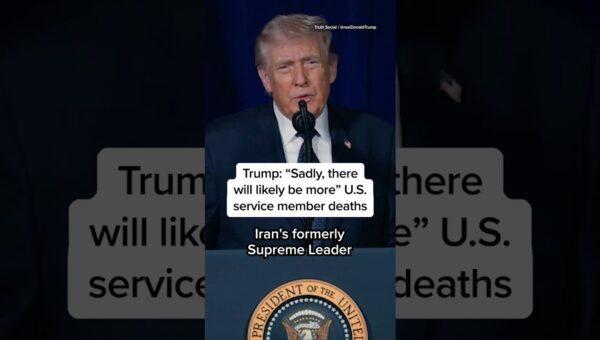
Trump Warns of More US Deaths in Escalating Conflict
Former President Donald Trump issued a somber warning on Truth Social, stating that further U.S. service member deaths are "likely" as geopolitical tensions escalate. He condemned Iran's former supreme leader, Ayatollah Ali Khamenei, and vowed retribution for fallen soldiers.

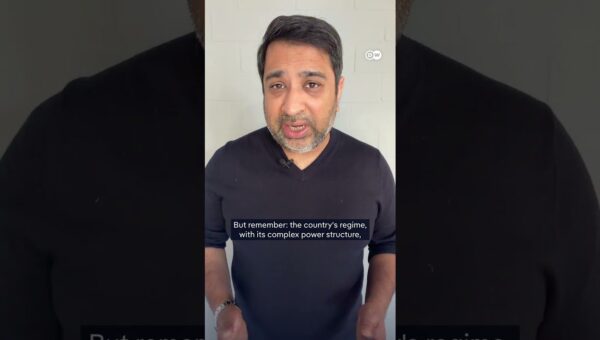
Trump Threatens “Unseen” Force on Iran After Leader’s Death
Following the assassination of Supreme Leader Ayatollah Ali Khamenei, U.S. President Donald Trump has vowed to unleash unprecedented force on Iran. While outlining ambitious goals including regime change, experts express skepticism about the effectiveness of airstrikes and the potential for popular uprising against a resilient Iranian government.
Senator Coons Questions Trump’s Iran Strategy After Troop Deaths
Senator Chris Coons has sharply criticized President Trump's strategy in Iran following the deaths of three U.S. service members. Coons questioned the intelligence regarding Iran's nuclear proximity and the lack of clear strategy and congressional debate for the "war of choice."