Beyond the Laughter: Unpacking German Internet Humor and Its Cultural Reflections
A recent YouTube video reacting to German memes offers a unique window into the nation's culture, humor, and societal quirks. From satirizing bureaucracy and consumerism to reflecting on regional identities and modern life's frustrations, these digital snippets reveal a sophisticated blend of wit and social commentary. They highlight how memes serve as powerful cultural barometers, offering insights into shared experiences and anxieties within German society and beyond.

Beyond the Laughter: Unpacking German Internet Humor and Its Cultural Reflections
In an increasingly interconnected world, internet memes have evolved from fleeting digital jokes into powerful cultural artifacts, offering unique insights into national identities, shared experiences, and societal anxieties. A recent YouTube video, ‘Reacting to the FUNNIEST GERMAN MEMES,’ serves as a fascinating lens through which to explore the distinctive blend of wit, self-deprecation, and sharp social commentary that defines German digital humor. Far from mere trivialities, these memes provide a window into the everyday lives, bureaucratic quirks, and consumer habits that resonate deeply within German society.
The Cultural Tapestry: Regional Identity and Everyday Observations
German memes frequently draw upon specific cultural touchstones, highlighting regional identities and common experiences. The mention of a ‘white and blue checkered flag,’ quickly identified as Bavarian, sparks a humorous discussion about regional stereotypes. Bavaria, with its distinct cultural heritage, dialect, and political landscape, often features prominently in German humor, reflecting internal diversity and playful rivalry within the nation. The accompanying jest about skin tone, clarified by the reactor as a meta-commentary on racism within meme culture, underscores the often multi-layered nature of internet humor, capable of both perpetuating and critiquing societal biases.
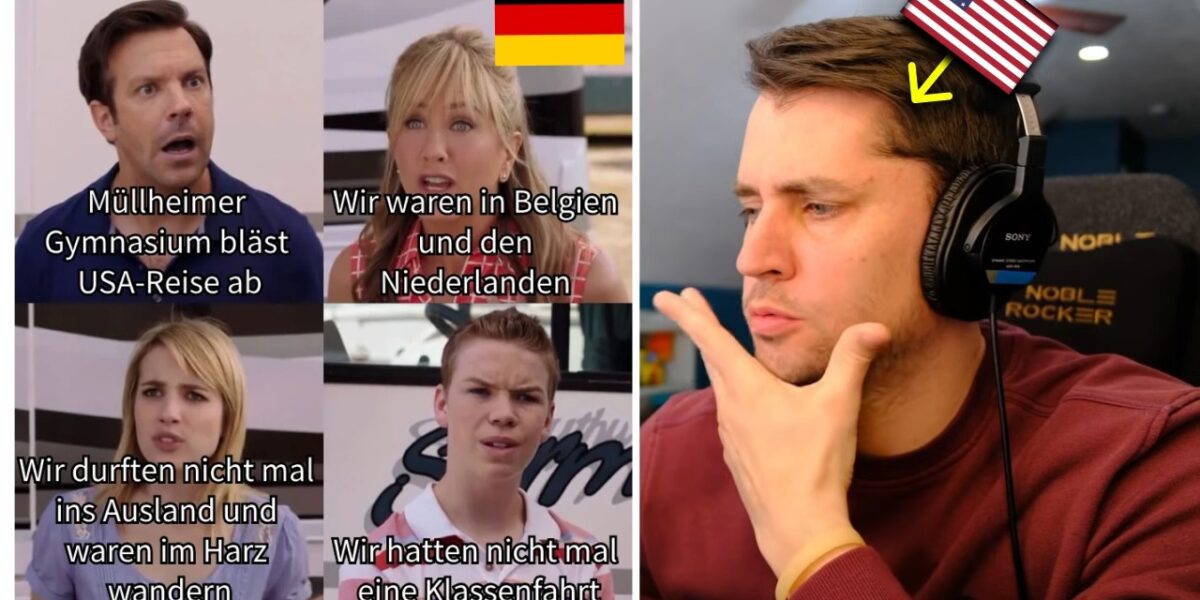
Other memes tap into universally relatable experiences with a distinct German flavor. The anecdote of ‘Molheim High School’ cancelling a USA trip, only for students to end up hiking in the Harz mountains or not having a class trip at all, resonates with the collective memory of school-era disappointments. This localized context amplifies the humor, painting a picture of practical, perhaps less glamorous, alternatives within the German educational system. Similarly, the ‘German stare’ meme, linked to the perception of directness or even sternness in German social interactions, cleverly plays on a common stereotype, turning it into a moment of self-aware humor.
Navigating Bureaucracy and Corporate Absurdity
A recurring theme in German memes, echoing broader societal perceptions, is the intricate dance with bureaucracy and the often-absurd realities of corporate life. The meme contrasting an 11-minute car journey with a two-hour, seven-minute train ride humorously punctures the perception of infallible German public transport. While Germany is renowned for its efficient infrastructure, this meme highlights the frustrations that commuters sometimes face, underscoring that even highly organized systems can have their inefficiencies.
Workplace humor also finds a fertile ground in German memes. The classic joke about an apprentice returning with ‘turn signal fluid’ is a universal trope found in many cultures, but it gains a particular resonance in a nation known for its strong vocational training and industrial heritage. It pokes fun at the often-naive apprentice, the demanding boss, and the sometimes-pointless tasks assigned to newcomers. Further examples, such as ‘Monty 61 in the accounting department’ reacting to a bra charged to a fuel card, or the satirical take on loyalty apps from retailers like Rewe, Penny, and Lidl, reveal a shared experience of corporate regulations, expense report anomalies, and user-unfriendly digital interfaces that plague modern working life.
Economic Realities and Consumer Culture
German memes also offer a satirical look at consumerism and economic realities. The exaggerated price tag of ‘€249 on a single chocolate bar’ for a Snickers, even with a ‘high protein’ label, lampoons the perceived overpricing of everyday goods and the marketing strategies that attempt to justify them. This hyperbole speaks to a consumer base that is often value-conscious and critical of perceived exploitation.
Perhaps one of the most insightful discussions arises from the ‘shredded meat scraps’ meme and the subsequent commentary on Pringles. The idea of pressing ‘shredded meat scraps’ into ‘fun shapes and breading them’ is presented as a cynical yet pragmatic example of ‘capitalism working to reduce waste.’ This segues into a popular urban legend (or clever marketing lore) about Pringles being made from ‘leftover scraps’ of potato from regular chip production. Regardless of the factual accuracy, this narrative highlights a fascination with the industrial processes behind common foods and a recognition of how market forces can turn perceived waste into profitable products. It’s a commentary on efficiency, resourcefulness, and the sometimes-unappetizing origins of convenience foods.
Modern Life, Technology, and Human Nature
Beyond the distinctly German elements, many memes resonate globally by tapping into universal aspects of modern life, technology, and human nature. The generational gap in technology is humorously captured by a meme about a ‘mom’s phone’ with an enormous font size, a common observation for anyone helping older relatives navigate smartphones. Similarly, the frustration of IT professionals dealing with recurring issues from ‘technological idiots,’ embodying the ’80/20 rule’ where a small percentage of users generate most support tickets, is a universally understood plight.
Personal struggles and daily annoyances also feature prominently. The existential dread of suddenly remembering a missing shirt in the middle of the night, the allure of ‘scooters’ despite their potential to be a ‘public nuisance,’ or the humorous exaggeration of needing ’22 hours of sleep a day’ all reflect shared human experiences of anxiety, leisure, and the constant battle against fatigue. Even the more surreal questions, like ‘where should a centaur’s penis be?’, demonstrate the internet’s capacity for absurd and uninhibited exploration of thought experiments, however bizarre.
Memes as Social Commentary: From Basic Law to Crane Pads
One particularly poignant meme juxtaposes ‘Article one of the basic law: Human dignity is inviable’ with ‘Article one: Crane pads must be compacted.’ This meme cleverly highlights the stark contrast between Germany’s foundational constitutional principles and the mundane, practical, and sometimes overly detailed regulations of everyday life. It’s a subtle critique of how bureaucratic minutiae can sometimes overshadow grander ideals, or simply a humorous observation on the German propensity for order and specific instructions, even for crane pads.
The role of humor in social commentary is crucial. Memes allow for a collective venting of frustrations, a shared laugh at absurdities, and a subtle critique of societal norms without the need for formal discourse. They are democratic, easily shareable, and often bypass traditional media gatekeepers, creating a direct connection between creators and a broad audience.
The Enduring Appeal of Digital Satire
The phenomenon of reacting to memes, particularly those from a specific cultural context like Germany, underscores the global reach of internet culture while simultaneously celebrating its local flavors. These digital snippets, often born from obscure references or everyday observations, become a common language, bridging gaps and fostering a sense of shared understanding and amusement.
Ultimately, the collection of German memes reviewed in the video serves as more than just a source of laughter. It’s a rich tapestry woven from cultural specifics, universal human experiences, and a keen eye for satire. From lampooning corporate inefficiencies and consumer habits to gently mocking regional stereotypes and the quirks of modern life, these memes offer a compelling and often humorous reflection of contemporary German society, proving that in the digital age, a picture – or a meme – truly can be worth a thousand words, and a deep dive into culture.
Source: Reacting to the FUNNIEST GERMAN MEMES [#137] (YouTube)

Related Articles

Germany on US-Israel Strikes: No “Lecturing” Partners
Germany's Chancellor Scholz calls on Iran to end its attacks and nuclear program but refrains from "lecturing" US-Israel on international law regarding recent strikes. Berlin increases security for Jewish institutions amid fears of retaliation.

Germany’s Fake Laws: AI Disinformation Campaign Exposed
Viral AI-generated videos falsely claim Germany has enacted absurd laws, including fines for flushing toilet paper. Experts reveal a disinformation campaign aiming to portray Germany as chaotic, with potential commercial or political motives behind the fabricated content.


Germany Navigates Tricky US-China Balancing Act
Germany faces a complex geopolitical challenge, needing to balance its alliance with the US and its economic ties with China. Experts suggest a 'smart approach' focusing on diversification and strategic autonomy, rather than a forced choice, is the most viable path forward.